How to freeze vegetables: blanching guide, storage times and what not to freeze
 By
Diego Cortés
By
Diego Cortés
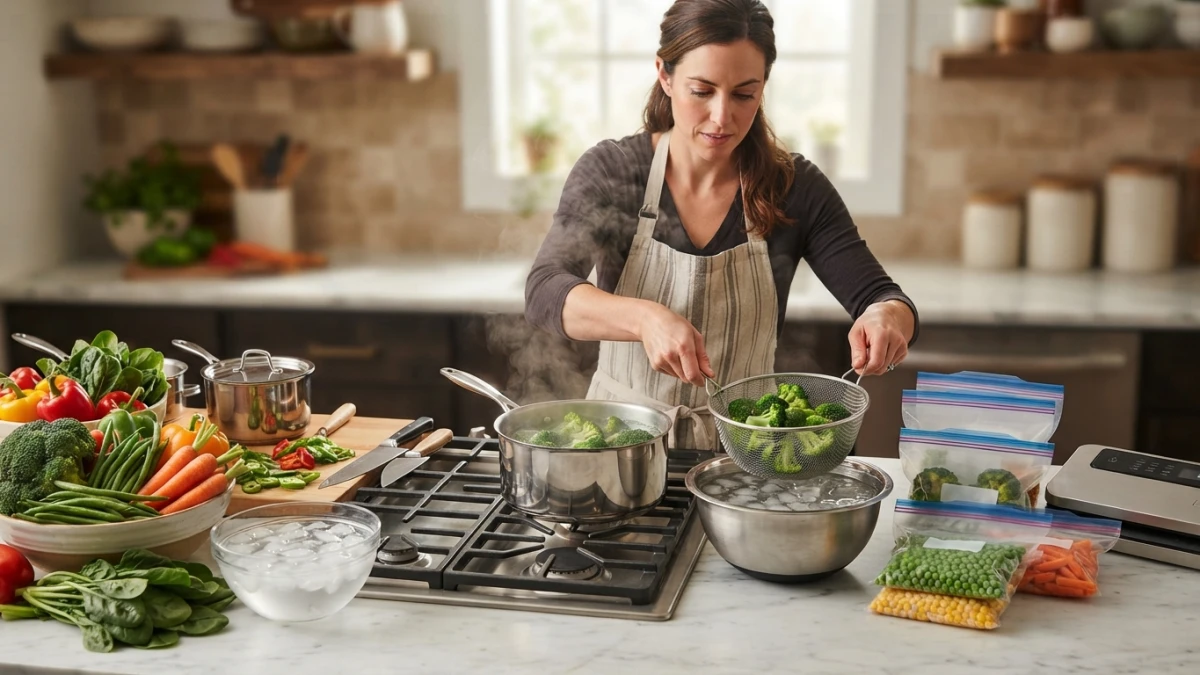
Bought too many vegetables and hate seeing them go to waste? Learning how to freeze vegetables properly is not complicated, but doing it right is the difference between veggies that taste fresh and bland, mushy ones. It all comes down to blanching, good packaging and knowing which vegetables can handle the freezer and which cannot. In this guide we share the per-vegetable times and the tricks professional kitchens use, so your freezer becomes a pantry instead of a graveyard of forgotten bags.
Freezing at home needs no expensive equipment: just a freezer set to 0 °F (-18 °C), airtight bags or containers and a few minutes of work per batch. The payoff is vegetables ready in minutes, with no preservatives and their flavor almost intact.
Why freeze vegetables (and when it is worth it)
Freezing vegetables has three big payoffs. First, you make the most of leftovers from the market or the garden: that extra bag of spinach or those ripe tomatoes do not end up in the trash. Second, you save money, because you buy at the good price and use it later. Third, you have vegetables ready in minutes for stir-fries, soups and stews, even out of season.
That said, it is only worth it if you start with good produce. The freezer does not improve quality, it only preserves it: if the vegetable is past its best, bruised or partly rotten, it will come out of the freezer just as bad. Wash it well, dry it and cut it into the size you usually cook with before freezing, so you can use it straight from the bag in your recipes.
Blanching: the step almost nobody does and everything changes
Blanching is a very brief cook, from 30 seconds to 5 minutes, in salted boiling water, followed by an immediate plunge into ice water. This thermal shock deactivates the enzymes that, even in the cold, keep degrading color, flavor and nutrients during storage. That is why a blanched green bean tastes freshly picked months later, while an unblanched one comes out dull and tough.
The process is simple: bring a large pot of salted water to a rolling boil, add the cleaned and cut vegetable, let it cook for the exact time and transfer it right away to a bowl of ice water for about the same time. Then drain and dry thoroughly: excess water forms ice crystals that break cell walls and ruin the texture.
Blanching times, vegetable by vegetable
Each vegetable has its optimal time. The general rule: the denser the vegetable, the longer it needs. Here is the quick reference:
- Spinach, chard and other leafy greens: 1-2 minutes.
- Peas: 1-2 minutes.
- Green beans: 2-3 minutes.
- Broccoli and cauliflower florets: 2-3 minutes.
- Sliced carrots: 2-3 minutes.
- Zucchini: 1-2 minutes.
- Bell peppers: 1 minute (optional, helps keep them firm).
- Mushrooms: 2-3 minutes, or give them a quick sauté before freezing.
If you blanch several vegetables in a row, reuse the same boiling water but let it come back to a full boil between batches. And write the time on each bag: six months from now it is easy to forget whether that vegetable took 2 or 3 minutes.
Vegetables that do not need blanching
Not everything that goes in the freezer passes through boiling water. A group of vegetables and aromatics freeze directly, raw and ready to use:
- Onion, garlic and leek: freeze them raw, chopped or sliced, perfect for sautéing straight from the freezer.
- Tomatoes: freeze better already crushed or as sauce, because raw ones release a lot of water when thawed.
- Fresh herbs: chop them and freeze in ice cube trays with oil or water; they are ideal for flavoring stews and stir-fries.
These exceptions do more than save time: they keep their aroma better than if they went through a cook, because the volatile compounds behind their flavor stay intact.
Packaging and labeling: how to avoid freezer burn
Freezer burn is that effect of dry, grayish, tasteless patches that appears when air touches the vegetable. It is easy to avoid with three simple habits. First, freeze loose pieces on a tray for an hour or two and package them afterwards: they will not stick together, and you can take out only the portion you need. Second, use airtight bags with the air squeezed out, or containers that really seal, and pack in flat portions that thaw quickly. Third, always label with the vegetable name and the date: three months from now nobody remembers what is in that bag, and the date lets you use the oldest first.
How long they last and how to thaw them
At 0 °F (-18 °C), the standard temperature of any home freezer, most vegetables keep good quality for 8 to 12 months. Leafy greens and zucchini last a bit less, 3 to 6 months, because their structure is more delicate. Longer does not make them unsafe, but flavor and texture do decline.
To use them, skip the thawing: many vegetables cook straight from frozen. Add them to the stir-fry, soup or stew without going through the fridge. If you do need them thawed, for example for a warm salad or a cream soup, move them to the fridge a few hours ahead. And one golden rule: never refreeze an already thawed vegetable, because the second ice cycle destroys the texture and increases the risk of bacteria.
What to NEVER freeze
Some foods are simply not made for the freezer, or demand special treatment:
- Lettuce, cucumber and radishes: their high water content turns them into mush when thawed.
- Raw potatoes: they become grainy and dark; freeze them already cooked, mashed or roasted instead.
- Whole or chopped avocado: only freezes as a purée with a squeeze of lemon, and for very specific uses such as guacamole.
When in doubt about a vegetable, think about how much water it holds and how you plan to use it. Vegetables you eat raw in salads almost never survive the freezer; vegetables headed for stews and stir-fries almost always do very well.
How to freeze vegetables step by step
If you keep only one idea, let it be this sequence, which works for almost any vegetable:
- Wash, dry and cut the vegetable into the size you use in your recipes.
- Blanch it in salted boiling water for the time indicated, then plunge it into an ice water bath.
- Drain and dry well, and spread it on a tray to freeze the pieces loose.
- Pack in flat portions in airtight bags or containers, leaving no air inside.
- Label with the name and the date, and store at 0 °F (-18 °C).
Frequently asked questions about freezing vegetables
Can you freeze vegetables without blanching?
Yes, and many people do, but quality drops: they lose color, flavor and nutrients faster. Blanching only adds a few minutes per batch and makes the difference between vegetables that taste fresh and vegetables that taste frozen.
How long do frozen vegetables last?
Most last 8 to 12 months at 0 °F (-18 °C). Leafy greens and zucchini, 3 to 6 months. Beyond that they are still safe, but quality fades.
Why do my frozen vegetables come out watery?
Because of excess water when packaging them, or because they were frozen without blanching. Dry them well after the ice bath, squeeze the air out of the bags and cook vegetables straight from frozen whenever you can.