Meal prep: cook once a week and eat healthy every day
 By
Diego Cortés
By
Diego Cortés
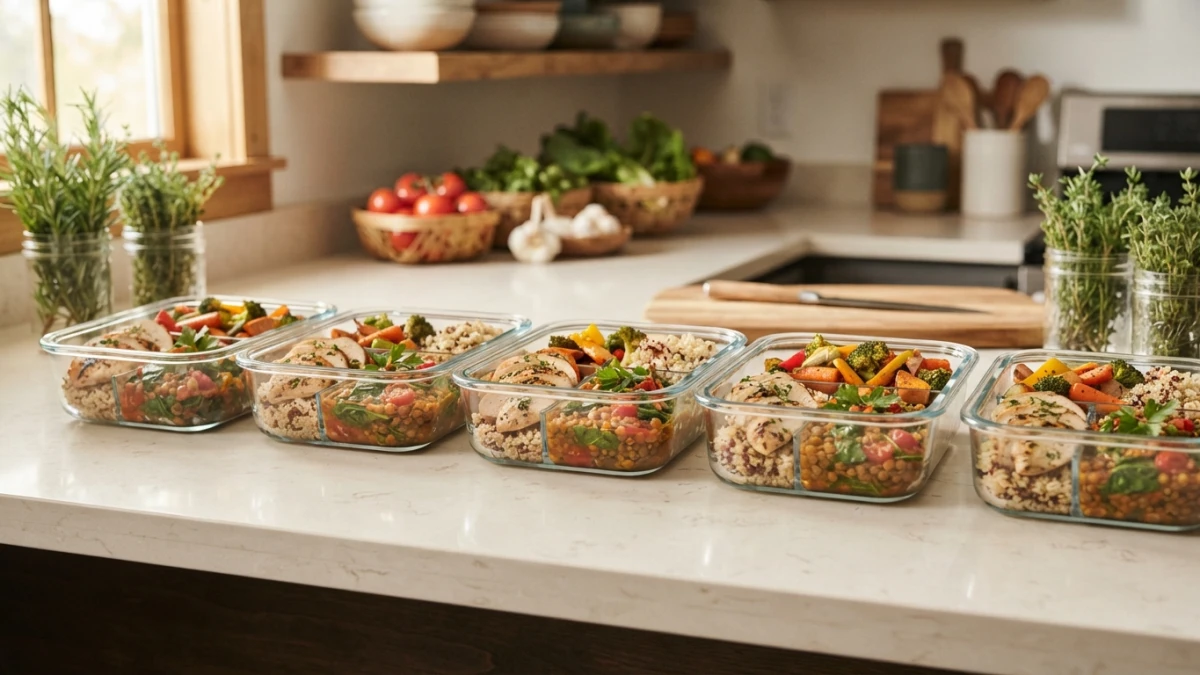
Meal prep means spending two or three hours on one fixed day of the week cooking in large batches, portioning the food, and storing it so you have meals ready from Monday to Friday. It is not a diet and it does not require complicated recipes: it is a system for eating home-cooked, varied, healthy food every day without cooking daily. If you have ever thrown wilted vegetables in the trash or ordered takeout because you had no time, this guide is for you: weekly plan, base recipes, storage rules, and mistakes to avoid.
What meal prep is and why it works
Meal prep, literally "meal preparation", is the practice of preparing several meals in advance, all at once. Batch cooking is the technique that makes it possible: instead of cooking one recipe for a single meal, you cook large amounts of two or three dishes and divide them into individual portions.
The benefits are immediate. You save time during the week: the two or three hours on Sunday become fifteen minutes a day of grab, reheat, and eat. You reduce food waste, because you shop and cook with a plan instead of on impulse. You control portions and ingredients, which matters if you are watching what you eat. And above all, you remove the daily decision: when the food is already ready, the temptation to order takeout or fall back on ultra-processed food drops dramatically.
This method works for almost anyone: busy professionals, families who want to eat dinner together without stress, athletes with specific nutrition goals, and anyone who wants to eat home-cooked food without cooking every day.
The weekly plan in 4 steps: menu, shopping, cooking, and portioning
Step 1: design a menu of 4 to 5 meals. You do not need to cook for all seven days. Choose dishes that store well and can be combined with each other, and leave room to eat out or improvise on some days.
Step 2: make your shopping list from the menu. Buying only what you need prevents waste and impulse spending. Pick a fixed cooking day: Sunday afternoon is the classic choice, because it leaves the week organized from the start.
Step 3: cook in parallel. Use the oven and the stovetop at the same time: while a stew simmers, roast vegetables and boil rice. That way, two or three hours go much further.
Step 4: portion as soon as the food is lukewarm. Divide each dish into individual containers and label them with the name and the date before putting them in the fridge or freezer.
The best base recipes for batch cooking
Not all dishes store equally well. The ones that hold up best for 3 to 4 days in the fridge are legume stews, curries, creamy rice dishes, soups and creams, stewed or roasted shredded meats, and pasta with sauce. On vidarecetas you will find several recipes made for this: a spicy lentil soup, red curry chicken with bamboo shoots, a plov (spiced rice), a vegetable cream, or an Italian pumpkin lasagna that also freezes wonderfully. If your plan includes bread, seed bread is a great ally: sliced and frozen, it thaws in minutes.
As for ingredients, tomato sauces, broths, cooked legumes, stewed meats, bread, and sautéed vegetables freeze well. Fresh dairy, mayonnaise, lettuce, and french fries, on the other hand, do not survive the freezer: they separate, split, or lose all their texture.
A very useful strategy is to cook loose components instead of finished dishes: a protein (chicken, legumes, or eggs), a side (rice, quinoa, or roasted vegetables), and a sauce. That way you mix them differently every day and the menu does not get boring halfway through the week.
Fridge storage: the 3-4 day rule
According to official food safety guidelines, cooked food keeps for a maximum of 3 to 4 days in the fridge at 4 °C (40 °F) or below (the canonical reference is the leftover safety guide from the U.S. Department of Agriculture). From the fourth day on, even if the food still looks fine, the risk of food poisoning rises significantly.
Store everything in airtight containers and always label with the contents and the date: it is the only way to know what is in the fridge and since when. Anything you will not eat within the next three days goes straight to the freezer. And one golden rule: never reheat the same dish more than once, so divide into individual portions before storing and heat only what you are going to eat.
If you want every ingredient to last longer and make better use of the space, our guide to organizing your fridge by zones and temperature will come in handy.
Food safety: the 2-hour rule and fast cooling
The most important meal prep rule is the 2-hour rule: cooked food must not sit at room temperature for more than two hours (just one hour if it is very hot). After that time, bacteria start multiplying rapidly, and cooling the food later does not eliminate the risk.
To cool quickly, divide the food into small portions or wide, shallow dishes, which lose heat much faster than a large pot. Never put hot pots in the fridge: they raise the temperature of everything else and compromise the whole batch. And when reheating, make sure the center of the food is piping hot, around 74 °C (165 °F) for meats and poultry, to kill any bacteria that may have grown during storage.
How to reheat each dish without ruining it
Each type of dish has its ideal method. Stews, soups, and curries: in a saucepan over medium heat with a splash of water or broth to bring back the texture; the microwave works too, but stir halfway through. Rice: with a few drops of water and covered, or stir-fried in a pan with a little oil; never reheat rice more than once, because reheated rice is one of the most common causes of food poisoning. Bread and vegetables: the oven or the pan brings back the crunch much better than the microwave, which leaves them rubbery. And whenever you can, thaw in the fridge overnight instead of at room temperature.
Common meal prep mistakes (and how to avoid them)
- Cooking too many days of the same food. If you are already bored by Monday, you will quit the method by Wednesday. Plan variety and combinable dishes from the start.
- Storing food hot or covered without cooling it first. This creates condensation, speeds up spoilage, and raises the temperature of the fridge. Always cool before covering.
- Forgetting to label and freezing without order. Without dates and without rotation (first in, first out) you will end up throwing food away or eating something past its prime without knowing it.
Frequently asked questions about meal prep
How long does prepared food last in the fridge? 3 to 4 days maximum; anything you will not eat within that time goes to the freezer. And in the freezer? 2 to 3 months depending on the dish, always well labeled and in airtight containers.
Is it healthy to cook so far in advance? Yes. Freezing does not alter the nutritional value of food; at most it changes the texture of some items. Besides, when you cook, you control the amount of salt, oil, and sugar in every dish.
How many hours do I need on Sunday? With a simple, planned menu, 2 to 3 hours are enough to leave 4 or 5 meals ready. The key is organizing the kitchen in parallel: oven and stovetop at the same time, and using cooking times to wash and portion.
Tip: start with a 3-day menu and scale up
The most common mistake for meal prep beginners is trying to prepare seven full days of food in the first session. Start small: plan three meals for the workweek, pick two recipes you already master, and a calm afternoon. Once you see that the system works and the food keeps perfectly, add more dishes and more days. Meal prep is not a cooking marathon: it is a habit built week by week, and consistency matters more than quantity.