How to organize your fridge: zone map and temperature guide
 By
Diego Cortés
By
Diego Cortés
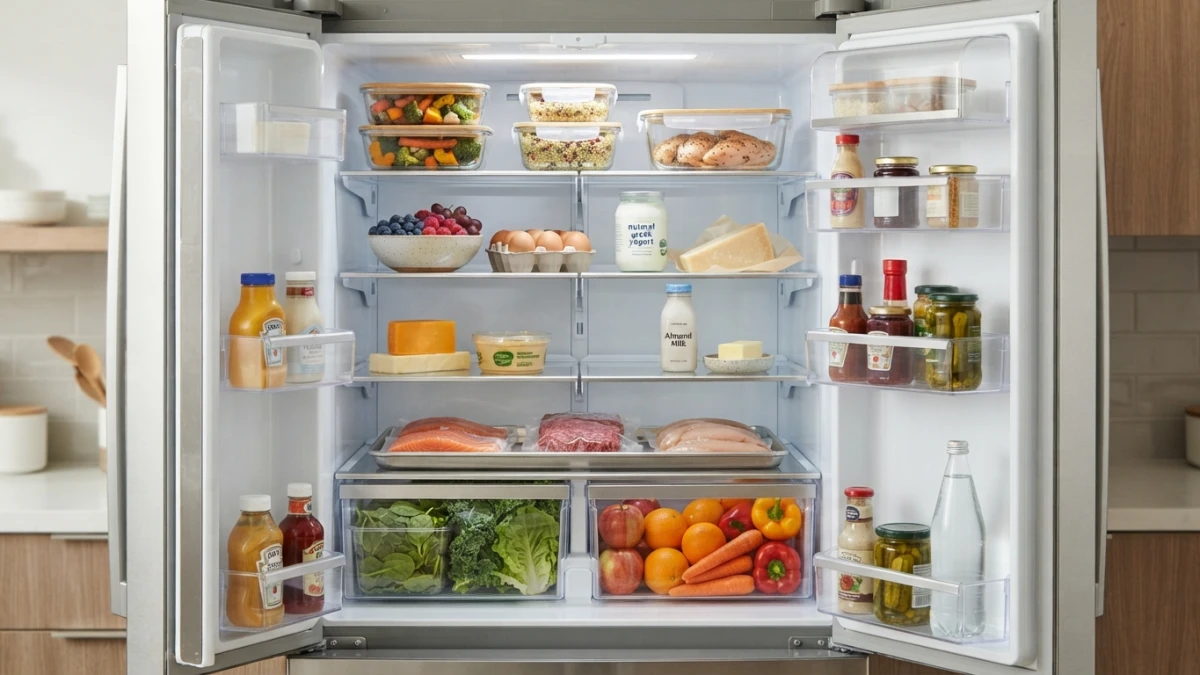
Milk in the fridge door, forgotten leftovers, and vegetables that go bad after two days? Your refrigerator is not the problem: each zone has a different temperature, and almost nobody takes advantage of it. Learning how to organize your fridge by zones is the easiest way to make food last longer, throw away less, and keep your energy bill down.
The 6 mistakes that make you throw away the most food
Before reorganizing anything, it helps to know what you are doing wrong. The first mistake is keeping milk and eggs in the door: it is the warmest, most unstable zone of the fridge and it speeds up their spoilage. The second is overloading the fridge: cold air cannot circulate and the temperature rises in the center, right where most of the food is. The third is storing things without labels or dates: nobody knows what is there or since when, and leftovers are forgotten until they smell.
The other three mistakes are subtler. Putting warm food in forces the compressor to work harder and warms everything else. Opening the door without thinking and leaving it open while you decide what to grab wastes the accumulated cold. And finally, ignoring rotation: the food that expires first stays hidden behind the newest groceries.
The right temperature: 4 °C in the fridge and -18 °C in the freezer
The ideal refrigerator temperature is between 3 and 5 °C (37-41 °F): it slows bacterial growth without driving up consumption. Going lower does not preserve better and does cost more electricity; going higher puts the most sensitive foods at risk. In the freezer, the standard is -18 °C (0 °F).
One detail almost nobody checks: the number on the dial does not always match the real temperature inside. An inexpensive fridge thermometer tells you the truth. You should also check the temperature after a big grocery run and on very hot days, the two moments when it rises the most.
The zone map: how to organize your fridge by temperature
The golden rule is that every shelf has its own temperature and every food, its own spot. The top shelf, where the cold is gentlest, is for ready-to-eat food: leftovers, yogurt, opened deli meats, and prepared sauces. The middle shelves keep a steadier cold: that is where dairy, cheese, and eggs belong.
The bottom shelf is the coldest zone and is reserved for raw meat and fish, which should also sit in containers or trays so no juice drips onto other foods. And a safety tip: never place raw meat above anything ready to eat; if it drips, it contaminates what is underneath.
The door: the "no" zone
The door is the part of the fridge with the most temperature fluctuation, because it suffers with every opening. That is why it is the "no" zone: no milk, eggs, or fresh cheese, which need constant cold to stay safe.
Keep it for the things that tolerate change: drinks, sauces, jams, opened preserves, and butter. This way, the items you use often are also within reach, and the door stays open for less time because you know exactly where everything is.
Crisper drawers: humidity for vegetables, air for fruit
The drawers keep high humidity, which preserves vegetables and leafy greens better, since they wilt in a dry environment. If your drawer has a humidity regulator, raise it for vegetables and lower it for fruit.
There is an important nuance: some fruits emit ethylene, a gas that speeds up the ripening of whatever is near them. Apples, bananas, and tomatoes should be kept away from sensitive vegetables like lettuce or broccoli, which spoil sooner when exposed to that gas. Separating emitters from sensitive produce is one of the keys to organizing your fridge so everything lasts.
The 5-step organization plan (once a month)
Once a month, spend half an hour resetting your fridge. Step one: empty it completely. Step two: clean shelves and drawers with water and baking soda, which disinfects and removes odors without leaving chemical residue. Step three: check expiration dates and throw away, in one go, everything that is no longer good.
Step four: assign fixed zones to each food group and use transparent, labeled containers with name and date, so everything is visible at a glance. Step five: apply first in, first out rotation: what expires soonest always stays in sight, at the front. With five minutes of weekly maintenance, the order keeps itself.
The fridge in summer: cold without overspending
In summer the fridge works harder, but turning the thermostat down is not the solution: 4 °C (39 °F) is always enough. What drives consumption up is the outside heat, not the setting, so it is better to attack the causes: leave space between foods so air can circulate, keep the back and the door seals clean, and do not put in hot food or warm leftovers, which force the compressor to work overtime.
It also helps to fill the fridge evenly: a nearly empty fridge cools worse and uses more energy, because the cold air escapes when you open the door. If you have little to store, a few bottles of water help maintain thermal mass.
FAQ about organizing your fridge
Where should I keep bread, tomatoes, or eggs?
Bread gains nothing from the cold: it goes stale faster; keep it in a cool, dry place instead. Tomatoes lose aroma in the fridge; keep them out, at room temperature. And eggs belong on a middle shelf, never in the door, so they do not suffer temperature swings.
How often should I clean the fridge, and with what?
A deep clean once a month, plus a quick wipe of spills as soon as they happen. Warm water with baking soda or vinegar is enough: cheap, chemical-free, and odor-removing.
How can I tell the temperature is right without buying a thermometer?
Put a glass of water on a middle shelf: by the next morning it should be cold but not frozen. If it freezes, the cold is excessive; if it is lukewarm, it is not enough. It is an approximate check, but it guides you better than the number on the dial.