Cooking with kids: real benefits, age-by-age tasks and first recipes
 By
Diego Cortés
By
Diego Cortés
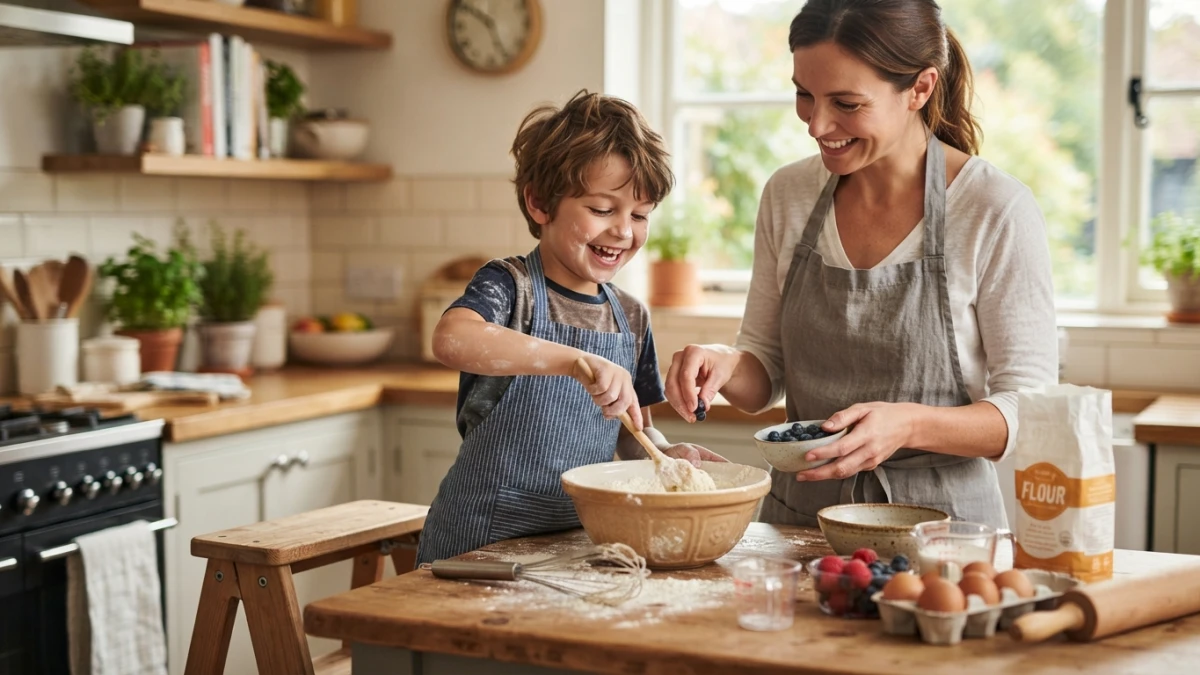
Does your kid only enter the kitchen to ask for a snack? Getting them involved improves their eating habits, independence and self-esteem, and you do not need to be a chef: just a simple recipe, a sturdy stool and a willingness to get messy.
Why cooking with kids is worth it (even when it takes twice as long)
Children who help in the kitchen eat more vegetables and accept new foods more readily. It is not a coincidence: when a dish contains a bit of their own effort, they feel proud of it and want to taste it. The explanation is simple and has to do with attachment to what we create: the bell pepper they cut into strips themselves is no longer "the bell pepper", it is "my bell pepper".
Cooking is also a complete activity. It trains fine motor skills through peeling and cutting, reading comprehension by following a recipe, math when measuring and counting, and problem-solving when something goes wrong and needs improvising. All of this happens in a real context, with a tangible result at the end: dinner. And above all, it is quality family time, with conversations, laughter and memories that link healthy food to something fun.
Benefits that show up outside the kitchen
What happens in the kitchen does not stay in the kitchen. Children who cook from an early age tend to eat a more varied diet as adults, and they develop a more relaxed relationship with food: they see it as something you prepare and enjoy, not just something that appears on the plate.
They also gain autonomy and confidence. Seeing the result of their effort on the table builds self-esteem in a very concrete way: "I made this". And they learn real responsibility: following steps, waiting for turns, taking on small tasks and seeing them through. These skills transfer directly to school and to life.
Ages 2 to 4: exploring with the senses
At this age the kitchen is a sensory lab. Do not expect perfect results or complex recipes: the point is for them to touch, smell and taste ingredients. Safe and fun tasks include washing fruits and vegetables, tearing lettuce with their hands, mixing in a large bowl with a wooden spoon and sprinkling flour or spices.
Supervision must be constant. Use plastic or silicone utensils, never knives, and keep little ones away from stoves and hot surfaces. The goal of this stage is not technique, it is connecting the kitchen with something pleasant.
Ages 5 to 7: hands-on with help
This is when kids become genuinely useful. Children this age can measure ingredients with cups and spoons, pour liquids, whisk, flatten dough with their hands and peel with a peeler. They can also start using a blunt-tipped knife to cut soft ingredients like banana, cheese or bread.
It is the perfect time for organization tasks: setting the table, putting away groceries and cleaning up their spills (almost) on their own. These small responsibilities give them a sense of belonging that no instruction can replace.
Ages 8 to 12: cooks under supervision
By age 8 they can read a full recipe, prepare simple dishes from start to finish and weigh with a kitchen scale. This is the time for their first contact with the stove and the oven, always under direct adult supervision: teaching them to use the oven or the pan safely is better than letting them figure it out alone as teenagers.
They can also plan the family menu, invent variations of recipes they already master and cook for the whole family once a week. The kitchen becomes a space for creativity and trust.
Kitchen safety: non-negotiable rules
Before starting, set the golden rules and repeat them every time: wash hands before cooking and never touch the stove, oven or knives without permission. Adapt the environment to the child's size: a sturdy stool, fitted sleeves, pan handles always turned inward and an apron they like.
And teach them what to do in case of a small cut or burn before it happens, calmly and without scaring them. Knowing there is a plan reduces fear and makes children take the kitchen seriously.
First recipes so they don't get frustrated
Choose recipes of twenty minutes or less and accept that the result will not be perfect: the process is what matters. To start, no heat needed: fruit skewers, salads, sandwiches, yogurt dips and fruit salad. With occasional adult help: oat and banana cookies, yogurt cake, mini pizzas and pancakes.
Here at Vida Recetas you will find recipes made for cooking with the family, with simple ingredients and clear steps a child can follow with help.
How to make it a routine without stress
Set one family cooking day per week and let the child choose the recipe between two options: feeling they have a choice is half the job done. Split tasks by age and slowly raise the difficulty to keep their interest.
Frequently asked questions
What if they don't want to taste what they cooked? That is normal. Do not turn tasting into a battle: let them cook, smell it, and take a bite if they want. Repeated exposure without pressure works better than any argument.
What if they get bored halfway through the recipe? Have a plan B: a bowl of water and a strainer, or switch them to another task. Sometimes the real problem is that the task was too long for their age.
At what age can they use the oven? It depends on the child, but between 8 and 10 they can put trays in and out with oven mitts if an adult supervises every move. Direct fire, always later.