Filipino Christmas Food: What Is Served at Noche Buena
 By
Diego Cortés
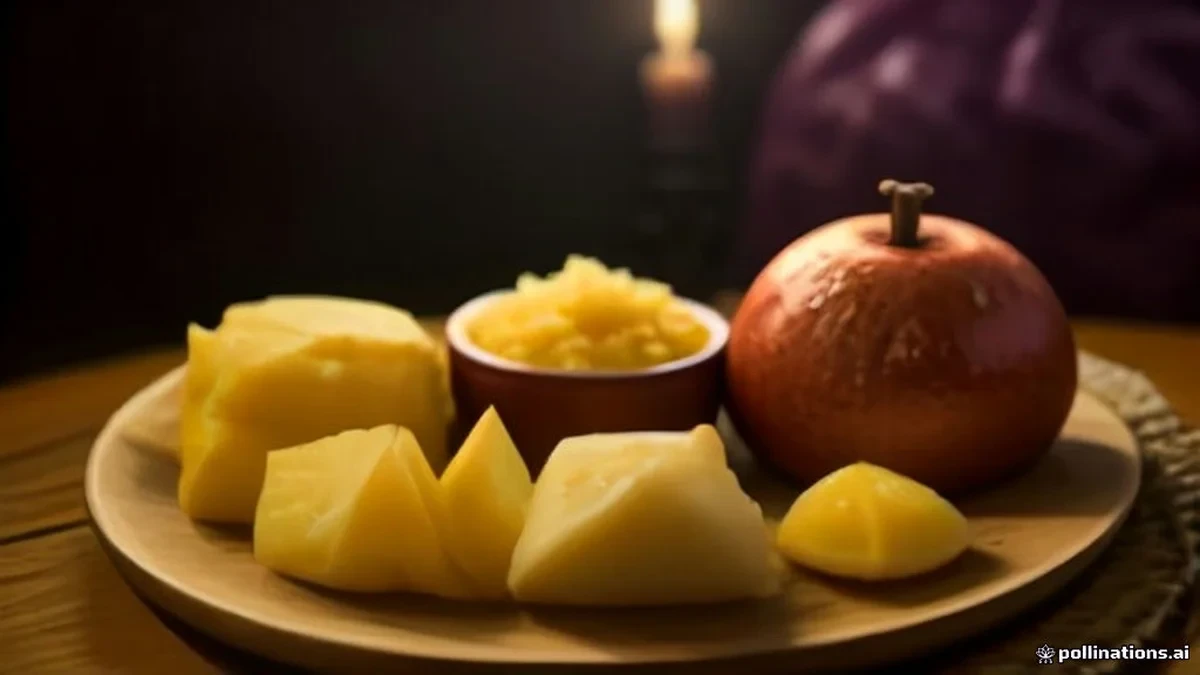
Filipino Christmas food is served after midnight on the 24th, once the last Mass ends, and half its dishes carry Spanish names: hamon, queso de bola, morcón. It is a dinner of meat and rice where turkey never appears.
The short answer: a midnight dinner with Spanish names
In the Philippines the dinner on the 24th is called Noche Buena and it starts after midnight Mass: people come back from church, sit down and eat. The table mixes strong savoury dishes (glazed ham, lechón, embutido, morcón) with noodles and rice, and ends in very sweet desserts. There is no turkey at the centre and no leafy salads, and nobody expects them.
What surprises a Spanish-speaking reader is the obvious thing: almost every name on the table is Spanish. Noche Buena, hamon, queso de bola, relyeno, morcón, embutido, ensaymada. The language kept them for centuries even though English is the country's other official language, and today they are used as they are, in homes and on supermarket signs in December.
Why Filipino Christmas runs from September to January
The ber months (September through December) open the season: carols and the first decorations appear in September. The celebration does not end on the 25th; it continues with the feast of the Santo Niño on the third Sunday of January and, in some families, until 2 February.
The local word is Pasko, which comes from the Spanish formula pascua de navidad and was shortened over the centuries. Christmas Eve is Bisperas ng Pasko and Christmas Day is Araw ng Pasko. There is a second date as well: the 31st is Media Noche, with twelve round fruits for good luck, noodles and sticky rice. The 24th and the 31st are two different dinners, not one long party.
Simbang Gabi: nine dawn Masses and a street that smells of burnt banana leaf
From 16 to 24 December there are nine Masses at dawn, many of them at 4:30 in the morning. This is Simbang Gabi, and popular belief says that completing all nine grants a wish. The series ends with the midnight Misa de Gallo on the 24th, just before dinner.
The background is documented: the practice appears as Misa de Aguinaldo from the 17th century and was recorded by the Jesuit Francisco Ignacio Alcina in 1668. It came from the Spanish tradition of Advent morning Masses held before dawn.
Half the dishes in this article are explained by what happens when people leave church. Before it gets light, the street fills with stalls selling hot bibingka and puto bumbong with thick chocolate or ginger tea. You eat standing up, with the banana leaf still warm in your hand, and you buy twice because the first one is gone before you get home.
Bibingka and puto bumbong: the two cakes sold only in December
Bibingka is a rice cake baked in a clay mould lined with banana leaf, with coals above and below: toasted edge, spongy middle. The traditional batter is soaked, slightly fermented glutinous rice, topped with salted egg and cheese and finished with butter, sugar and grated coconut. The smell of scorched leaf is the signature of the stall.
Puto bumbong is the opposite in colour and technique: purple glutinous rice (pirurutong) mixed with white glutinous rice, soaked overnight and steamed inside bamboo tubes. It is served on banana leaf with butter, muscovado sugar and grated coconut. The name says it: puto is the steamed cake and bumbong the bamboo tube.
Outside the country both have relatives that make them easier to understand: Indonesian kue putu, green from pandan leaf, and South Indian and Sri Lankan puttu, which is savoury. Without pirurutong, many diaspora stalls use ube flour or colouring. The site has the bibingka recipe for anyone who wants to make it at home.
What is actually on the Noche Buena table
The ham is glazed with brown sugar and pineapple, and the format most people buy is hamon de bola: round, boneless and fully cooked, needing only a glaze in the oven. Queso de bola is the Dutch Edam ball in red wax, served on a board with crackers or bread. Lechón is the whole roast pig, with Cebu as the country's most famous version.
Noodles are never missing, for a specific reason: long pancit strands are linked to long life, a Chinese inheritance. On the table, pancit sits next to lumpia, embutido (a steamed meat roll), morcón (a stuffed roll), relyeno (stuffed chicken) and festive rice dishes such as bringhe or paelya. It is a table of many small dishes, not one huge centrepiece.
| Dish | What it is | Its role at dinner |
|---|---|---|
| Glazed ham | Cooked boneless leg, glazed with brown sugar and pineapple | Centre of the table; bought ready and finished in the oven |
| Queso de bola | Dutch Edam in a red-wax sphere | Starter and bread companion |
| Lechón | Whole roast pig with crackling skin | Party dish, ordered in advance |
| Pancit | Long noodles stir-fried with vegetables and meat | Long life; never absent from a celebration |
| Lumpia and embutido | Fried rolls and a steamed meat roll | Finger food before the main dishes |
| Bibingka and puto bumbong | Rice cakes, baked and steamed | Pre-dawn dessert with thick chocolate |
Then there is the dish that confuses visitors: Filipino spaghetti, an adaptation of bolognese with a sweet sauce, sweetened with brown sugar, banana ketchup or condensed milk, topped with sliced hot dogs, ground meat and grated cheese. It is a children's party dish and a Noche Buena dish. An honest warning: to a European palate it tastes like savoury dessert, and you will still go back for more.
The sweet ending: flan, fruit salad and thick chocolate
Leche flan is the yolk flan, denser than the Spanish original; fruit salad is made with canned fruit, condensed milk and cream. Behind them come ube halaya (purple yam jam), maja blanca, suman and tupig, sticky-rice parcels cooked in leaf.
The hot drink is what is missing from most Western tables: tsokolate, thick whipped tablea chocolate, and salabat, ginger infusion. They are served with the rice cakes at dawn, while your body is still in the street and not yet at the table.
One detail closes the logic of the night: almost everything can be bought ready-made. The ham, the cheese, the lechón by order, the flan, the fruit salad. Home cooking is reserved for the pancit, the embutido and the rice dishes. Noche Buena is a feast of orders and of gathering, not of stoves burning all afternoon.
Filipino Noche Buena against the Chilean dinner
In Chile the centre is turkey and the dessert is pan de pascua with cola de mono, as explained in the Chilean Christmas Eve menu. In the Philippines the centre is ham and lechón, and dessert arrives in several dishes at once. Chilean pan de pascua has no direct equivalent on that table: rice cakes take its place.
What they do share is the important part: dinner happens at night and after church, the name Noche Buena is the same, and on both tables the main dish is a roast that is bought or ordered for the occasion.
To build it outside the Philippines, queso de bola is simply Edam; for the ham, a cooked ham glazed with brown sugar and pineapple juice works; banana leaves can be replaced with plantain leaves or parchment paper; without pirurutong, ube flour is the accepted substitute, and without lechón, a well-roasted pork shoulder does the job.
Frequently asked questions
What is Noche Buena in the Philippines?
It is the dinner on 24 December, served after midnight Mass. For most Filipino families it is the most important meal of the year, and it brings together glazed ham, queso de bola, lechón, noodles and rice cakes.
What is the main dish of Filipino Noche Buena?
Glazed ham, and in households that can afford it, lechón. The boneless, fully cooked hamon de bola is the most common format because it only needs glazing in the oven.
Why is ham and queso de bola eaten at Christmas in the Philippines?
For commercial and technical reasons. Edam aged well and travelled well by ship, and ham arrived cured and ready to serve. Both were luxury goods that became affordable in December.
What is puto bumbong and why is it purple?
It is a glutinous rice cake steamed inside a bamboo tube. The colour comes from pirurutong, a purple to almost black glutinous rice mixed with white glutinous rice.
Is the Filipino Christmas dinner on the 24th or the 25th?
The big dinner is on the 24th, after midnight. The 25th is a day of visits, leftovers and family; the main table already happened the night before.
Can you do a Filipino Noche Buena without lechón?
Yes. Lechón is the showpiece, but the dinner works with glazed ham, pancit, lumpia, embutido and rice dishes. Many urban families celebrate without it.
What is eaten on 31 December in the Philippines?
Media Noche is a separate dinner, not a repeat of the 24th. Twelve round fruits go on the table, along with noodles for long life and sticky rice dishes; at midnight people make noise with firecrackers and horns.