Yule Log vs. Swiss Roll: What Is the Difference
 By
Diego Cortés
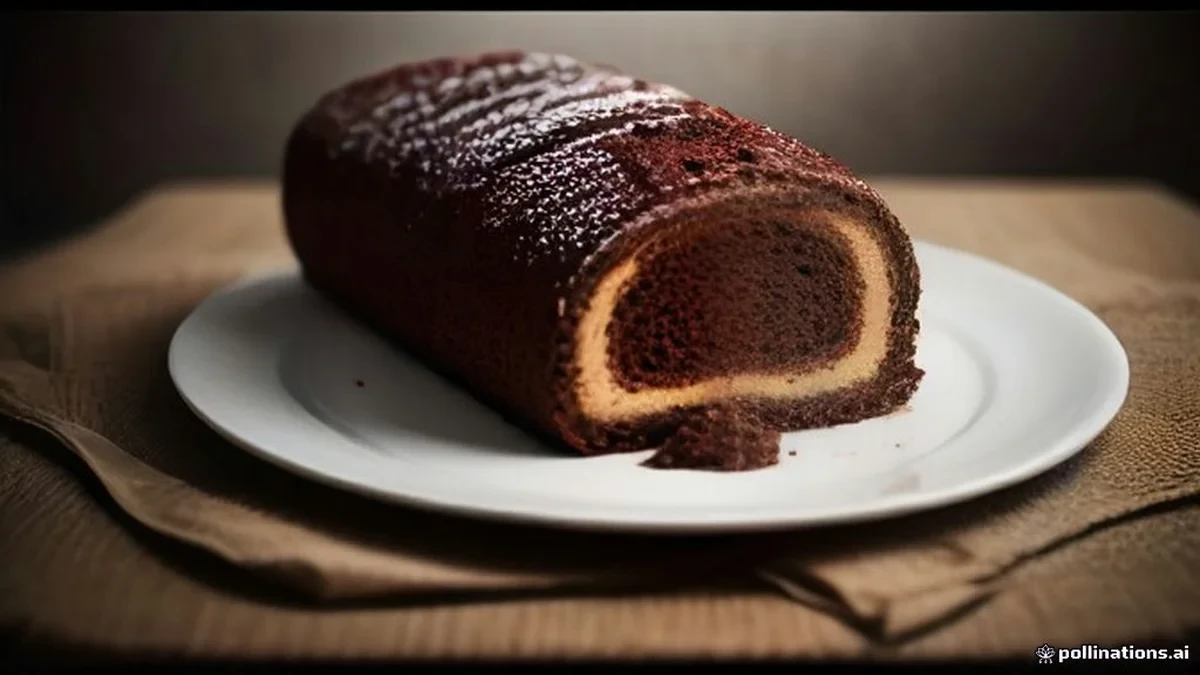
A yule log and a Swiss roll are the same thin sponge, rolled up, wearing two outfits that look nothing alike on the table: one is a holiday dessert under a coat of chocolate, shaped to look like a piece of wood; the other is the everyday roll, filled with jam and dusted with sugar.
The short answer: one sponge, two desserts
Both are flat sponge cake, baked thin and rolled while still warm around a cloth. The difference is not in the batter but in what goes inside, how it is covered, and which day it shows up.
The occasion. A yule log belongs to Christmas Eve and the party table. A Swiss roll is everyday baking: birthdays, Sunday coffee.
The filling and the coat. A yule log takes creams that survive the fridge and can be whipped: chocolate ganache, buttercream, chocolate mousse. A Swiss roll takes something spreadable and sweet that will not run, which is exactly what jam or dulce de leche is.
The finish. The log gets its bark scored with a fork or a comb, the ends trimmed on the diagonal, and a dusting of icing sugar for snow; the roll is only dusted. A fourth difference: the log is served cold and sliced about two centimetres thick so the cream cuts clean, while the roll is eaten at room temperature.
A log in the fireplace: where the yule log comes from
Before it was a cake, the yule log was wood. Across much of Europe, a large log, preferably from a fruit tree, was burned in the hearth for the winter solstice and had to keep burning for days, three at the very least. It was doused with wine, oil or water so it would last, and sometimes lit with the ashes of the previous year's log. Depending on the region, the oldest or the youngest member of the household set it alight.
The ritual had a different name in every region, which shows how widespread it was: Yule log in the British Isles, cacho fio or calignaou in Provence, tizón de Nadal in Galicia, toza in Aragon and tió de Nadal in Catalonia. The Catholic Church folded the custom into Christmas, and the log became a symbol of the season. The rite is summarised in the yule log cake entry on Wikipedia.
From hearth to pastry shop: when the log became a cake
There is no single date and no undisputed inventor. The reason is clear enough: once closed stoves replaced the open hearth in the nineteenth century, the log had nowhere to burn, and the custom moved to the table as a dessert shaped like one.
French sources place the change around 1870 and spread the credit across three recurring candidates: an apprentice at a chocolate shop in Saint-Germain-des-Prés around 1834; the pastry chef Bonnat, in Lyon, with a frozen log of chocolate ganache in 1860; and the most widely repeated claim, a recipe for marzipan filled with ice cream and covered in fondant published by Pierre Lacam in 1898. Treat it as a disputed origin, not a settled fact.
That frozen origin explains the modern log: it was born as a cold dessert, not a baked one, which is why the classic version is filled with cream or mousse and finished with shaved chocolate standing in for bark. The bûche de Noël recipe shows that logic in practice, and the yule log cake with a full bark finish takes the decoration further.
The Swiss roll: the everyday version of the same cake
A Swiss roll is a thin sponge, still warm, rolled around a cloth with jam, cream or dulce de leche and finished with a dusting of sugar. It shows up at birthdays or with afternoon coffee, not at a holiday dinner: the fast version of a rolled cake, assembled in under an hour.
The same dessert carries a different name in every country. In Chile it is called brazo de reina, also used in Colombia, and it is filled with manjar, the local dulce de leche; the English-speaking world knows it as a Swiss roll or a jelly roll, Spain calls it brazo de gitano, Argentina says arrollado, the Philippines has the brazo de Mercedes, and several Latin American kitchens call it pionono.
The etymology is usually told as history when it is not. Explanations for the "arm" (the shape of the roll, the way it is carried) and for the adjective are theories, and in Spain the older variant "egipciano" still circulates. What is documented is that the older version was topped with crema española, a custard of milk, eggs, sugar and starch. For a holiday take without leaving the format, the turrón and chocolate roll is the short route.
The differences are in the technique
The choice comes down to technique, not vocabulary. The filling: a yule log needs creams that hold up cold and can be whipped, while a Swiss roll needs something spreadable that will not run. The finish: the log gets its bark scored and is decorated with meringue mushrooms or icing sugar; the roll is only dusted. Time and cold: the log needs hours in the fridge so the cream firms up, while the roll is filled and eaten the same day.
| Yule log | Swiss roll | |
|---|---|---|
| Occasion | Christmas Eve, party table | Birthday, afternoon coffee |
| Filling | Ganache, buttercream, mousse | Jam, cream or dulce de leche |
| Coating | Chocolate with scored bark | No coating, just icing sugar |
| Service | Cold, straight from the fridge | Room temperature |
| Slices | About 2 cm, hot clean knife | Thicker slices |
| Make ahead | Yes, assembled the day before | Assembled and eaten same day |
How to roll a yule log that does not crack
The technique is not hard, but it forgives very little. The sponge is spread thin, baked briefly and rolled warm inside a cloth so it learns the shape; if it cools flat, it cracks the moment you force it.
The same mistakes come up every time: a dry sponge because it stayed in the oven too long, a filling too soft to carry the weight of the roll, and impatience with the unmoulding. The safe order is fill, roll, chill, then coat.
When serving, cut slices about two centimetres thick, wiping the knife hot and clean between cuts, and serve cold: at room temperature the cream softens and the slice collapses on the plate. To step away from chocolate, the classic yule log recipe covers the traditional finish, while the turrón and chocolate roll swaps the sponge and forgives a rushed schedule.
Which one belongs on the table
The dessert that defines a Chilean Christmas is pan de pascua, a fruit cake bought ready-made and shared with cola de mono. The yule log appears where somebody bakes or on a restaurant table, and the Swiss roll is the safe choice for a big crowd. The difference between pan de pascua and panettone is covered in the comparison of the two sweet breads.
For quantities, a simple rule works: 100 to 120 grams per person for any of them. A log for ten people lands around 1.2 kilos; if there is also fruit cake on the table, drop to 80 grams. Those are estimates.
The decision is practical: with a big table and children, one large dessert that is simple to assemble; with a small one, the log works better because it can be made the day before. Roasting times and the order of the meal are worth planning with the Christmas Eve menu guide and the turkey roasting chart.
Frequently asked questions
Is a yule log the same as a Swiss roll?
No. They share the rolled sponge, but differ in filling, coating and occasion: a yule log is a holiday dessert served cold; a Swiss roll is everyday cake.
Where does the yule log come from?
From the log burned in the hearth for the winter solstice. When stoves replaced the open fireplace in the nineteenth century, the custom moved to the table as a cake.
Why is it called bûche de Noël?
Because in French bûche means log and Noël means Christmas. It is the French name for the dessert.
Is a Swiss roll the same as a jelly roll?
Yes. Jelly roll is the American name and Swiss roll the British one, and neither says where the cake was invented.
How long does a yule log keep in the fridge?
Two to three days, tightly covered and away from strong-smelling food.
Can you freeze a yule log?
Yes, undecorated and wrapped in two layers; thaw it overnight in the fridge.
Can a yule log be made ahead?
Yes, assembled and chilled overnight. What does not hold up is fresh fruit added too far in advance.