What Chileans Eat on New Year's Eve: The 31st Menu
 By
Diego Cortés
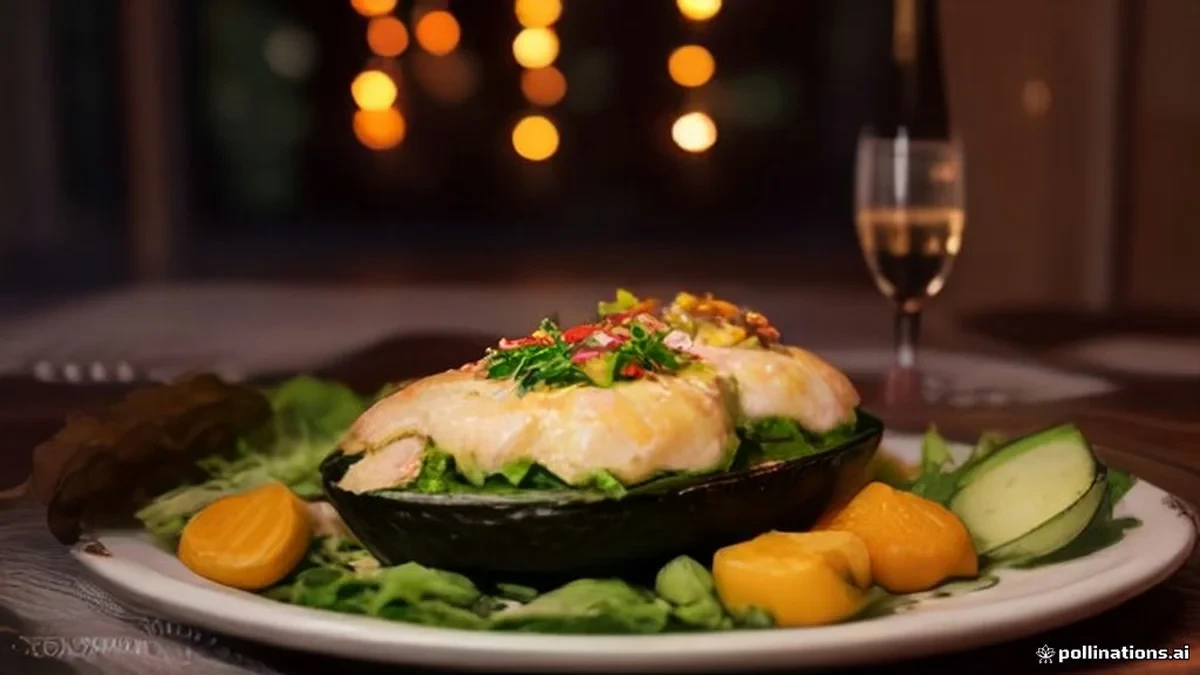
What Chileans eat on New Year's Eve answers in one line: a late dinner in high summer, without repeating the Christmas turkey. The table on the 31st is lighter and colder, with one hot main, chilled salads and a dessert waiting in the fridge.
The 31st dinner is nothing like the 24th
In Chile, the last dinner of the year starts between 10 and 11 pm, with the window open, and dessert is served with the chimes, not before. That single fact organizes everything: if dessert lands at 12:05, half the menu has to be settled the day before.
The difference from the Christmas Eve menu is not about budget but about temperature and rhythm. The 24th is a formal dinner with turkey and a long table talk. The 31st is a dinner built around waiting: the star is not the dish, it is midnight.
So the menu is assembled backwards: first you decide what is served at 00:00, then the main. The oven is used once, before 9 pm, and it does not get turned on again.
The menu that repeats across Chilean homes
The names are specific: palta reina to start, asparagus with mayonnaise as a cold starter, stuffed turkey with papas duquesas or pork loin with orange and Arabian rice as the main, and cold salads on the side. Many homes replace the turkey because it was already eaten five days earlier.
The order matters: cold starter, the hot main served once, salads dressed at the end and a chilled dessert in the fridge. No long grazing, because whoever fills up on appetizers will not be awake for the chimes.
Queen avocado explains why this menu works: it is assembled hours ahead and served cold. Same with Russian salad and the potato salad. These are dishes that improve while they wait.
| Dish | Served | Made |
|---|---|---|
| Palta reina | Starter, 10:30 pm | Early on the 31st; avocado peeled at the end |
| Russian or potato salad | With the main | The 30th, kept chilled |
| Pork loin with orange | Single main, 11 pm | Afternoon of the 31st; served warm |
| Arabian rice | Side dish | The 31st, last, so it does not stick |
| Lentil salad | Dinner and midnight | The 30th, served cold |
| Chilled dessert or mote con huesillo | With the chimes | The 30th |
| Chilean salad | With the main | The 31st, dressed when served |
If the table drops to four, the second main and the asparagus go. What stays is a cold starter, one main, two salads and dessert: the structure of a complete dinner.
No turkey: mains that take half an hour
Repeating the Christmas bird is the most common mistake and the easiest to avoid. The first exit is baked salmon with lemon: skin-on fillets, 12 to 15 minutes at 200 C, done. It is the fastest main and the one that pairs best with cold salads.
The second is baked pork loin, cooked in the afternoon and served warm, something turkey never forgives. The third is stuffed chicken for New Year's Eve. With any of the three, Arabian rice handles the side dish.
If the house is grilling, serve 250 to 300 grams of raw bone-in meat per adult and cut the salads in half, because bread and meat fill more. The coals get lit by 9:30 pm at the latest.
Improvisation is expensive: buying a turkey because it is December and serving it again on the 31st leaves two identical dinners in one week.
The midnight spoonful of lentils: where the ritual comes from
At midnight, in many Chilean homes someone eats a spoonful of lentils, or keeps a handful in a pocket, as a wish for abundance. It coexists with the grapes and with yellow underwear, and nobody is required to believe in it: it is a gesture at the table, like the toast.
The symbol has visual logic: a lentil reads as a coin because of its shape and colour. Eating them at the turn of the year is associated with the Italian table, where they are served with cotechino, and further back with a Roman practice for prosperity. It is a very widespread tradition, not a documented fact in Chile with a date.
The solution so nobody turns on the stove at 11:50 pm is a cold lentil salad made on the 30th, which provides the midnight spoonful. For reference, cooked lentils provide 116 kilocalories per 100 grams, so a level tablespoon is around 17.
The twelve grapes and the other Chilean table rituals
The mechanics are simple: one grape per chime, twelve in total, one wish for each month of the incoming year. The custom is Spanish: Madrid newspapers already described it as common in 1897, and it became popular in 1909, when winegrowers from Alicante and Murcia, sitting on a surplus harvest, funded a campaign to boost consumption. From there it spread to Chile and the rest of Latin America. The 1909 version is the most widely told, not the only explanation.
Rituals are separate from food: yellow underwear, which in Chile is given as a gift, the suitcase carried around at midnight and the first hug of the year are gestures, not recipes.
The honest part: none of these rituals changes how the food tastes. What does change the outcome is having the grapes peeled and seedless before 11:45 pm, with the glasses already out. For ten people, a generous kilo of grapes is enough, counting twelve per adult plus a margin.
The toast: what gets poured at midnight
Every drink has its hour. A pisco sour opens the evening, sparkling wine or cider arrives with the toast, and ponche a la romana is the sweet option with ice cream. The cola de mono and the pan de pascua left over from the 24th stay on the table, and that is fine.
The math is modest: about 200 millilitres per adult and one pitcher of pisco sour for four, with water and a non-alcoholic option in sight.
The detail almost nobody solves: sparkling wine glasses go in the fridge, not the freezer, and pisco sour is shaken in batches.
How much to buy per person and what to prepare on the 30th
With a grill, 250 to 300 grams of raw bone-in meat per adult; with a plated main, 200 to 250 grams of boneless fillet or loin. Add 150 grams of salads, 100 of dessert and 200 millilitres of toast drink. These are my own calculations based on portion rules, not official figures.
| Item | Per adult | For 10 people |
|---|---|---|
| Bone-in meat (grill) | 250 to 300 g | 2.5 to 3 kg |
| Boneless fillet or loin | 200 to 250 g | 2 to 2.5 kg |
| Salads | 150 g | 1.5 kg |
| Dessert | 100 g | 1 kg |
| Toast drink | 200 ml | 2 litres |
| Grapes for the chimes | 12 grapes | About 150, close to 1 kg |
The schedule splits across two days. On the 30th you cook everything served cold: the lentil salad, the mote con huesillo, the chilled dessert and the salad potatoes. The grapes also get peeled. On the 31st, the morning finishes the dessert, the afternoon dresses the salads, and by 10 pm only the main and the ice are left.
What cannot be moved earlier: Chilean salad gets dressed when served, fish goes in the oven fresh and avocado is peeled at the last minute.
Frequently asked questions
What do Chileans eat on New Year's Eve?
A summer dinner lighter than Christmas Eve: a cold starter such as palta reina, one hot main, cold salads and a chilled dessert. At midnight the lentils and the twelve grapes are added.
Why do people eat lentils at midnight?
Because a lentil reads as a coin by shape and colour, so eating them at the turn of the year is tied to abundance. It is a widespread tradition, rooted in Italy and Rome, practised in Chile as a symbolic gesture.
How many grapes do you eat and what do they mean?
Twelve, one per chime and one wish for each month ahead. The custom comes from Spain and became popular in 1909, when winegrowers from Alicante and Murcia funded a campaign to sell a surplus harvest.
Is the New Year's Eve dinner on the 31st or the 1st?
The dinner is on December 31st, between 10 and 11 pm, and the toast happens at midnight on January 1st. Lunch on the 1st is a lighter meal built from the leftovers.
What can I serve if I do not want turkey?
A main that takes half an hour: baked salmon with lemon, warm pork loin or stuffed chicken.
What should I prepare on December 30th?
Everything served cold: lentil salad, mote con huesillo, the chilled dessert, the potatoes and the peeled grapes. Fish, avocado and Chilean salad cannot be moved earlier. The 24th menu is in what Chileans eat at Christmas.