How long do vegetables last in the fridge: shelf-life chart and how to revive wilted ones
 By
Diego Cortés
By
Diego Cortés
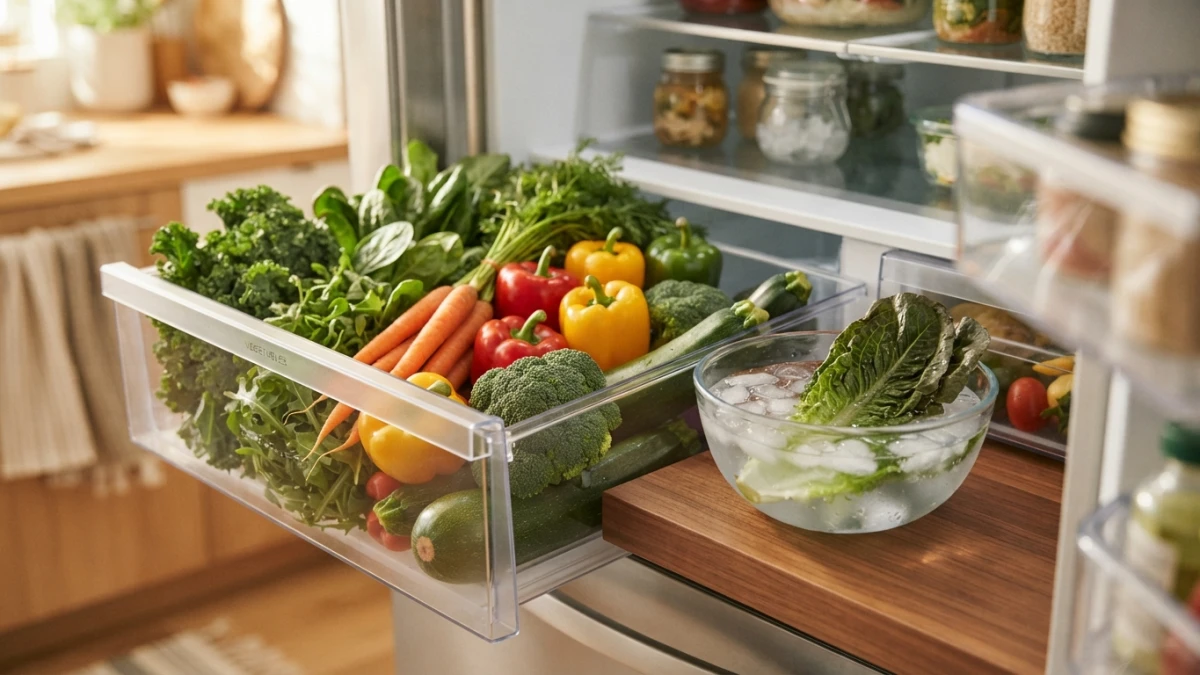
How long do vegetables last in the fridge? Spinach holds for 3 days; carrots, almost a month. This guide with a vegetable-by-vegetable shelf-life chart, tricks to revive wilted greens and a weekly anti-waste plan helps you keep your produce out of the bin.
Why some vegetables last days and others weeks
Not all vegetables age at the same pace, and understanding why lets you predict how long each vegetable lasts in the fridge without relying on memory. Three factors explain almost every difference.
Water content and exposed surface. Leaves (lettuce, spinach, chard) transpire constantly: they lose water through their whole surface and wilt within days. Roots and cabbages, by contrast, have less exposed surface and lose moisture much more slowly, which is why carrots, beets or cabbages keep for weeks.
Temperature and humidity. The steady cold of the refrigerator slows the vegetable's respiration, the process that burns its reserves and degrades it. High humidity in the crisper drawer keeps leaves turgid, but excess standing water speeds up mold. The balance lies in a drawer that is moist but with air circulation.
Ethylene and bruises. Ethylene is the ripening gas released by apples, tomatoes and bananas, and it accelerates the deterioration of sensitive vegetables such as lettuce or broccoli. On top of that, any bruise is an entry point for bacteria: a damaged vegetable spoils sooner even when properly refrigerated.
How long do vegetables last in the fridge: the vegetable-by-vegetable shelf-life chart
This is the most practical vegetable shelf-life chart for everyday use, designed for a home refrigerator at around 4 °C (39 °F). Use it as a reference and adjust to the condition of your shopping: a vegetable that arrives already damaged always lasts less.
Short-lived (2-5 days): spinach and leafy greens, lettuce, asparagus (with stems in water), mushrooms, corn on the cob and fresh peas. These are the first ones you should eat or cook.
Medium shelf life (1-2 weeks): broccoli, cauliflower, green beans, cucumber, zucchini, bell peppers and celery (wrapped in aluminum foil). Fresh herbs such as parsley or cilantro also fall into this group if you keep them in a glass of water, like a bouquet of flowers.
Long-lasting (2-4 weeks or more): carrots and beets without their greens (the leaves steal their moisture), cabbage, Brussels sprouts, turnips and leeks. Whole, unwashed carrots can last a full month in the crisper drawer.
Quick tip: keep each group in a different section of the drawer and write the purchase date on the bag. That way you know how long each vegetable lasts in the fridge without opening every bag to check.
The ones that last longer outside the fridge: the pantry preserves too
The refrigerator is not the best home for every vegetable. Some last longer, and with better texture, in the pantry: a cool, dark, well-ventilated place.
Potatoes: 1 to 2 months out of the fridge. The cold of the refrigerator turns their starch into sugar, leaving them grainy and sweet-tasting when cooked.
Onions and garlic: 1 to 3 months in a dry, airy spot, always kept away from potatoes: together, the gases they release make onions sprout and rot sooner, and they also pick up each other's smell.
Ripe tomatoes: 3 to 7 days at room temperature, away from direct sun; the fridge strips their aroma and leaves the flesh mealy. Winter squash and pumpkins, for their part, keep for 1 to 3 months in a cool corner of the kitchen.
How to revive wilted vegetables in minutes
A wilted leaf is not spoiled: it has simply lost water. With these tricks to revive wilted vegetables you get the crunch back in minutes and avoid throwing away produce that is still perfectly good.
Ice-water bath. Submerge lettuce leaves, celery, carrots or radishes in a bowl of very cold water with ice for 15-30 minutes. The cells reabsorb the water and the crisp texture comes back almost completely.
Stems in water. Cut the end of asparagus, celery or leeks and stand them upright in a glass of cold water. They rehydrate within 1-2 hours; leaving them overnight in the fridge works even better.
What cannot be revived. If the vegetable is slimy, moldy or smells sour, there is no turning back: cook it as soon as possible in soups, purees or stir-fries before it fully spoils, or discard it if the damage is widespread.
Signs it is time to freeze (and how to do it without ruining them)
Freezing is the second chance for vegetables, but it only works if you act at the right moment: at the first sign of wilting, not when they are already soft and smelly.
Blanch before freezing. Scald the vegetable for 2-3 minutes in boiling water and transfer it immediately to an ice bath. This step locks in color, texture and nutrients, and stops the enzymes that would keep degrading it in the freezer.
Freeze in flat portions. Divide the vegetable into single-meal portions in flat bags labeled with the name and date. That way you thaw only what you need and nothing gets lost at the bottom of the freezer.
What freezes well and what does not. Broccoli, green beans, spinach, bell peppers and pumpkin keep for 8 to 12 months at -18 °C (0 °F). Lettuce, cucumber and radishes, on the other hand, turn watery when thawed: better to eat them fresh.
The weekly anti-waste plan: eat first what spoils first
The best strategy to keep vegetables out of the trash is not buying less, but ordering your consumption by each group's natural expiration date.
Days 1-3: leaves and herbs. Spinach, lettuce, chard, parsley and cilantro are the most urgent. Use them in salads, smoothies or quick stir-fries during the first days.
Days 3-7: the medium ones. Broccoli, mushrooms, asparagus and green beans go in the second round. They are perfect for steamed dinners, stir-fries or sheet-pan roasts.
From day 7 on: the sturdy ones. Carrots, cabbages, bell peppers and beets wait for weeks without a problem; use them for weekend meals or long-cooking recipes.
Create an "eat me first" zone on the most visible shelf of the fridge and apply first-in, first-out rotation with every shopping trip. And set aside one weekly rescue meal (a soup, a stir-fry, an omelet or a sheet-pan dinner) with everything about to spoil: it is the easiest way to waste nothing.
Frequently asked questions about vegetable shelf life
How long does cooked vegetable last?
3 to 4 days in an airtight container in the fridge. If you think you will not eat it within that window, freeze it on the same day you cook it, while it still has its best texture.
How do I know a vegetable is no longer good?
Sour smell, slimy texture or visible mold are clear signs that its shelf life is over. When in doubt, throw it out: the risk of food poisoning is not worth saving a bag of vegetables.
Why should I not store potatoes and onions together?
Potatoes release moisture and gases that make onions sprout and rot sooner, and the smells contaminate each other. Always keep them in separate, dry, ventilated places.
Tip of the week: keep a glass of cold water in the fridge and use it as a vegetable hospital: any leaf or stem that starts to droop spends 20 minutes in ice water before cooking, and you always gain a couple of extra days of freshness.