How to store food in the pantry so it lasts longer
 By
Diego Cortés
By
Diego Cortés
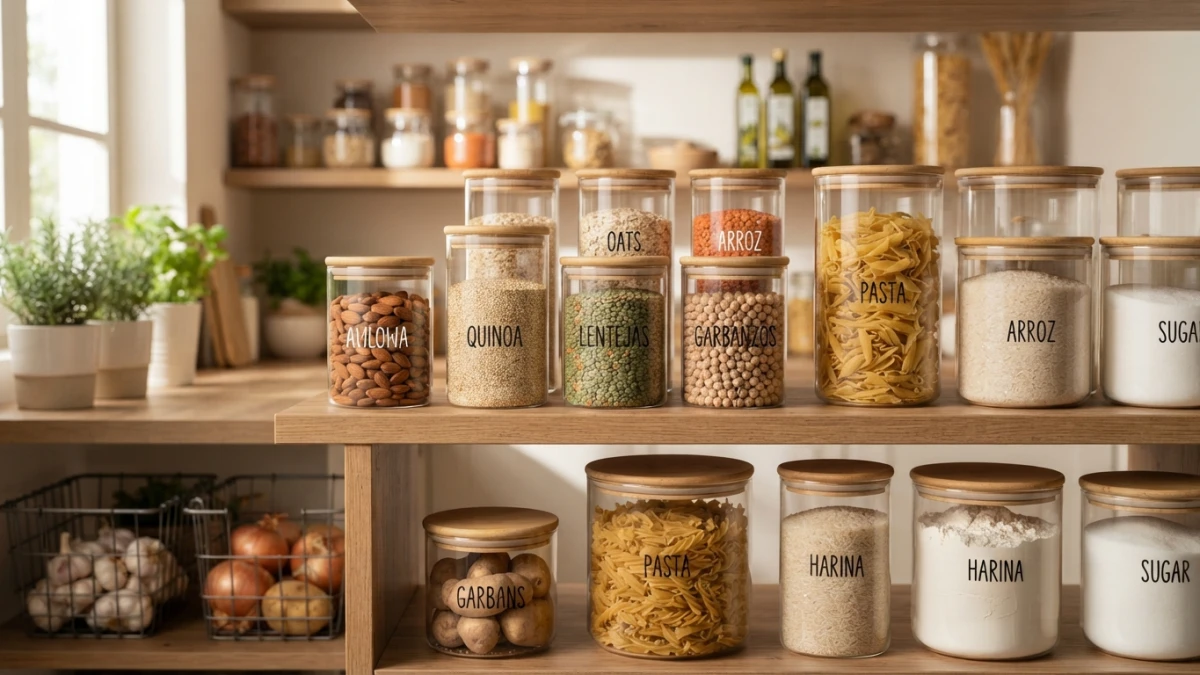
Storing food in the pantry is not complicated, but most kitchens get it wrong: weevily flour, flavorless spices and sprouting potatoes. With three basic rules and the right containers, dry goods can last for months, and some for years, without losing flavor.
How to store food in the pantry: the 3 golden rules
Everything you keep in a pantry shares three enemies: moisture, light and heat. Keeping them under control is the foundation of any dry food storage method.
- Cool: the ideal temperature is around 59-70 °F (15-21 °C). Avoid placing the pantry above the stove or next to the oven, where heat speeds up spoilage.
- Dry: moisture encourages mold, sprouting and pests. If you live in a humid area, a silica packet or a small dehumidifier makes a real difference.
- Dark: light accelerates the oxidation of fats and degrades vitamins, aromas and colors. Opaque containers or a closed cabinet protect better than open shelves.
Use airtight glass or hard plastic containers for everything that comes in a bag or a cardboard box: they keep moisture and insects out, and let you see at a glance how much is left. Label each jar with the food name and the purchase or opening date, and always rotate: first in, first out.
Flour and grains: airtight containers are non-negotiable
Flour is one of the first things to spoil if left in its original package. White flour keeps for about 6 months when well sealed and stored in a cool spot; whole-wheat flour, on the other hand, goes rancid much sooner because it keeps the oils of the wheat germ, so try to use it within 2-3 months.
White rice is one of the longest-lasting grains: stored properly, it keeps for years without losing quality. Brown rice lasts less because of the bran, which also contains fats that can turn rancid. In both cases, check your jars now and then: tiny dark specks or a fine dust at the bottom are a sign of weevils, and you should act fast, discarding the affected batch.
Legumes and pasta: the long-lasting champions
Dried legumes (lentils, chickpeas, beans) and pasta age better than almost anything: dry and in an airtight jar, they easily last over a year and keep their texture when cooked. The trick is to transfer them from the original plastic bag into sealed containers, because opened bags let moisture and odors in.
Storing properly also means organizing with a plan: keep newly bought items separate from older ones and use the oldest first. If your pantry is small and everything piles up, a clear organization system helps, like this guide to maximizing every inch of a small pantry.
Spices and herbs: they don't expire, but they fade
Spices don't go bad in the strict sense, but over time they go flat: the aroma evaporates and the flavor fades. Whole spices (peppercorns, cumin, cloves) last much longer than ground ones, which is why the best practice is to buy them whole and grind them right before use.
Keep them away from the gas stove and direct light, their two biggest enemies. The quick test to know if a spice has run its course: rub it between your fingers; if it barely smells, it's time to replace it.
Oils, nuts and seeds: watching out for rancidity
Oils, nuts and seeds turn rancid from the combination of heat, light and oxygen. Store them in a cool, dark place with the lid tightly closed, and avoid clear containers exposed to sunlight. Nuts and seeds (walnuts, almonds, chia, sesame) last much longer in the fridge inside a sealed jar, where they can keep for up to a year.
The smell and taste of rancidity are the unmistakable sign that it's time to toss them: it's not worth ruining a whole dish for a handful of doubtful nuts.
Potatoes, onions and garlic: cool, dark and ventilated
Potatoes, onions and garlic prefer a cool, dry, ventilated spot: not the fridge (the cold turns potato starch into sugar and makes them taste sweet) and not near the light (which makes them sprout and turn green). And one rule almost nobody follows: potatoes and onions should never be stored together, because they exchange gases that speed up sprouting and rot.
Check the basket every so often and remove any piece that starts sprouting or softening before it affects the rest. Green potatoes or ones with long sprouts contain solanine and should be discarded.
Canned goods and preserves: order and inspection
Cans and preserve jars last for years, but they also deserve a check: before using them, look for dents, rust or a bulging lid, signs that the contents may be contaminated. Apply the same rotation as the rest of the pantry and keep the soonest-to-expire items at the front.
Once opened, canned goods don't go back on the shelf: transfer the contents to a lidded container and refrigerate. And for fresh produce you won't get to in time, the freezer is your best ally: this guide to freezing vegetables tells you what can be frozen and for how long.
Note: one trick that prevents surprises
Keep a dried bay leaf inside your flour and grain jars: its aroma keeps weevils away without changing the taste of anything. And once a month, spend five minutes checking the whole pantry; catching a problem early saves the rest of your food and keeps one bad jar from contaminating its neighbors.