How to substitute wheat flour: gluten-free blend guide
 By
Diego Cortés
By
Diego Cortés
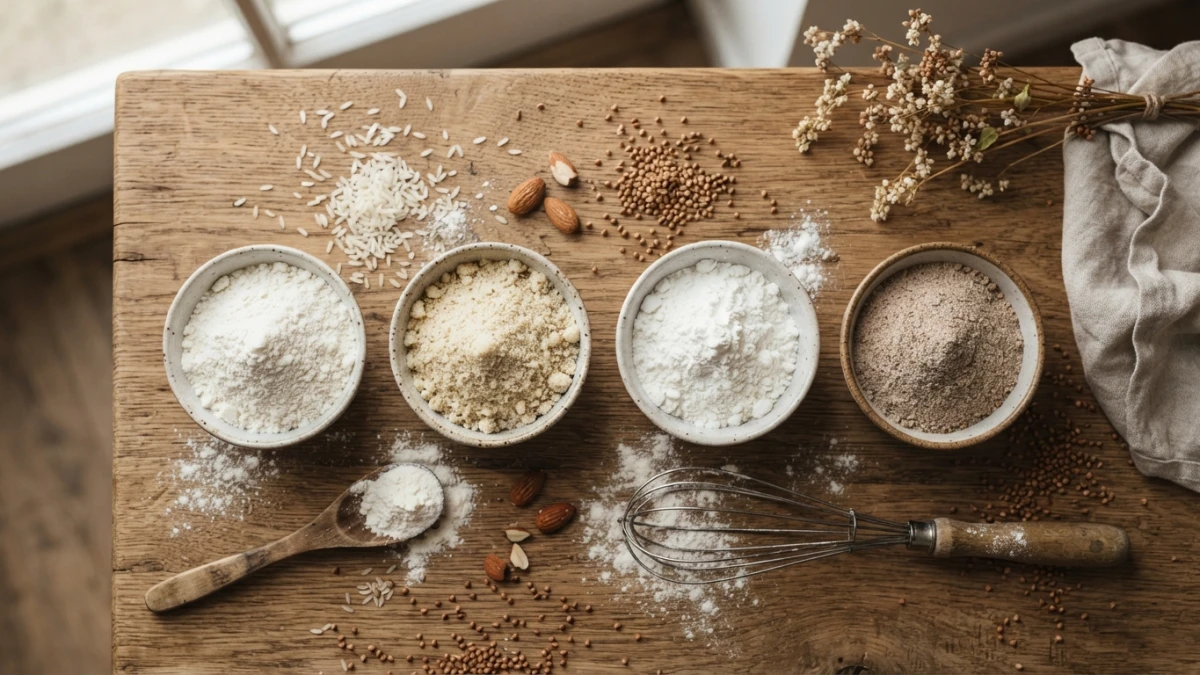
Out of wheat flour right when you are about to bake, or cooking gluten-free for health or by choice? The most common mistake is substituting wheat flour 1:1 with any other flour: each one absorbs liquid, builds structure and reacts to the oven differently, and the usual result is a sunken cake or cookies that crumble apart. This guide explains the real equivalents, the homemade blends that work and the binders that do gluten's job.
Why you cannot swap wheat flour 1:1
Gluten is the protein network that gives dough its elasticity and structure. When you remove it, that network disappears: dough tends to fall apart, cakes sink and breads turn out dense. This is not a technique problem but an ingredient one: wheat flour does structural work that no other flour can reproduce on its own.
Also, every flour absorbs a different amount of liquid. If you swap the flour without adjusting the recipe's hydration, you will get sticky dough (if the new flour absorbs less) or dry, cracked results (if it absorbs more). And it is not only water that changes: fat, flavor and density change too. Almond flour, for instance, does not behave like wheat flour even if it looks similar at first glance.
The two families of gluten-free flours: grains and starches
Every gluten-free flour belongs to one of two families, and understanding the difference is the key to blending them well.
Whole grains (rice, oats, buckwheat, corn, millet, quinoa and sorghum) bring flavor, fiber and body, but used alone they produce dense, heavy results. Starches (cornstarch, tapioca, arrowroot and potato starch) bring lightness, fluffiness and help with browning, but on their own they hold no structure at all.
The practical rule of gluten-free bakers is to blend both families at roughly 40 % grains and 60 % starches. If you want to know each flour in depth, our complete guide to types of flour and their uses covers them all.
Flour-by-flour equivalents for your recipes
Each flour has its own personality, and it pays to know what to expect before using it as a substitute.
- Rice flour: the most neutral and light, a good baking base; blend it with others so it does not turn gritty.
- Oat flour (certified gluten-free if you need it): mild flavor and tender texture, great in cookies and cakes; absorbs similarly to wheat.
- Chickpea flour: protein-rich and dense, it shines in savory recipes such as tortillas and socca; avoid it in delicate sweet baking.
- Corn flour: in general you need a bit more than wheat (around 10-12 % extra) to compensate for its lower binding power.
Special flours: almond and coconut, the trickiest ones
Almond flour and coconut flour look like easy swaps, but they ruin more recipes than any other if used without adjustments.
Almond flour adds fat and moisture and works very well in cookies and moist cakes, but it does not build structure: you need to reduce some of the liquid or eggs in the original recipe. Coconut flour is even more deceptive: it absorbs a huge amount of water, about four times its weight, so you use less of it than wheat and it demands more eggs or more liquid.
If your result turns out grainy or dry, it is almost always because you used coconut or almond without adjusting the recipe.
Homemade all-purpose gluten-free blend
Instead of memorizing equivalents, many home bakers prepare their own all-purpose blend and use it as a direct wheat flour stand-in in any recipe. A base that works:
- 40 % brown rice flour
- 40 % starch (tapioca or cornstarch)
- 20 % oat, sorghum or buckwheat flour
For baking, add one teaspoon of xanthan gum per cup of blend. Always sift, and let the batter rest for 20-30 minutes: gluten-free flours absorb liquid gradually, and that rest is the difference between an elastic batter and one that cracks.
Binders: the glue that replaces gluten
Gluten is, at its core, a natural glue. To replace it you need a binder that holds ingredients together and traps air.
- Xanthan gum: the most practical for cakes, cookies and sweet doughs; one teaspoon per cup of flour is enough.
- Psyllium: the star of gluten-free breads, it adds elasticity and holds the moisture of fermentation.
- Homemade alternatives: ground chia or flax seeds soaked in water (1 tablespoon of seed + 3 of water per egg you want to bind).
Common substitution mistakes and how to avoid them
If a gluten-free recipe goes wrong, it is almost always one of these three failures:
- Swapping 1:1 with coconut or almond without touching liquids or eggs: the number one cause of disasters.
- Forgetting the binder or overmixing: batters that fall apart or turn rubbery.
- Not weighing ingredients: density varies a lot between flours; use a scale and sift whenever you can.
Practical tip: start with forgiving recipes
If this is your first time substituting flour, do not start with bread: cookies forgive mistakes far more easily and teach you how each blend behaves. Keep your mix in an airtight jar labeled with the exact proportions and write down which one you use in every recipe; once you find a blend that works, stick to it.