How to organize a small pantry and maximize every inch
 By
Diego Cortés
By
Diego Cortés
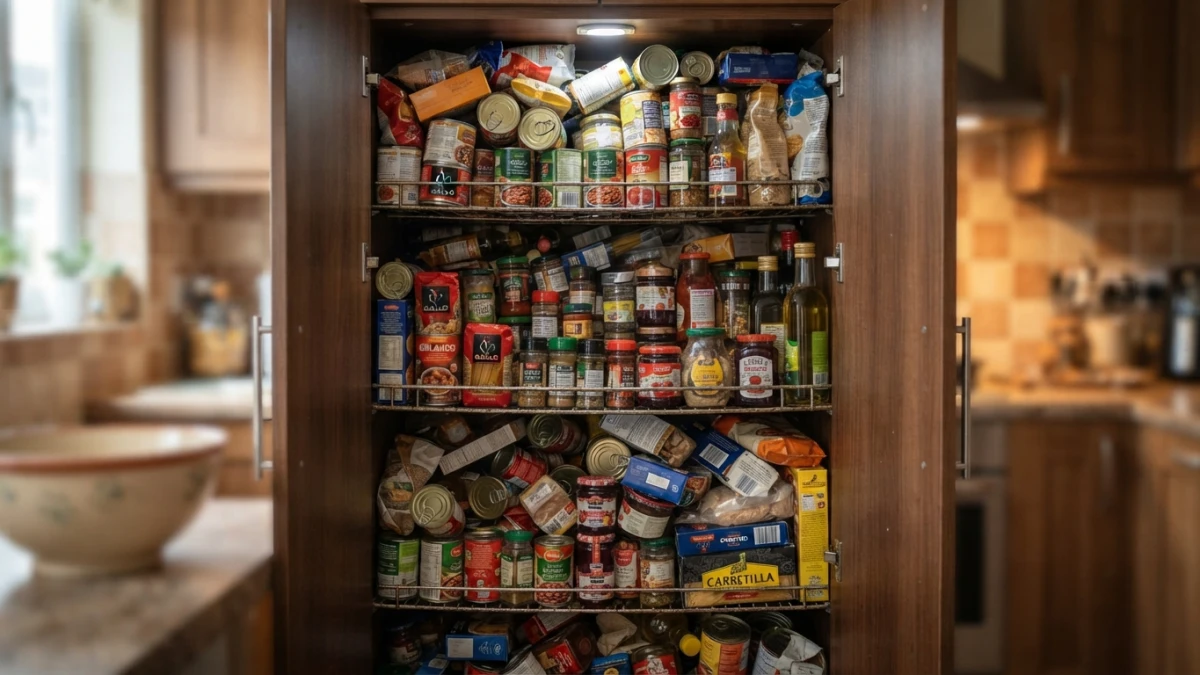
Is your pantry a tiny closet where everything piles up and you never find anything? You do not need more square feet, you need a better strategy: extra shelves, door organizers and the three-height rule turn any nook into a magazine-worthy pantry without renovations or big spending.
Learning how to organize a small pantry is a matter of method: empty, sort, use the vertical space and give everything a place. These are the steps and tricks that actually work, no matter the size of your closet.
Why a small pantry can work just as well
The problem is not the size, it is the clutter. In a small space, every badly used inch counts double: cans get lost behind other cans, packages pile up and you end up buying the same thing twice because you do not know what you have. A compact, well-organized pantry saves time, avoids duplicate purchases and reduces food waste.
The good news is that you do not need to renovate or buy new furniture. With simple organizers and good habits you can make the most of the space you already have. Whether your pantry is a closet under the stairs, a kitchen cabinet or a rolling cart, the principles are the same.
Step 1: empty, sort and decide what stays
The first step is the most important and the one almost nobody does completely. Empty the pantry completely and get rid of anything expired, anything opened months ago and anything you will never use. Be honest: that spice jar from years ago is not coming back to the kitchen. Take the chance to clean the shelves, which usually collect crumbs and forgotten spills.
Then group what remains by category: cooking staples (rice, pasta, flours), canned goods, breakfast, snacks, spices and baking. Ask yourself what you really use every week: anything you have not touched in months has no place in such a limited space. Store it elsewhere or donate it, but do not let it take up room in your pantry.
Use the height: shelves, risers and hooks
The most common mistake in small pantries is using only the shelf surface and leaving the air above empty. Adding extra shelves or intermediate ledges doubles your capacity without touching a wall: there are options that install without drilling, ideal for rentals or for keeping your kitchen intact.
Risers and two-level shelves are another great ally: they let you see what is behind the front row and make use of the leftover air. A can you can see gets used; a hidden can gets forgotten and expires. Hooks and bars under the shelves hang mugs, dish towels or reusable bags and free up useful surface.
Door organizers and dead corners
The inside of the door is pure gold in a small pantry. A door organizer with pockets stores spices, oils, vinegars and small jars that would otherwise take up a whole shelf. Just do not overload it: the door supports less weight than a shelf and will warp.
Lazy Susans rescue deep corners and prevent the famous "what is in the back gets lost" effect. One spin and you can see everything in the corner without taking anything apart. Stackable boxes and baskets group similar products and come out as a single piece when you need something from the bottom.
Space-saving containers: jars, labels and decanting
Square or rectangular jars make better use of the space than round ones, which leave empty gaps between them. If your pantry is small, this simple shape choice can win you an entire shelf of capacity. Airtight jars also protect pasta, legumes and flours from moisture and pantry pests, and stack safely.
Decanting has another advantage: by removing the cardboard packaging, each product takes up less room and is visible at a glance. Just always label with name and date. In a small pantry, an unlabeled jar is a mystery nobody wants to open, and the date reminds you what to use first.
The three-height rule for placing everything
Once you have optimized the space, it is time to decide where everything goes. The three-height rule simplifies it all:
- Everyday items at eye level: oil, salt, coffee, frequently used spices. What you use most should be the first thing you see and grab.
- Heavy and bulky items at the bottom: bottles, large cans, bags of potatoes. This protects your back and prevents heavy falls from above.
- Occasional items at the top: trays, molds, small appliances you only take out on special occasions. Out of the daily path, but in sight.
Keeping the order without effort, week by week
Organizing is only half the job; the other half is maintaining it. Spend ten minutes a week rearranging, cleaning spills and checking expiry dates: it is enough to keep chaos from coming back. A small spill cleaned up on time prevents a sticky stain that attracts pests.
Do a quick inventory before shopping: buy only what is missing and use first what expires soonest. If you live with other people, labeling zones by person or by category helps everyone put things back in their place. Order maintains itself when every object has a clear, logical home.
Frequently asked questions about small pantries
How do I create a pantry where there is none?
A kitchen cabinet, a rolling cart or a shelving unit works perfectly. What matters is not the furniture but the method: clear categories, containers that save space and the three-height rule.
Glass or plastic jars?
Glass lasts longer, shows the contents and is easier to clean, but it is heavier. Food-grade plastic is lighter, ideal for high shelves and for spots where weight matters. You can mix both: glass at the bottom, plastic at the top.
How often should I review the pantry?
At least once a month, and always before a big shopping trip. Checking expiry dates and rearranging once a month prevents surprises and keeps the system working without effort.