How to choose a frying pan: materials, uses and care guide
 By
Diego Cortés
By
Diego Cortés
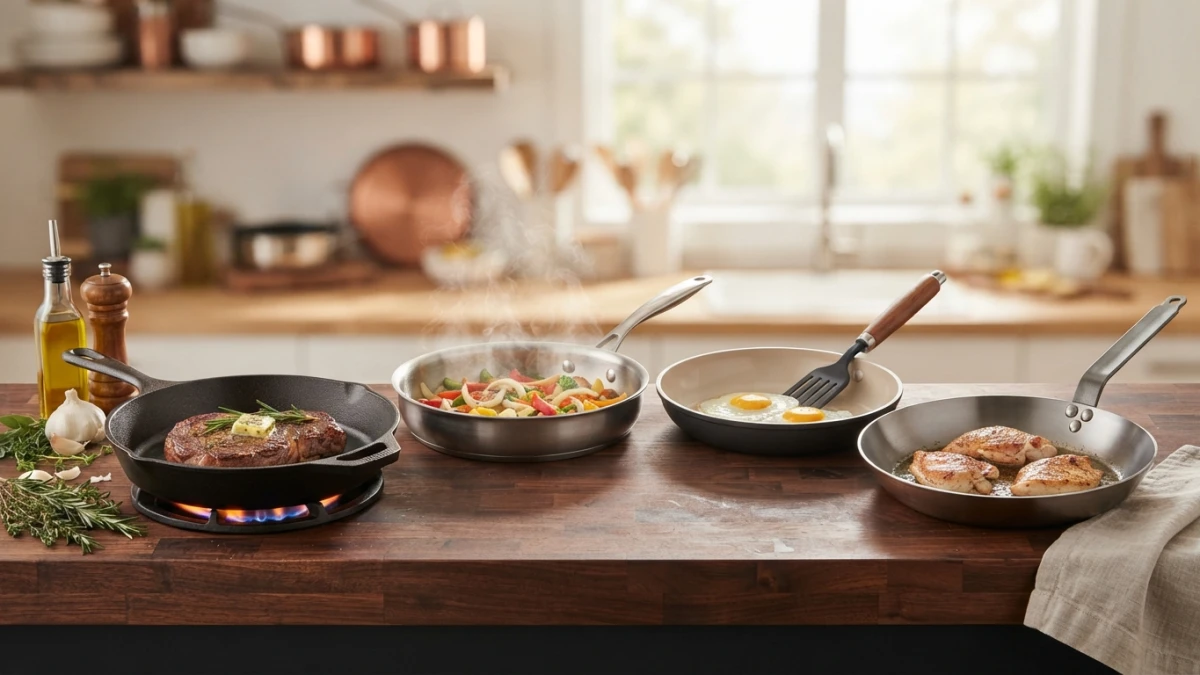
Choosing a frying pan is not just about price: material, size and care make the difference between a piece that lasts decades and one that ends up scratched in a drawer. Learning how to choose a frying pan for your cooktop saves money and improves every dish.
Why choosing well matters
The frying pan is the most used tool in the kitchen. A good one distributes heat evenly, does not warp with use and cleans up without drama. The wrong one, even if expensive, can burn food at the edges, stick for no reason or shed particles over time. That is why the criterion is not price, but how well the material matches what you cook most often.
Materials: which one fits your cooking
Each material behaves differently with heat and needs different care. Before you buy, think about your usual dishes: sauces, eggs, stir-fried vegetables or seared meats all point to different answers.
Stainless steel: searing and sauces
Stainless steel is not naturally nonstick, but it is the king of browning meat, reducing sauces and cooking over high heat. It handles extreme temperatures, does not react with acidic foods and can go in the dishwasher without worry. Technique is key: preheat it properly and use enough oil to prevent sticking. Once you master the heat point, it is a pan for life.
Cast iron: heat that stays
Cast iron absorbs heat and holds it, which makes it ideal for searing, deep frying and slow cooking. With use it develops a natural nonstick layer called seasoning that improves over time. It is heavy, slow to heat and does not like harsh soaps or staying wet, but it is almost indestructible and often passes from one generation to the next.
Carbon steel: the chef favorite
Carbon steel combines the heat capacity of cast iron with a lighter weight and faster response. It is the classic choice in professional kitchens for stir-fries and woks. Like iron, it needs initial seasoning and immediate drying after washing. With care, it builds an excellent nonstick surface over the months.
Nonstick: eggs and delicate fish
If your priority is cooking without anything sticking, a nonstick pan with a PTFE coating is the most convenient option. Perfect for eggs, pancakes, thin fish and rice. Its weaknesses are high heat, which degrades the coating, and metal utensils, which scratch it. It needs replacing when the coating wears out, every few years depending on use.
Ceramic: the PTFE-free alternative
Ceramic pans offer a nonstick surface without PTFE, with a smooth finish that handles moderate heat well. They are a good choice if you prefer to avoid traditional coatings. Their nonstick performance lasts less than quality PTFE and they require care: medium heat, silicone or wooden utensils and gentle washing.
Anodized aluminum: light and even
Anodized aluminum distributes heat excellently, weighs little and resists corrosion better than plain aluminum. Many professional pans use this base with a nonstick coating on top. It is a balanced option between weight, performance and durability for everyday use.
Size and weight: what to look for
Size is measured by the top diameter, not the base. A 24-centimeter pan works for one or two people; 28-centimeter pans are the most versatile for families. Also check the weight: a very light pan warps with heat and jumps on induction cooktops, while a very heavy one tires your wrist when tossing. Look for a comfortable handle, preferably riveted and heat-resistant, and make sure the base is flat and thick.
Compatibility with your cooktop
Not every pan works on every cooktop. Induction requires a ferromagnetic base: the quick test is holding a magnet to the bottom. On gas, any material works, but a thick, flat base prevents warping. Ceramic and electric cooktops prefer flat bases that sit fully on the surface. Always check the manufacturer label before buying.
Care that lasts for years
Correct care extends the life of any pan. Do not heat it empty at maximum power, do not shock a hot pan with cold water (it warps the metal) and use utensils suited to the material. Steel and iron pans dry for a minute over the heat after washing; nonstick pans are washed with a soft sponge and stored without stacking heavy pieces on top. A good habit: use oil with the right smoke point for the material.
Budget: how much to spend
You do not need the most expensive pan to cook well. On a tight budget, a good mid-range nonstick pan covers daily cooking and a mid-range stainless steel pan handles searing. Spending more makes sense on cast iron or carbon steel, because they last decades with care. The simple rule: buy the best material your routine actually uses, not the most expensive one in the store.
How to choose a frying pan: final tips
Before you pay, ask yourself three questions: what do you cook most, what cooktop do you have, and how much time do you want to spend on care. With those answers, the material chooses itself. If you are just starting out, a 28-centimeter nonstick pan plus a stainless steel pan covers 90 percent of recipes. And remember: one well-cared pan outperforms three cheap ones that get replaced every year.