How to Keep Bread Fresh Longer: Storage Tricks That Work
 By
Diego Cortés
By
Diego Cortés
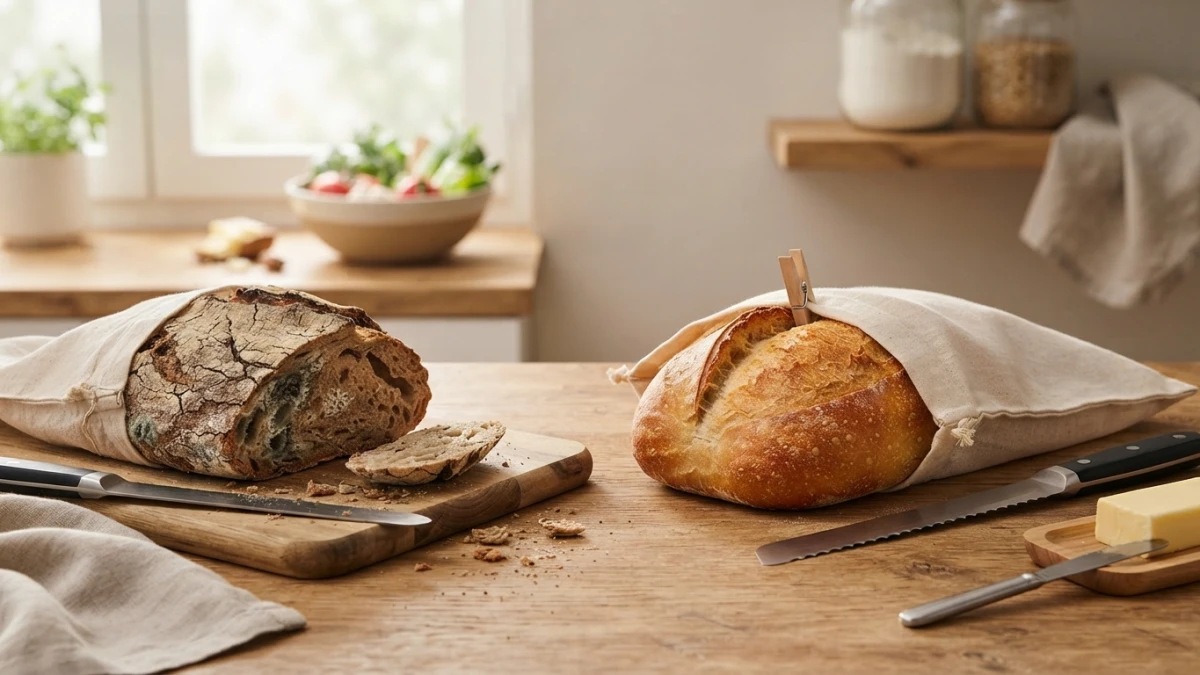
Does your bread turn rock-hard overnight or grow mold inside the bag? Learning how to keep bread fresh longer is not about luck: it depends on where you store it, how you freeze it, and a few tricks that bring back that first-day texture.
Why bread goes stale: starch retrogradation
From the moment it leaves the oven, bread starts losing freshness. The starch in the crumb releases moisture and crystallizes in a natural process called retrogradation: the crumb hardens, the crust dries out, and the bread loses aroma. It is not that the bread has "gone bad": it is a physical change that happens even when the bread is perfectly stored.
Cold speeds up that process. That is why bread goes stale much faster in the fridge than at room temperature: refrigeration temperatures (between 36 and 46 degrees Fahrenheit) are exactly the ones that crystallize starch the quickest.
Not all breads age the same way. Traditionally made bread and sourdough last longer: sourdough adds acidity, which delays mold and slows down the hardening of the crumb.
The golden rule for keeping bread fresh: never store it in the fridge
The fridge is the worst place for bread. It accelerates starch retrogradation and leaves the crumb hard and dry within hours. The freezer, on the other hand, does work: extreme cold stops the crystallization process almost completely, so frozen bread keeps its texture for weeks.
There is one single exception: sandwich bread on very hot days, to keep mold away. In that case, always keep it inside its tightly sealed bag and eat it soon.
Do not leave bread out in the open either: in a few hours it dries out completely and the crust turns leathery. Bread needs a balanced environment, not the kitchen air or the dry cold of the refrigerator.
How to keep bread fresh depending on the type
Every bread format behaves differently, and the right container changes with it.
- Baguette or thin loaf: keep it in the bakery paper bag and eat it the same day, ideally within about 4 hours. Being narrow, it dries out sooner than a round loaf.
- Whole round loaf: the paper bag is your best ally. Avoid plastic, which traps moisture and makes the crust chewy. This way it keeps for several days without a problem.
- Round loaf already sliced: in a plastic bag it lasts up to 3 days. If the bread has a thick crust, wrap it only partially so it can breathe and the crumb does not get damp.
Containers that work: bread box, cloth, and paper
The classic wooden or wicker bread box is still the best method for keeping bread fresh at home: it balances moisture and ventilation, keeps the crust crisp, and does not dry out the crumb.
The cotton or linen cloth bag is the great ally of the round loaf. It lets the bread breathe and prevents the excess moisture that brings mold. In very dry climates, combine it with a layer of paper so the bread does not lose too much water.
Sealed plastic keeps bread from drying out, but it softens the crust and encourages mold if the bread is still warm. Use it only for already sliced, fully cooled bread.
How to freeze bread without losing texture
The freezer is the best friend of bread you will not eat today. The key is preparation:
- Freeze only completely cooled bread. If you freeze it warm, steam condenses inside the packaging and mold appears early.
- Slice it or portion it first and wrap the pieces tightly in plastic wrap or freezer bags with no air inside. That way you can take out only what you need without defrosting the whole block.
- Label the date. In a home freezer, bread keeps well for 1 to 3 months. After that it is still safe, but it dries out and loses aroma.
How to defrost and reheat to get the point back
Defrosting well makes the difference between chewy bread and bread that seems freshly baked.
- Oven: about 5-8 minutes at 350 degrees Fahrenheit bring back the crisp crust and that fresh-baked aroma. It is the method with the best results.
- Toaster or air fryer: they work well for slices, just be careful not to burn the thinnest spots.
- Slow defrost: take the slices out a couple of hours ahead and leave them at room temperature without opening the bag, so they do not dry out.
- Trick to revive stale bread: lightly dampen the crust with water and give it 5 minutes in the oven at 350 degrees Fahrenheit. It recovers a texture surprisingly close to day one.
Common mistakes that ruin bread (and how to avoid them)
Four mistakes shorten the life of bread more than anything else: storing it warm, leaving it uncovered in the open air, using airtight plastic bags with warm bread, and mixing different types of bread in the same container. Avoid them and you will notice the difference in days.
Also, never store bread and fruit together: fruit releases ethylene, a gas that speeds up mold on bread. And slice only what you are going to eat: the crust acts as a natural barrier, and if you slice the whole loaf ahead of time, the exposed crumb dries out much faster.
If you bake bread at home and have leftovers, the same rules apply: let it cool completely, portion it, and freeze it. That way your no-knead homemade bread or your fluffy banana bread lasts much longer than a couple of days.
Frequently asked questions about bread storage
How long does each bread last? A baguette is eaten the same day; a whole loaf keeps 2-4 days in a bread box or cloth bag; slices last 3-5 days in plastic; and frozen, 1 to 3 months.
Can you reheat yesterday's bread? Yes: dampen the crust a little and give it 5-8 minutes in the oven at 350 degrees Fahrenheit. It becomes crispy outside and tender inside again.
What if mold appears? Throw the whole loaf away even if you only see one affected spot. The spores have already traveled through the crumb and eating it can cause food poisoning. Mold is not cut off like on cheese: the entire bread goes in the trash.
With these tricks, buying or baking bread stops being a race against the clock. Store each loaf where it belongs, freeze what is left, and reheat with a plan: avoiding common kitchen mistakes starts with storage.