Types of Cooking Oil: Which to Use by Smoke Point
 By
Diego Cortés
By
Diego Cortés
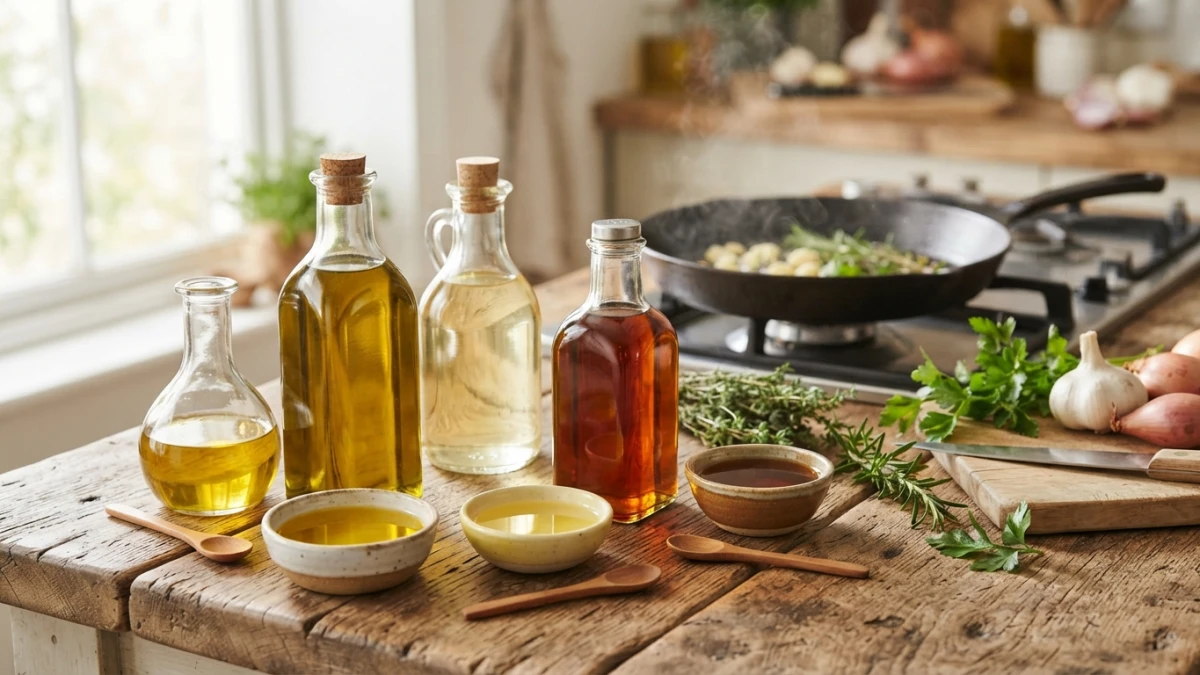
Choosing among the types of cooking oil on the supermarket shelves may seem like a gourmet whim, but it affects the flavor, texture and safety of your dishes. The key is the smoke point: the temperature at which each fat starts to break down.
In this guide we explain which oil to use for frying, sautéing or dressing, and the rules for reusing frying oil safely.
What is the smoke point and why it matters in the kitchen
The smoke point is the temperature at which an oil starts to smoke and decompose: its molecular structure breaks down and releases compounds such as aldehydes, acrolein and acrylamide, irritants linked to cellular damage.
Going past it ruins the dish: the oil burns, the food turns bitter and charred, and the kitchen fills with smoke that irritates the nose and throat. It is the most common mistake when cooking over high heat and one of the most repeated at home.
Practical rule: home frying works between 160 and 180 °C, so choose an oil whose smoke point sits comfortably above the cooking temperature, with a safety margin of at least 40-50 °C.
Oils for frying: the ones that handle the heat (and the ones that do not)
The most stable at high temperatures are refined olive oil (around 220-240 °C), high-oleic sunflower oil (230-240 °C), avocado oil (250 °C or more, the highest thermal ceiling) and ghee or clarified butter (around 250 °C).
For long frying sessions, avoid regular butter (150-175 °C), which burns quickly, and unrefined walnut, flaxseed or sesame oils, which degrade fast because of their high content of polyunsaturated fats.
Extra virgin olive oil does work for short frying and sautéing: its smoke point (160-190 °C) covers the usual frying temperature, and its antioxidants make it more resistant to oxidation than its smoke point suggests. More on that below.
Smoke point chart: 12 types of cooking oil at a glance
| Oil or fat | Smoke point (°C) | Recommended use |
|---|---|---|
| Avocado | 250-270 | Frying and grilling |
| Ghee (clarified butter) | 250 | Frying |
| High-oleic sunflower | 230-240 | Frying and sautéing |
| Refined olive | 220-240 | Frying |
| Sesame | 210 | Asian stir-fries |
| Canola or rapeseed | 205-230 | Everyday neutral cooking |
| Regular sunflower | 200-230 | Sautéing and occasional frying |
| Virgin coconut | 175-200 | Baking and medium heat |
| EVOO (extra virgin) | 160-190 | Dressing, sautéing and short frying |
| Butter | 150-175 | Baking and low heat |
| Walnut | 150-160 | Raw dressings |
| Flaxseed | 105-110 | Raw only |
The figures are approximate: they depend on the degree of refining, the quality and the free fatty acid content, so two bottles of the same type can differ. The key criterion for reading the chart is simple: the hotter the cooking method, the higher the smoke point of the chosen oil should be.
Which oil to use for each cooking method
Raw and dressings
When there is no heat to degrade the fats, flavor rules. Extra virgin olive oil is the natural choice for salads and dressings, such as this quinoa and avocado salad, while sesame or walnut oils add an unmistakable aromatic touch when used raw.
Sautéing and grilling
For quick stir-fries and medium-high cooking, EVOO, avocado or sunflower oil work well. If you are using very high heat, step up to avocado oil or ghee, which hold up without burning.
Frying
For long or high-volume frying, choose refined olive oil, high-oleic sunflower, avocado or ghee. For home deep fryers, high-oleic sunflower is the best balance of cost and stability.
Baking and roasting
Butter brings flavor and texture, virgin coconut works in vegan preparations and sunflower is the neutral all-rounder when a recipe calls for a flavorless oil. In the oven, a drizzle of EVOO over this oven-baked lemon salmon is all it needs to brown without smoking.
Extra virgin olive oil: the great misunderstanding
Let us bust the myth that EVOO cannot be heated. It is rich in oleic acid and natural antioxidants (polyphenols), which makes it very stable and resistant to oxidation, even at frying temperatures.
Its smoke point (160-190 °C, up to about 210 °C in high-quality oils) easily covers standard home frying at 170-180 °C. The idea that it "burns" comes from comparing it with refined oils with a higher smoke point, but in practice it handles home cooking with ease.
The real criterion here is economic and practical, not technical: save EVOO for dressings, sautéing and short frying, and use refined olive oil or high-oleic sunflower for long frying and large quantities. That way you enjoy its flavor where it matters most without overspending.
How to reuse frying oil safely
Reusing oil at home is normal, but it has limits. Strain the oil after each use to remove food residue, store it in a clean, airtight container in a cool, dark place, and do not reuse it more than 2-3 times, as consumer organizations recommend.
Discard it if it changes color, becomes viscous, foams when heated or smells off: careless reuse releases toxic aldehydes that build up with every heating cycle.
Also, do not mix fresh oil with used oil, lower the heat for delicate foods and, when in doubt, throw it away: oil is cheap compared with the risk. If you notice that characteristic smoke in the pan, you now know what is happening and how to avoid it, as we explain in the article about common cooking mistakes.
How to store oils at home
Keep all oils in a cool, dry cupboard away from light and from the heat of the stove. Olive oil, ideally, in a dark glass bottle, tightly sealed.
Rancidity is oxidation: light, heat and air speed it up, and you detect it by an unpleasant smell and taste. Rancid oil must be discarded, not masked with other ingredients, because it ruins any dish.
Buy the size you will actually use: fragile oils (walnut, flaxseed, sesame) degrade within a few months, while olive oil lasts much longer if stored properly.
Frequently asked questions (FAQ)
Can you fry with extra virgin olive oil?
Yes, up to about 180 °C without a problem. For long or high-volume frying, refined olive oil or high-oleic sunflower oil is better.
What is the healthiest oil for frying?
The most heat-stable ones: avocado, ghee, refined olive and high-oleic sunflower, because they release fewer harmful compounds at high temperature.
How many times can you reuse frying oil?
At most 2-3 times, straining it and storing it well between uses. Never if it smoked excessively, changed color or looks off.
Why does my pan smoke?
Because the oil has passed its smoke point: lower the heat or switch to an oil with a higher smoke point.