How to use an air fryer: cooking times, temperature and mistakes to avoid
 By
Diego Cortés
By
Diego Cortés
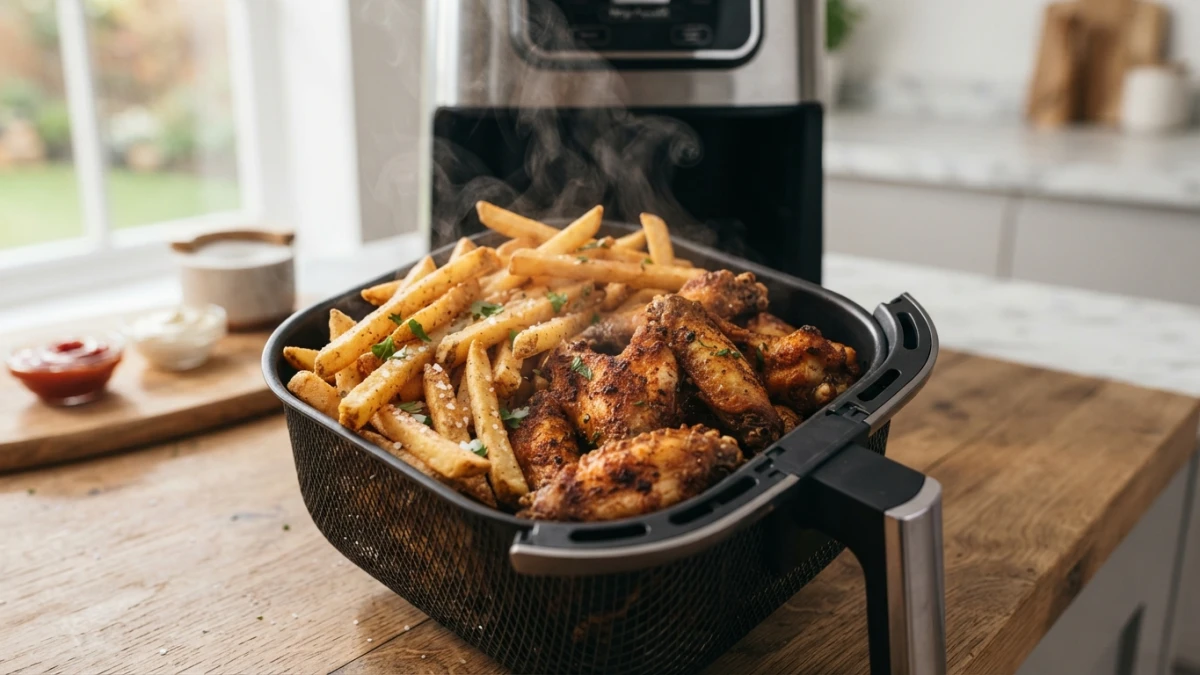
If you are wondering how to use an air fryer and food comes out raw or dry, it is almost always a usage mistake: overloading the basket, skipping preheat or picking the wrong temperature. Guide with a cooking time chart and the 8 most common mistakes for perfect crunch.
How to use an air fryer: what it is and how it works
Before touching any button, it helps to understand what you have on your counter. An air fryer is not a deep fryer: it is a small convection oven that circulates very hot air at high speed to brown and crisp food with very little oil. That air current does the work, not the oil.
That is why it cooks faster than a traditional oven. As a general rule, lower the temperature of oven recipes by 10-15 °C and cut the cooking time by 20-25 %. If a recipe says 40 minutes at 200 °C in the oven, aim for about 30 minutes at 185-190 °C in the air fryer and check halfway through.
And the most important part: the air needs room to circulate. Never fill the basket completely. If you pack it to the top, the hot air cannot reach every piece and you get uneven cooking: some parts browned and others raw.
Preheating: the step almost nobody does
Preheat the air fryer for 3-5 minutes at the target temperature before adding the food. Most modern models have a preheat function that beeps when ready.
What happens if you skip it? The cooking time gets longer and the browning becomes uneven, because the appliance spends the first minutes heating the air instead of cooking the food. The typical result is pale fries and a soft outer layer that never crisps up.
There is one practical exception: small frozen foods, such as frozen fries or nuggets, can go in cold without a problem. The ice on the surface balances the temperature and the final result is nearly the same.
How much oil to use (and which one)
The big myth about the air fryer is that it needs no oil at all. The truth is that a tiny amount improves browning and texture. One to two teaspoons of oil per batch is enough: spray the food or toss it with your hands to spread it evenly. Too much oil does not make it crispier; it creates smoke and a greasy texture.
Choose oils with a high smoke point for long, high-temperature cooking: avocado oil, high-oleic sunflower oil or canola. Extra virgin olive oil works at moderate temperatures, but at 200 °C it can smoke and turn bitter.
If the food already has its own fat, like bacon or chicken wings, do not add any oil. The appliance uses the fat released by the ingredient itself and the result is just as crispy, with fewer calories.
Cooking time and temperature chart per food
These times are a guide: every model heats a little differently, so on the first try always check halfway through and adjust. Shake the basket once halfway through cooking so the browning is even.
- French fries (fresh or frozen): 200 °C, 14-20 minutes, shaking the basket halfway through.
- Chicken (thighs, breast, wings): 180-200 °C, 18-25 minutes depending on the cut; check with a thermometer that the center reaches 74 °C.
- Fish and seafood: 180 °C, 8-12 minutes.
- Fresh vegetables: 180-200 °C, 8-15 minutes depending on thickness.
- Breaded frozen foods (nuggets, croquettes): 200 °C, 10-15 minutes.
- Reheating leftovers: 160 °C, 3-5 minutes.
For meat, the time is a guide but the internal temperature is what matters. An instant-read kitchen thermometer is the best investment you can make: chicken breast is done at 74 °C in the center and fish flakes easily when it is cooked through.
Shake, flip and leave space: the basket rule
Shake or flip the food halfway through cooking so the browning is even. Fries and vegetables especially appreciate it: the pieces at the bottom get less air and take longer to brown.
Spread the food in a single layer whenever you can. If you are cooking for several people, do two batches instead of piling everything at once. Two well-cooked batches taste better than one huge batch with half of it raw.
And do not be afraid to open the basket to take a look. Unlike an oven, opening the air fryer halfway through does not ruin the result: the air recovers in seconds and you can check the doneness, shake or flip the pieces without a problem.
What NOT to put in the air fryer
Not everything that handles heat belongs in the basket. These are the ingredients and materials you should avoid:
- Loose lightweight paper: unwaxed paper without weight on top can be sucked by the fan toward the heating element and burn. If you use paper, make it parchment paper and make sure something holds it down.
- Aluminum foil at the bottom: avoid placing it where grease collects, because it can block the airflow. If you use it, put it over the perforated basket without covering the holes.
- Liquid batters without a mold: cakes, loose melted cheese or very runny batters would drip through the grate. Cook them in an air fryer-safe mold, such as silicone or steel.
- Very sugary sauces: sugar caramelizes and burns fast at high temperature, leaving hard-to-clean stains on the basket.
When in doubt, think about the air current: anything that could fly, drip or block the holes is a likely problem.
Cleaning and maintenance to make it last
Clean the basket and tray after every use, while they are still warm. Most baskets are dishwasher-safe, but if you wash them by hand with warm water and mild soap, the non-stick coating lasts longer.
Avoid abrasive sponges and metal scrubbers: they scratch the non-stick surface and then food starts sticking. A cloth or a regular kitchen sponge is enough if you clean soon.
Check the heating element and fan from time to time. If they build up grease, wipe them with a dry cloth (always with the appliance unplugged and cold). Store the air fryer unplugged with a dry basket to avoid odors and moisture.
Frequently asked questions
Why does smoke come out of the air fryer?
The three most common causes are: too much oil on the food, burnt food residue in the basket, or a temperature too high for that ingredient. Lower the temperature, clean the basket and cut the oil to 1-2 teaspoons.
Can I put parchment paper in it?
Yes, as long as something weighs it down (the food itself) and it does not cover the basket holes. Parchment paper stops delicate foods from sticking, but it should never be loose.
How do I convert an oven recipe to the air fryer?
Lower the temperature by 10-15 °C and reduce the time by 20-25 %. Check halfway through and adjust based on what you see. After converting two or three recipes you will get the hang of your model.
The air fryer is one of the most versatile tools in the modern kitchen, but it only pays off if you respect its rules: preheat, do not overload, use little oil and check halfway through cooking. With those four habits, most failures disappear and everything starts coming out crispy.