How to use a pressure cooker: cooking times, safety and mistakes to avoid
 By
Diego Cortés
By
Diego Cortés
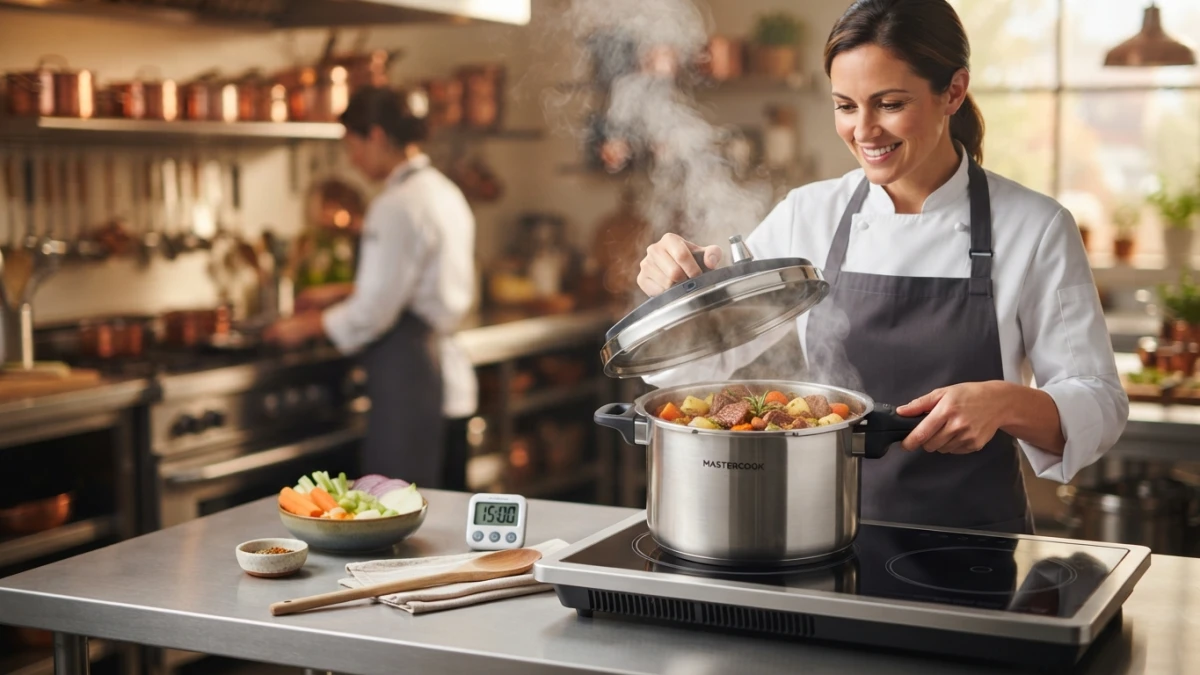
Knowing how to use a pressure cooker changes everyday cooking: beans are ready in 20 minutes, stews take half the time and you only dirty one pot. This practical guide covers per-food cooking times, how to release steam safely and the mistakes that most often ruin your meals.
How to use a pressure cooker: understand how it works first
The principle is simple: once the lid is closed, steam cannot escape and the pressure inside rises. Water no longer boils at 100 °C but reaches about 120 °C, a temperature that softens food up to 70 % faster than regular boiling. That is why a pot of beans that takes an hour in a normal saucepan is done in twenty minutes here.
Not all cookers work the same, and that changes your timing:
- Stovetop pressure cooker: reaches about 15 psi (1 bar). It is the fastest model and the one most cooking-time charts assume.
- Electric pressure cooker (multi-cooker): works at about 10-12 psi, so add 20-30 % to recipes written for stovetop cookers.
One rule explains almost every beginner failure: cooking time starts counting once the cooker reaches pressure (when the valve releases steam or the indicator rises), not when you turn on the heat. If you count from ignition, everything will come out undercooked.
Before you start: check the cooker and measure the liquid
A pressure cooker is safe when it is in good condition. Before every use, spend thirty seconds inspecting it:
- Sealing ring: no cracks, warping or stuck-on food. It is the part that fails most often.
- Pressure valve and safety valve: must be clean and clear. If the steam outlet is blocked, the cooker will not seal or will build pressure unevenly.
- Liquid: at least 250 ml (1 cup) to generate steam. Never fill past two-thirds of capacity, and only halfway with foods that foam, such as beans, rice or oats.
- Ingredient size: cut everything into even pieces so cooking is uniform.
Every model seals differently (locking handle, side latch, screw top), so read your manual before the first use. That five-minute read prevents most of the scares.
Step by step: from closed lid to the first hiss
The startup routine is always the same, whatever your cooker:
- Add food and liquid, close the lid and lock the handle or latch according to your model. Check that it is fully locked before turning on the heat.
- Turn the heat to high until the valve starts releasing steam or the indicator shows pressure. The rocking weight or gentle hiss is your signal that the cooker is working.
- Lower the heat to medium-low to maintain pressure and start counting. Higher heat does not cook faster: it wastes energy and makes the valve sputter.
If pressure takes too long to build, suspect the ring or the seal. Do not raise the heat expecting that to fix it.
Pressure cooker cooking times (count from the first hiss)
These times are guidelines for a stovetop cooker at full pressure; add a few minutes per item with an electric one. Always start with the shorter time: you can always close the cooker and cook a little more, but overcooked vegetables cannot be undone.
- Legumes soaked 8-12 hours: chickpeas and beans, 20-30 min; lentils without soaking, 10-15 min; chickpeas or beans without soaking, 35-45 min.
- Vegetables and staples: medium whole potatoes, 10-12 min; whole beets, 20-25 min; white rice, 4-6 min; brown rice, 20-25 min.
- Meat: chicken breast, 10-12 min; chicken thighs, 15-18 min; beef for stew, 35-45 min; large roasts, 60-80 min.
- Bone broth: 45-60 min to extract collagen without going too far.
Write the times of your favorite recipes on a card: after two uses you will not need the chart anymore.
Releasing pressure: natural, quick or cold water
Finishing well matters as much as cooking well. There are three ways to bring the pressure down, and each suits a type of food:
- Natural release: turn off the heat and wait 10-15 minutes for the pressure to drop by itself. It is the right choice for meat, legumes and grains: it finishes the cooking gently and keeps the food from bursting.
- Quick release: open the valve carefully, keeping your distance. Use it for vegetables, eggs, fish and delicate dishes that overcook easily.
- Cold water (stovetop cookers only): a stream of cold water over the lid speeds up the pressure drop. Follow your manual if your model asks you not to wet the valve.
When in doubt, natural release never ruins a dish: it only adds a few minutes.
Common mistakes that ruin your food (and how to avoid them)
Most pressure cooker failures repeat themselves. These are the big four and their fixes:
- Opening the cooker before all pressure is released: the food is undercooked, hot liquid splashes and the steam burns. Wait until the indicator is fully down before trying to open it.
- Overfilling or forgetting the liquid: the valve clogs, the bottom burns or the cooker never reaches pressure. Measure before closing the lid.
- Counting time from high heat: everything comes out undercooked. The clock starts when the cooker hisses, not when you turn it on.
- Keeping the heat high for the whole cook: the food turns out dry and the valve sputters. Medium-low heat is enough to maintain pressure.
Real safety: myths and golden rules
Pressure cooker explosions belong in movies and in old, neglected cookers. Modern models have two or three safety systems: a pressure valve, a safety valve and a lid lock that prevents opening while pressure remains. If you look after the ring and the valves, the risk is minimal.
Even so, a few golden rules are worth internalizing:
- If the pressure will not build or release, never force the lid: take the cooker off the heat, let it cool on its own and check the valve.
- Keep your face and hands away from the valve when releasing steam, and use a cloth or oven mitts. Steam comes out above 100 °C and burns instantly.
- Never leave a cooker running unattended, especially stovetop models.
Cleaning, maintenance and when to replace the ring
A well-cared-for pressure cooker lasts decades. Maintenance takes ten minutes:
- Wash the lid, ring and valves after every use with warm water and soap. If the manual says not to put the whole lid in the dishwasher, respect it: harsh detergents degrade the ring.
- Replace the sealing ring every 1-2 years or at the first sign of cracks, stiffness or a lingering smell. A worn ring is the most common reason a cooker will not seal.
- Store the lid upside down or with the ring loose so it keeps its shape.
- Check the safety valve from time to time and remove any food residue that could clog it.
Pressure cooker FAQ
Can I open the cooker when steam stops coming out? Not always: the pressure indicator is what counts. Even with no visible steam, pressure may remain inside; wait until the indicator is fully down.
Why will my cooker not reach pressure? Check in this order: a worn or misplaced ring, an unsealed lid, not enough liquid, or a blocked valve.
Is a pressure cooker good for everything? It excels at legumes, broths, stewing meat and root vegetables. Delicate foods (fish, broccoli) benefit from quick release so they do not overcook.
With the technique in this guide, the pressure cooker goes from the appliance that scares you to the one you use most on weekdays. Start with a classic: soaked beans with a simple sofrito, and you will see the difference in 25 minutes.