How to Keep Avocado from Turning Brown: Storage Methods, Times and Tricks
 By
Diego Cortés
By
Diego Cortés
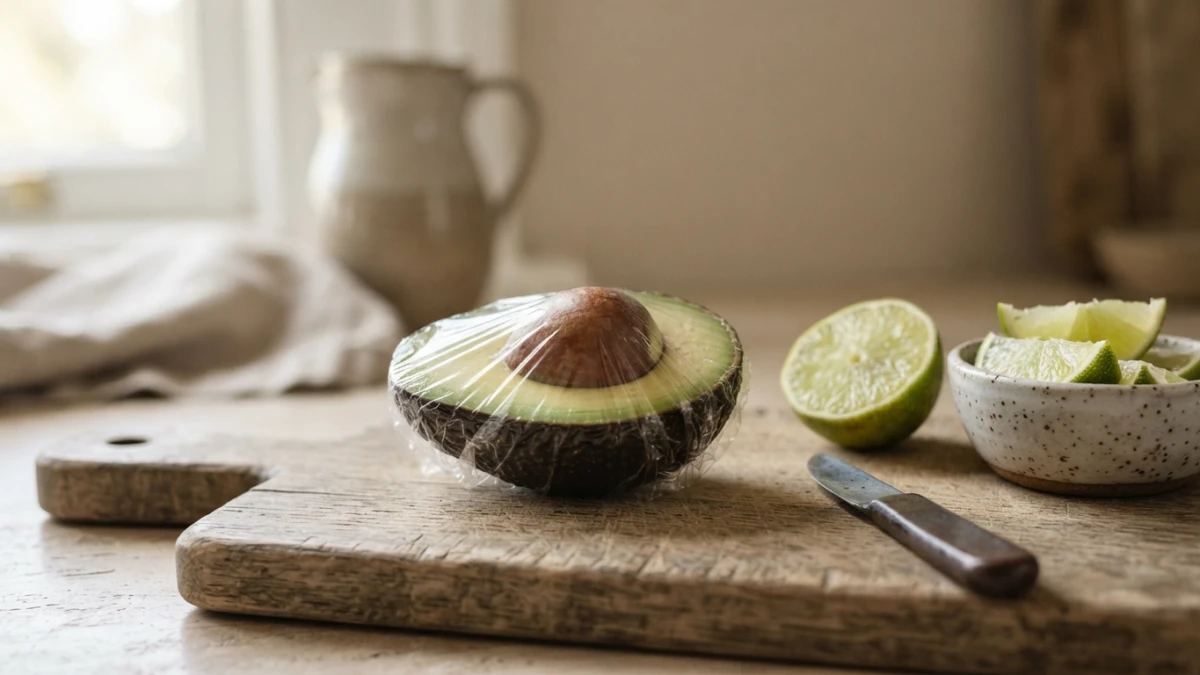
Did you cut an avocado and find a brown layer on the flesh a few hours later? Learning how to keep avocado from turning brown comes down to three things: cold, acid and zero air. No viral hack required. You just need to understand what triggers the color change and cut off its oxygen in time.
Why avocado turns brown (and why it does not always mean it has gone bad)
When you cut an avocado, the flesh is exposed to air and its own enzyme, polyphenol oxidase, starts turning phenolic compounds into quinones. Those quinones polymerize into the brown pigments you see. This is enzymatic browning, exactly the same process that darkens a cut apple or pear. It is not rot, and it is not an automatic sign that the food is unsafe.
The reaction needs three things at once: oxygen, an intact enzyme and a temperature that lets it work. That is why the methods that actually work attack one of those three points. Cold slows the enzyme down, the acid in lemon or lime lowers the pH until the enzyme barely works, and a physical barrier that keeps air away stops the process at the source.
Not all brown is the same, though. A thin, pale layer on the surface can be scraped off with the tip of a knife and the rest of the flesh is perfectly fine to eat. If you see gray or translucent patches, a mushy texture and a sour or fermented smell, oxidation is no longer the issue: that is spoilage, and the whole avocado should be discarded.
How to keep avocado from turning brown once it is cut: the method that works best
For the half avocado left over, this is the combination that performs best at home, step by step:
- Leave the pit in the half you are storing. It does not preserve anything by magic and it does not protect guacamole: it simply reduces the exposed flesh surface, which is what oxidizes.
- Sprinkle a few drops of lemon or lime over the cut. Acid is the cheapest and most effective brake you have on hand.
- Cover it with plastic wrap pressed against the flesh. The plastic should touch the surface with no air pockets trapped underneath: that is where most of the result comes from.
- Close it in an airtight container and keep it in the fridge on a middle shelf, not in the door, where the temperature rises and falls every time you open it.
With pit, acid, wrap in contact and a sealed container, a half avocado keeps for 2 to 4 days with good color and texture. If you do not want a citrus taste, brush on a very thin layer of olive oil: it works as the same kind of barrier without changing the flavor.
Methods compared: water, onion, oil and vacuum
Every trick going around has a cost, and it is worth knowing it before you adopt it:
- Water. Submerging the half with its pit in a container of water and refrigerating it keeps the green for 48 to 72 hours. But the FDA advises against the viral hack of leaving avocados in water for days: moisture on a porous skin can encourage Listeria and Salmonella to multiply and move into the flesh.
- Onion. Sulfur compounds from onion slow oxidation inside the container, but avocado is almost pure fat and absorbs odors easily. It only works if the avocado is headed for a savory dish.
- Airtight container alone. With no acid and no wrap pressed on the flesh, brown shows up between 8 and 12 hours anyway. Closing is not the same as isolating.
- Vacuum. This is the method that extends color the longest, up to about 3 days, but it requires a vacuum sealer that not every home kitchen has.
How long does avocado last: times by stage
Shelf life changes completely depending on the state of the fruit and where you store it:
- Whole and unripe: 4 to 5 days at room temperature, in a basket or paper bag, in a dark, dry spot and not piled up. In the cold they ripen poorly and end up tasteless.
- Whole and ripe: 3 to 4 days in the fridge. Keep it away from apples and bananas, which release ethylene and push it past its prime.
- Cut and well protected: 2 to 4 days.
- Mashed or guacamole: 1 to 2 days in a container filled to the brim.
- Frozen as puree with lime: 4 to 5 months.
If you want the opposite, a fast-ripening avocado, the route is reversed: a closed paper bag with an apple or a banana inside and a little patience. The details are in our guide on how to ripen an avocado quickly.
How to freeze avocado (and how to use it afterwards)
Yes, you can freeze it, with one warning about texture. Ice crystals form in the water inside the flesh and break the cells, so once thawed it turns softer and somewhat watery.
- Halve, peel and mash the flesh with a few drops of lime and a pinch of salt. Never freeze a whole avocado in its skin.
- Portion it into small containers and cover with wrap pressed against the surface so no air remains.
- Seal, write the date on it and freeze for up to 5 months.
- Thaw it in the fridge, never at room temperature. If it is going into a smoothie, use it straight from the freezer.
Because of that softer texture, frozen avocado shines in preparations where you do not see slices: smoothies, sauces, spreads and guacamole. Do not use it to garnish salads or toast, because the difference shows.
Guacamole and puree: how to keep them green
With mashed flesh there is far more surface exposed, so the margin gets narrower:
- Lime is not just flavor: acid is the main brake on browning. Always add it and adjust the salt at the end, not at the start.
- Store guacamole in a tall, narrow container filled to the brim, with wrap pressed against the surface and the pit inside: that leaves very little air touching the paste.
- Well protected it lasts 1 or 2 days in the fridge. If the top layer oxidizes, scrape it off and everything below is still perfect.
And if you have good avocado left over, one option is to use it in the kitchen with a homemade guacamole in 5 minutes or a queen avocado that uses every bit of it.
Mistakes and myths that ruin avocado
- Leaving it open outside the fridge. It goes from green to brown in under an hour, and after 2 hours a raw cut avocado is already in the food safety danger zone.
- Wrapping it only in aluminum foil or leaving it in an open bag. Neither blocks air the way plastic wrap pressed on the flesh does.
- Washing the avocado after cutting it. The skin can carry bacteria and should be washed before you open it, never after: in FDA sampling, close to 18% of skin samples tested positive for Listeria, compared with 0.24% of flesh samples. The correct procedure is in our guide on washing fruits and vegetables.
- Keeping an avocado that is already past its prime hoping it lasts one more day. When it is very soft with gray patches, no technique brings it back.
How to tell if avocado is still good
- Color: pale, even brown is oxidation, so trim it and use the rest. Gray or translucent patches with fibers and a sour smell: discard it entirely.
- Feel: gives slightly under pressure but keeps its shape means it is just right; if it caves in and releases liquid, it is past its prime.
- Mold or bitterness: white, green or black mold, or a strong bitterness, means the whole fruit goes in the bin. Trimming the visible part is not enough.
The same rule of cold and protection applies to other cut fruit and vegetables; the timing chart in our guide on how long vegetables last in the fridge helps you plan.
The bottom line
Against browning, the recipe is always the same: less air, some acid and good cold. The pit only helps by geometry, lemon and lime do the chemical work, and plastic wrap pressed against the flesh is the single move that makes the biggest difference. With that, the half avocado that was headed for the bin stays in perfect shape for days.