How to Keep Fresh Herbs Longer: Parsley, Cilantro, Basil and Mint
 By
Diego Cortés
By
Diego Cortés
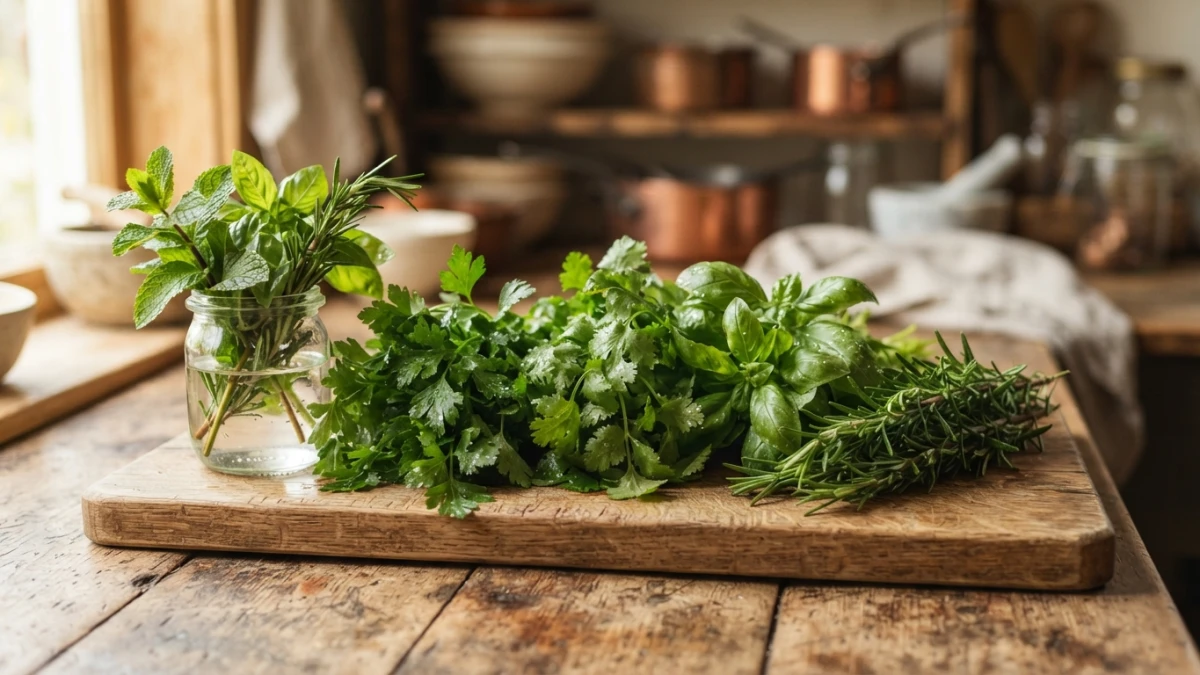
Does your parsley wilt in two days and your basil turn black in the fridge? It is almost never the fridge: it is that not all herbs should be stored the same way. Learning how to keep fresh herbs longer comes down to moisture, the right cold and a fresh cut at the base.
Why a bunch of herbs is ruined in two days
The supermarket bag is the worst possible place. Moisture released by the leaves pools inside, air cannot move and, within 48 hours, the herbs go soft and start to grow mould. The second enemy is the cut: once the bunch is separated from the plant, the stems stop taking up water and dry out, so the leaves go limp even in the cold.
The third factor is cold applied the wrong way. Basil is a warm-climate herb and the fridge damages it; rosemary and thyme appreciate dry cold; parsley and cilantro need water and cold at the same time. Storing everything together, the same way, guarantees that something gets lost.
How to keep fresh herbs longer: the golden rule is to sort by stem type
Before thinking about tricks, split what you brought home into three groups:
- Soft stems: parsley, cilantro, dill and mint. Treat them like a bouquet, base in water and leaves in the air, inside the fridge.
- Woody stems: rosemary, thyme, oregano and sage. No water, wrapped in barely damp paper towel and sealed in a container.
- Basil: the exception. It does not go into the fridge at all.
In every case, remove the tie, the black leaves and any broken stems before storing: one spoiled leaf spreads to the whole bunch within hours.
Soft-stem herbs: the bouquet-in-water method
Trim 1-2 cm off the base of the stems with a sharp knife and stand them in a jar or glass with 2-3 cm of water, enough to cover the base without soaking the leaves.
Cover the leaves with a loose plastic bag, without pressing it down or sealing it completely, and put the jar in the fridge. That way the herbs get moisture without the excess humidity that rots the leaves. Change the water every 1-2 days and trim the base again: with that routine, parsley, cilantro, dill and mint last anywhere from 10 days to 2 weeks.
Woody herbs and chives: dry cold and an airtight container
Rosemary, thyme, oregano and sage never go in water: the humidity of a glass makes them rot. All they need is the moisture already in the air. Wrap the bunch in barely damp paper towel, place it in a zip bag or an airtight container and refrigerate: they keep for up to 3 weeks.
Chives sit in between: not woody, but they do better with the same treatment as woody herbs, lightly damp paper and a little air, than in a glass of water. Chopped and frozen they lose their crunch, but they hold on to their flavour very well for cooking.
Basil: the herb that should not go in the fridge
Basil grows in warm climates, between 20 and 29 degrees, and below 10-12 degrees it suffers cold damage: leaves blacken and lose their texture in a single day. If you put it in the coldest drawer and found it black the next morning, you did nothing strange; you simply gave it the wrong climate.
Stand it in a glass of room-temperature water, away from direct sun, and change the water every 1-2 days: it lasts up to 2 weeks looking newly bought. If your kitchen is very dry, cover it loosely with a bag so it does not dehydrate. And if you have no choice but to refrigerate it, use it within 1-2 days and keep it away from the back wall, which is the coldest spot. To get more out of it, take a look at the properties of basil beyond its aroma.
To wash or not to wash: the choice that decides how long they last
Do not wash herbs you plan to store. Loose water on the leaves is mould's best friend, and once mould appears you lose the whole bunch. Wash only the portion you are about to use.
If the bunch came home wet or you washed it out of habit, dry it thoroughly with a salad spinner, paper towel or a clean cloth until not a single drop is left. Keep them well away from fruit that ripens quickly (apples, bananas, avocados), because it releases ethylene gas and speeds up yellowing. And if you are making a sauce or a stew with cilantro, check how to clean cilantro without bruising the leaves.
Freezing herbs: oil cubes, bags and what does not work
Parsley, cilantro, dill and woody herbs freeze well: wash, dry, chop and portion into zip bags. They keep for 3 to 6 months and can go straight into the pot, no thawing needed.
For soft-leaf herbs there is a better trick: chop them and freeze them in ice cube trays topped up with olive oil. Each cube is a portion ready for sofritos, sauces and eggs. So the oil does not mask the dish, pick a neutral one: among the types of cooking oil the flavour differences show more than you would expect.
Basil does not freeze whole because it blackens: turn it into pesto or a paste with oil. And keep in mind that frozen herbs are for cooking, not for garnishing or finishing a plate, because they lose texture and freshness. If you are freezing vegetables too, this vegetable freezing guide sorts out times and blanching for you.
Drying, reviving limp herbs and mistakes that ruin the bunch
If you have more than you will use fresh, drying is the longest-lasting option. Tie the sprigs into bundles, hang them somewhere dark and well ventilated for 1-2 weeks and store the leaves in an airtight jar out of the light: they keep for 6 to 12 months. You can also use a dehydrator or the oven at 40-50 degrees. Drying concentrates the aroma, but it does not replace fresh herbs for finishing a dish.
If the leaves are limp but still green, soak them for 15-20 minutes in very cold water with ice: soft stems rehydrate and recover part of their texture. And if the bunch has mould, slimy stems or black leaves, throw it out without guilt: cold does not reverse spoilage and that flavour spreads through the whole dish.
With the three-group rule and a water change every couple of days, most herbs go from lasting 48 hours to lasting weeks. That is the difference between buying a new bunch every week and always having parsley, cilantro or basil ready for whatever you feel like cooking.