Black Pearl Cocktail: What It Is, What Alcohol It Has and Calories
 By
Diego Cortés
By
Diego Cortés
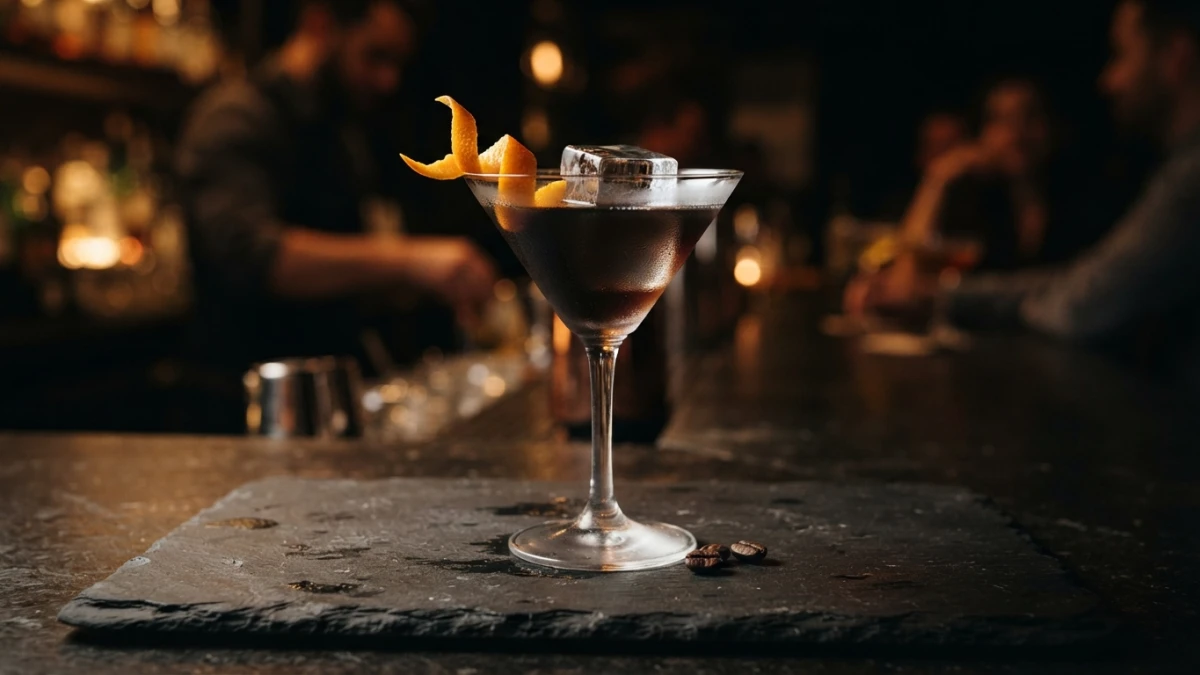
The black pearl is a short two-ingredient cocktail served ice cold and never shaken: coffee liqueur and dark rum. The real question is not how to make it, but what each version actually contains, because very different drinks travel under that name.
What the black pearl is: two ingredients and a name that misleads
The short definition: a short cocktail with two ingredients, served cold and stirred rather than shaken. Here the measure is 50 ml of each liqueur, a drink of about 100 ml for one person, ready in two minutes with a mixing glass and a bar spoon.
The black part comes from the colour that coffee liqueur and dark rum give each other, almost opaque together. The pearl part refers to texture: in the glass the drink looks round and glossy. There is no pearl, no secret ingredient and no exotic liqueur behind the name.
The trap: there is no single black pearl recipe. In Mexico and on the party circuit, the black pearl is Jägermeister with an energy drink; in other Latin American bars it comes with rum, lemon juice, brown sugar and grenadine. Neither is wrong: they are different versions, and this article sorts them out.
What alcohol the black pearl has: the short answer
In one sentence: coffee liqueur and dark rum in equal parts. That is the classic version, the one in this site's black pearl recipe card, and the reference point for comparing the rest.
| Version | Ingredients | Strength | Calories |
|---|---|---|---|
| Classic black pearl | 50 ml coffee liqueur and 50 ml dark rum | 28 percent | 200 to 240 kcal |
| Nightclub version | Jägermeister and energy drink, one part to one or two | 17 percent | 180 to 230 kcal |
| Bar version with rum | Dark rum, lemon juice, brown sugar and grenadine | 20 to 25 percent | 210 to 260 kcal |
| Black Russian, the skeleton | 50 ml vodka and 50 ml coffee liqueur | 28 to 30 percent | 190 to 230 kcal |
Final strength is a weighted average of what you pour. With 40 percent rum and 16 percent coffee liqueur, the drink lands near 28 percent; with Jägermeister, around 35 percent, and energy drink in equal parts, it drops to about 17 percent. One sentence settles the doubt: if your black pearl has Jägermeister and energy drink, it is not the same recipe as the one on this site.
Where the skeleton comes from: the 1949 Black Russian
The Black Russian, vodka with coffee liqueur, is credited to bartender Gustave Tops at the Hotel Metropole in Brussels in 1949, reportedly served in honour of Perle Mesta, then United States ambassador to Luxembourg. Swapping vodka for dark rum adds colour and the caramel and vanilla notes of cane, and that adjustment spread across Latin America as the black pearl; add a floating layer of cream and it becomes a White Russian. What is not documented is where the name was born in Chile or when. Better to say so than to invent a bar story.
Ingredients, ratios and which coffee liqueur to use
The base ratio is 1:1, one measure of each liqueur; for a drier drink, two parts rum to one part coffee liqueur works well. Spoons do the job too: one tablespoon is about 15 ml. The kitchen equivalents are in the guide on how to measure ingredients.
The coffee liqueur is the big variable: the most common bottle in Chile declares 16 percent alcohol, but sugar and alcohol change from brand to brand. Read the label and taste it on its own before adjusting. A very sweet liqueur calls for the 2:1 version; a dry one takes 1:1. For the rum, an aged dark one brings colour and caramel and a white one turns out more neutral; brandy or whisky also work. Unblended aguardiente, on the other hand, breaks the balance. Large ice and a cold glass: a few minutes in the freezer, or filled with ice and water while you set everything else up.
How it is served: strained into a glass or over ice
Strained into a cocktail glass it is stronger, because it stops diluting while you sip. Over a large cube in an old fashioned glass it is the bar version: colder and slightly more diluted by the end.
The technique leaves no room for shortcuts: fill the mixing glass with ice, add both liqueurs and stir for 15 to 20 seconds with a bar spoon. Shaking adds nothing here: with no citrus, cream or pulp, it only brings air and water. The exact steps live in the recipe card; this article explains the why and does not repeat them.
To garnish, a maraschino cherry or a strip of orange peel twisted over the surface: squeezing it releases oils that change the aroma of the first sip. Skip tropical fruit and paper umbrellas.
How strong and how many calories a black pearl has
The calories come from alcohol, at roughly 7 kcal per gram, and from the sugar in the coffee liqueur. A 50/50 black pearl lands at about 22 to 24 grams of pure alcohol, or around two standard drinks, comparable to one and a half 175 ml glasses of wine.
By composition: 50 ml of 40 percent rum is close to 110 kcal and 50 ml of coffee liqueur adds 90 to 130 kcal depending on the brand, leaving 200 to 240 kcal in total. The Jägermeister and energy drink version sits around 180 to 230. In a bar, with 70 ml measures, the same drink climbs past 300 kcal without the glass looking bigger.
The site's recipe card lists 160 kcal per serving as a general estimate, while the composition estimate rises to the 200 to 240 range, mostly because of the sugar. If you are watching your intake, count the higher number. To put the numbers in context, the chart of calories in Chilean dishes helps you compare.
Variations: white, frozen, shot, espresso and alcohol free
- White Russian: the same base with cream floating on top. Softer and higher in calories.
- Frozen: blended with ice until it turns to slush.
- Shot: the same mix in a small, very cold glass, to drink in one go.
- With a twist: cinnamon, vanilla or orange peel change the aroma without touching the ratio.
- Alcohol free: iced espresso, a syrup of sugar, caramel or vanilla, and milk or cream to get close to the colour and body of the original.
One necessary line on the alcoholic version: it is a high-strength drink by volume, so it is not served to minors or to pregnant women, and it does not mix with driving.
Common mistakes and how to order one at a bar
- Shaking instead of stirring: it adds water and bubbles to a drink that should feel dense.
- Using crushed ice: the drink turns watery within two minutes.
- Serving in a room temperature glass: the first sip tastes warm.
- Not measuring: an unbalanced ratio tastes of pure alcohol or of pure sugar.
- Buying the sweetest coffee liqueur and not adjusting the ratio afterwards.
To order one without surprises: ask for a black pearl with dark rum and coffee liqueur and you get the classic version. If it arrives too sweet or too strong, ask about the measure: the problem is almost always how much coffee liqueur went in.
Frequently asked questions about the black pearl
Is it the same as a Black Russian?
No. A Black Russian uses vodka; the black pearl swaps it for dark rum, which shifts both colour and flavour.
Which coffee liqueur should I use?
Any one you enjoy on its own. Bottles around 16 percent that are not overly sweet work best in equal parts.
How strong is it?
About 28 percent in the classic version and close to 17 percent in the Jägermeister and energy drink one.
Can it be made without alcohol?
Yes: iced espresso, a syrup of your choice and milk or cream give an after-dinner drink with the same dark profile.
Why is it called black pearl?
Because of the almost black colour of the mix and the round gloss of the drink in the glass. It refers to no ingredient.
Tip: 1:1, large ice, stir for 15 seconds and serve in a cold glass. If it tastes of pure alcohol, the coffee liqueur measure came up short; if it tastes of liquid caramel, the opposite happened. Taste it after ten minutes, not at the first sip: it keeps opening up as it dilutes.