Jote: What This Chilean Wine and Cola Drink Is and How Many Calories It Has
 By
Diego Cortés
By
Diego Cortés
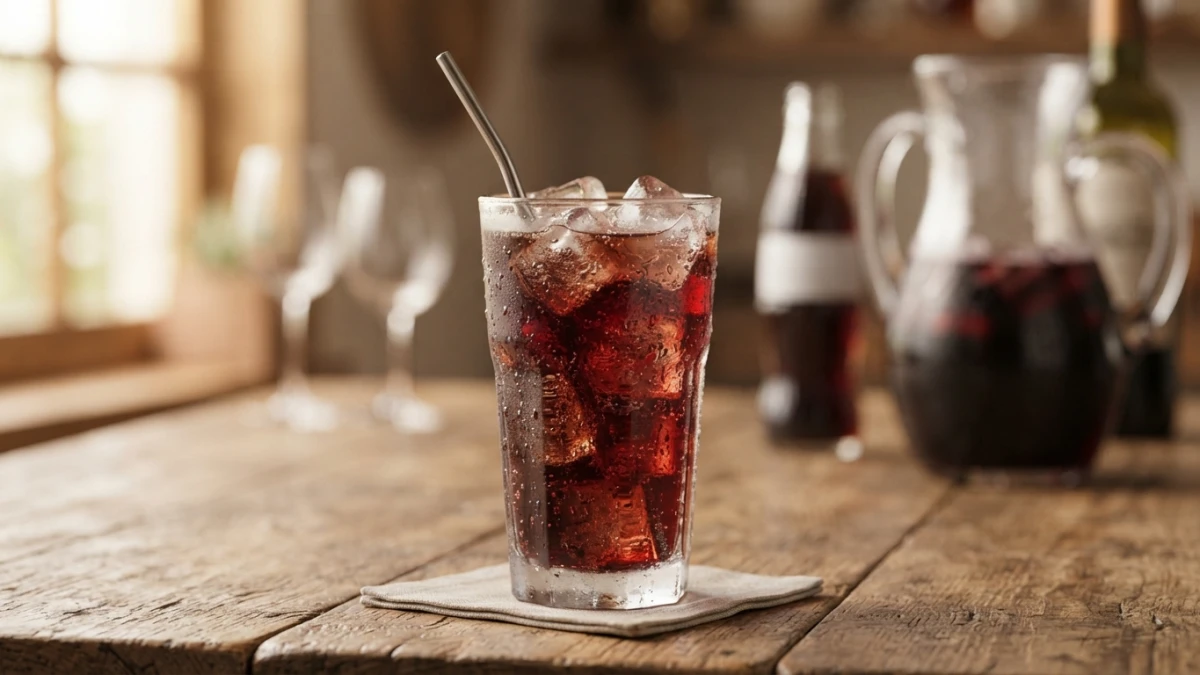
Jote is the Chilean red wine and cola drink: two ingredients, ice and a tall glass. It was born to stretch cheap wine at a fonda and today people argue about it as a cocktail. Here are the ratios, the alcohol that ends up in the glass and the calories by glass size.
What jote is: red wine and cola in a tall glass
Jote is a mix of two ingredients and nothing else: red wine and cola, served very cold over ice in a tall or wide glass. There is no syrup, no bitters, no added spirit; the simplicity is the whole recipe. It is the Chilean version of the kalimotxo poured in the Basque Country and across much of Spain.
The name comes from the carrion bird with black plumage and a red head: the colors of the wine and the cola, in that order. That is where the nicknames "licor de ave" and "avecor" come from, along with the synonym "tincola" (red wine and cola).
In practice it belongs to the fondas and ramadas of the national holidays, to asados and to casual gatherings: a cheap, refreshing drink served by the jug and shared. The step-by-step with amounts lives in the jote recipe on vidarecetas.com; here you get the name, the alcohol, the calories and the serving.
Where jote comes from: from the Basque kalimotxo to Chilean fondas
The mix became popular in the Basque Country in the 1970s as a cheap way to rescue spoiled wine: half wine and half cola in a wide glass. It is worth saying this carefully, because the exact origin is disputed and some press argues the Basques did not invent it.
In Chile it was adopted under the name jote and became part of the national cocktail record: it appears in the guide Cocteleria Criolla (2017) and in the lists of Chilean drinks the press has published since the 2000s, almost always described as wine with cola, working-class in register and with more wine than soda.
The mix is still talked about today: specialist press debates whether mixing wine with cola is a betrayal or a cultural ritual. In Chile jote carries the stigma of "mortgaging" a good red and at the same time has defenders. Both things are true.
Jote ratios: 1:1, 2:1 and the lighter version
The international formula is half and half: 50% wine and 50% cola in a wide glass over ice, with a slice of lemon if you like. That is the kalimotxo ratio and the one most repeated in recipes for the mix.
The Chilean custom asks for "a little more wine than soda": several local recipes use 2:1, meaning 1 liter of red wine to 500 ml of cola with sliced orange, serving four to five portions. Just as many repeat "equal parts". Both are valid.
The recipe on this site uses a lighter mix, 100 ml of wine and 300 ml of cola in a tall glass, to drink soft. If you prefer a stronger jote, the route is a young, medium-bodied red and less cola, never a wine meant for cellaring.
How much alcohol is left in the glass
A young table red sits between 12% and 14%. Once you mix, the strength drops in proportion to volume: the wine's alcohol times the wine's share divided by total volume. With a 13% wine, a 1:1 mix lands near 6.5% and a 2:1 mix near 8.6%.
In perspective: a 1:1 jote sits in beer territory (4% to 5%), but it is drunk from a much larger glass, so the alcohol per glass is higher. A piscola at 1:3 with 40% pisco lands near 10%. Jote is deceptive because it goes down sweet and fizzy.
Ice plays a role too: with plenty of ice the drink dilutes as you go and flattens toward the middle of the glass; with little ice it ends up warm and flat. To water it down: more cola, more ice and a lower-alcohol wine.
Jote calories: they depend on the glass, not the recipe
The calories come from the wine and the cola. A table red runs around 85 kcal per 100 ml according to food composition tables; the cola label declares 42 kcal and 10.6 g of sugar per 100 ml. Alcohol adds 7 kcal per gram, so the total depends on glass size and ratio.
| Glass or portion | Mix | Calories (estimate) | Alcohol by volume (estimate) |
|---|---|---|---|
| 150 ml glass | 1:1 (75 + 75 ml) | ~95 kcal | 6.5% |
| 200 ml glass | 1:1 (100 + 100 ml) | ~127 kcal | 6.5% |
| 200 ml glass | 2:1 (133 + 67 ml) | ~141 kcal | 8.6% |
| 350 ml tall glass | 1:1 (175 + 175 ml) | ~222 kcal | 6.5% |
| 350 ml tall glass | 2:1 (233 + 117 ml) | ~247 kcal | 8.7% |
| Portion from a 1.5 L jug (375 ml) | 2:1 (1 L wine + 500 ml cola) | ~265 kcal | 8.7% |
| 350 ml tall glass with diet cola | 1:1 | ~149 kcal | 6.5% |
The numbers are this house's estimate based on those reference values, not laboratory data: they are useful to compare one glass with another. With that yardstick, the figure the Chilean press often quotes, about 220 kcal per glass of jote, matches a tall glass served 1:1 and not a small glass.
If you want to bring it down, the lever is diet cola: the 1:1 tall glass drops from about 222 to about 149 kcal and keeps the sweetness. For context, a 330 ml beer runs around 140 kcal, and the chart of calories in Chilean dishes covers the food on the table.
How jote is served (and how to order it at a fonda)
Serving matters as much as the mix: a tall or wide glass chilled well, plenty of ice in large cubes (they melt more slowly than crushed), freshly opened and very cold cola, and wine straight from the fridge. The cola goes in last, down the side of the glass, so the fizz survives. The orange or lemon slice is optional.
Ordering is simple: at fondas, ramadas and bottle shops, "un jote" or "un tincola" means wine with cola. Softer, with more ice and more cola; to share, by the jug: 1 liter of wine with 500 ml of cola serves four generous portions.
On storage: jote is meant to be drunk fresh and gains nothing from being kept. It loses fizz within hours, so whatever is left gets covered and lasts a day at most in the fridge. Freezing it makes no sense: once thawed you get a flat liquid with no bubbles.
Jote and its cousins: fanshop, borgona, chupilca and piscola
Jote opens the door to a whole family of Chilean drinks that exist for the same reasons: to stretch wine, soften it and refresh it.
- Fanshop: wine with orange soda.
- Borgona de fruta: red wine with strawberries and sugar.
- Chupilca: wine or chicha with toasted flour.
- Navegado: hot wine with cinnamon and orange, the winter version.
- Wine in melon: the summer mix par excellence.
- Ponche a la romana: wine, fruit and sugar, served by the liter.
- Piscola: the spirit-and-cola branch; and the terremoto of pipeño with pineapple ice cream, which also has an alcohol-free version.
Within the family there are variations: white or rose wine makes it fresher and more citrusy, herbs or lemon sharpen it, and the "flaite" is the version made with a non-traditional cola brand. And in Chile "jote" is also the nickname for someone lovesick.
Mistakes that ruin a jote
Ingredient mistakes are the expensive ones: warm or half-flat cola kills the drink before the first sip; an expensive or age-worthy wine is a waste, because the point of jote is a young, simple red; and overdoing the cola turns it into colored soda.
Serving mistakes are just as common: a small, warm glass; too little ice or crushed ice that melts instantly; a jug left open for hours; and mixing it in advance to "get ahead" of lunch. The fix is always the same: cold, fizzy and made to order.
Without a lecture: two tall glasses of jote add up to about half a bottle of wine per person and go down easily thanks to the sweetness and the fizz, so it pays to alternate with water, never serve it to minors or pregnant women and do not drive afterwards. With that clear, jote is what it is: cheap, simple and very Chilean.