How to Reheat Food in the Microwave Without Drying It Out: Power, Times and Common Mistakes
 By
Diego Cortés
By
Diego Cortés
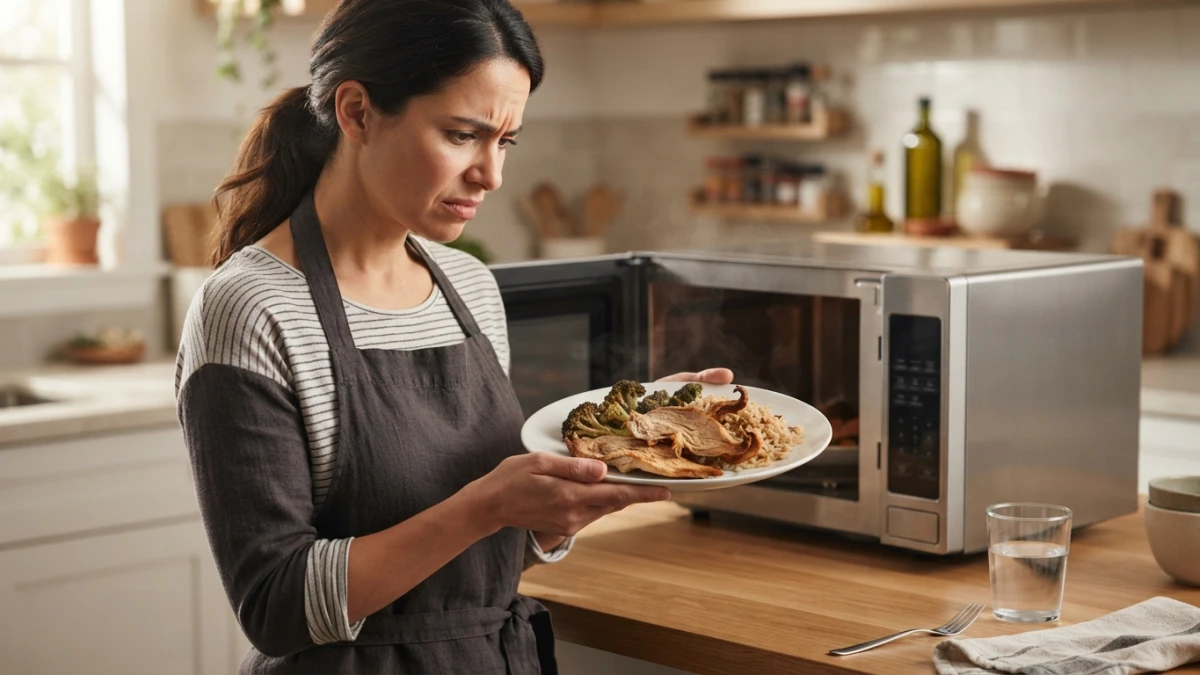
Does reheating food in the microwave always end in dry chicken and hard rice? It is almost never the appliance's fault, but the technique. This guide explains how to reheat food in the microwave without drying it out: steam, the right power level and food safety rules.
The microwave is the appliance people use the most for leftovers and, at the same time, the one that gives the worst results when used at full power and without moisture. The good news is that you do not need to buy anything: with a glass of water, a lid with a steam vent and two or three short bursts, chicken turns juicy again, rice recovers its fluffy grains and stews keep their sauce.
Why the microwave dries out food (and sometimes makes it explode)
The microwave does not heat the plate from the outside, the way an oven does: it makes the water molecules inside the food vibrate and the heat is born in the interior. At full power, that water boils very quickly and escapes as steam, which is why chicken and rice come out dry or hard even when the plate is burning hot.
On top of that, heat spreads unevenly: some spots boil while others stay cold. That explains the sauces that splash and stain the inside of the appliance, the raw centers and the uneven reheating we have all seen at some point.
The solution is not to switch appliances or give up on leftovers: it is to reheat with moisture, at medium power and in short bursts. That is what this guide is about.
The steam trick: a glass of water, a lid and damp paper
The simplest way to bring moisture back is to place a cup or glass of water next to the plate inside the microwave. The water absorbs part of the energy and produces steam that surrounds the food: instead of drying it out, it rehydrates it.
Cover the plate with a microwave-safe lid leaving a small vent for the steam to breathe, or use slightly damp kitchen paper. This step is almost mandatory for rice, pasta and meat, the foods that dry out the most.
If the plate is very dry, sprinkle one or two tablespoons of water, broth or sauce over it before covering. That extra moisture is what brings yesterday's leftovers back to life.
Power and time: why not everything should be reheated at full power
Full power only works for liquids: soups, stews and broths. For dense dishes, meat and rice, drop to 50-70 percent so the heat reaches the center without burning or drying the surface.
Heat in short bursts of 30 to 60 seconds and check between rounds. Two short bursts work better than one long round at maximum power, because they let the heat spread before adding more.
And even though it is hard to wait, let the plate rest for about two minutes outside the microwave before serving. During the rest, heat keeps traveling toward the center and the temperature evens out: it is the difference between a plate that is hot on the outside and cold inside, and one that is properly hot all the way through.
How to reheat each food: rice, pasta, meat, stews and more
Every food has its trick. These are the general guidelines for the most common leftover cases.
Rice and pasta
Sprinkle a few drops of water, cover and heat at medium power. Rice should only be reheated once: its Bacillus cereus spores survive cooking and the toxins they produce resist heat, so anything left after reheating should be thrown away.
Chicken, meat and fish
Cover with a little moisture and heat at 50-60 percent so they stay juicy instead of rubbery. Fish, in particular, appreciates very short bursts.
Stews, soups and sauces
These can go at full power, but stir halfway through to spread the heat and stop the surface from boiling while the center stays cold.
Vegetables, pizza and bread
Reheat vegetables in short bursts so they keep their texture. For pizza, place a glass of water next to it: the steam stops the cheese from turning rubbery; if you prefer a crispy base, a skillet or the oven are better options, as we explain in our guide to how to use an oven. Bread only needs 10-15 seconds without a cover, and it is best eaten right away because it hardens quickly once out.
Safe containers: what goes in the microwave and what does not
Glass, ceramic and plastics marked as microwave-safe are fine. Metal, aluminum foil and dishes with metallic rims should never go in: they cause sparks and electric arcs that can damage the appliance and, in the worst case, start a fire.
Do not heat tightly sealed containers either: pressure deforms them or makes them burst. Eggs in their shell and single-use containers without the microwave symbol are off the list.
To cover food, use the microwave's own lid, an inverted plate or kitchen paper, always with a vent so the steam can escape slowly.
Food safety: how hot to reheat and how long leftovers last
Reheat until the center is fully steaming. The safe reference, according to official food safety guidelines, is 165 °F (74 °C) in the center of the food, measured with a kitchen thermometer if you want to be sure.
Leftovers should go into the fridge within two hours of cooking and be eaten within three to four days. If you will not eat them in time, freeze them; our guide to how long vegetables last in the fridge includes the storage times for each food.
Reheat only the portion you are going to eat and only once: cooling and reheating the same dish over and over multiplies the risk of contamination and ruins the texture. And if the leftovers came from the freezer, thaw them first with a safe method: our guide to how to thaw food safely explains the three recommended methods.
Common mistakes when reheating food in the microwave (and how to avoid them)
Setting four or five minutes at full power without a cover is the recipe for rubbery chicken and hard rice: always moisture, medium power and short bursts.
Piling the food onto a small plate does not help either. Spread it in a thin layer shaped like a donut, leaving the hole in the center, so it heats evenly, and stir or rotate the plate halfway through.
Two typical oversights: skipping the rest and reheating the same dish twice. Wait the two minutes before serving and divide leftovers into portions when you store them, so you only reheat what you are going to eat.
Summary: how to reheat food in the microwave step by step
Follow this sequence and leftovers will come out almost as good as freshly cooked:
- Spread the food in a thin layer with a hole in the center.
- Add moisture: a glass of water next to it, a lid with a steam vent or damp paper.
- Choose the power: 50-70 percent for dense dishes and meat, 100 percent only for liquids.
- Heat in 30-60 second bursts and stir or rotate between rounds.
- Let it rest for about two minutes outside the microwave.
- Check that the center is steaming (165 °F with a thermometer if in doubt).
Frequently asked questions
How long should you reheat food in the microwave?
There is no universal time: it depends on the amount, the food and the wattage of the appliance. The practical rule is to heat in 30-60 second bursts, check and repeat until the center is fully steaming.
Why does reheated rice turn out hard?
Because it loses moisture and the starch changes structure as it cools. It is fixed with a few drops of water, a cover and medium power; and remember that rice should only be reheated once for safety.
Can you reheat chicken twice?
It is not recommended. Every cooling and reheating cycle increases the risk of contamination, so divide leftovers into portions and reheat only what you are going to eat.
What happens if I put metal in the microwave?
Metal reflects microwaves and creates sparks and electric arcs that can damage the appliance and start a fire. Only containers and utensils marked as microwave-safe should go in.