Asado de Tira: Cross-Cut Beef Ribs and How to Grill Them
 By
Diego Cortés
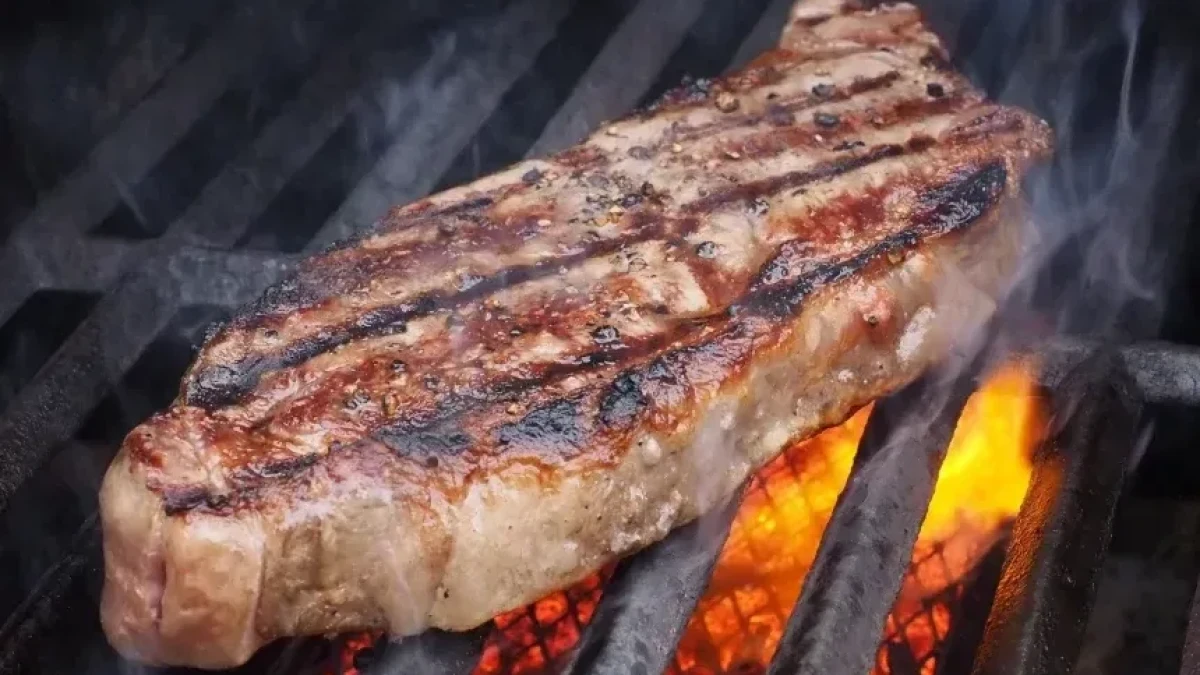
Asado de tira is not a steak and it is not a tender cut: it is beef ribs cut across the bone, cooked the way a rib should be cooked. Ordering it like a sirloin is exactly what leaves it tough. Here is what to know before you buy it.
What asado de tira is: beef short ribs cut across the bone
Asado de tira is a strip of beef rib cut crosswise, perpendicular to the bone, so every piece carries meat and bone inside. No saw, no strip: the cut exists because a saw goes through the bone.
The names change with the country and the butcher: asado de tira, tira de asado, tira de costilla, costilla cargada. In Chile it sits next to the whole rib rack and next to the banderita, the wide, showy strip. In English it is sold as beef short ribs, cross-cut beef ribs or flanken-style short ribs, the last one being the flanken cut.
Two working measures settle everything else. The narrow strip is under 5 cm wide and the wide strip is over 5 cm. And the bone tells you the age of the animal: small, rounded bones mean a young animal and more tender meat.
Where it comes from: the saw at the Campana packing plant
The best documented origin is Campana, north of Buenos Aires, in 1882, where The River Plate Fresh Meat Co. set up the first beef packing plant in South America. What went to London were boneless quarters, so the rib racks were thrown away whole as low-value trim.
The missing piece was the saw. When the plant brought one over from Europe, the workers began cutting those discarded racks into strips and taking them home to grill: an export by-product turned into the most popular cut on the Argentine grill. The story was reconstructed by Claudio Valerio in his book Asado de tira.
Before the saw, the whole rib rack was roasted on a cross or on a stake, and the metal grill only became common in the mid twentieth century. Valerio adds an awkward, useful detail: the cut was born in town butcher shops.
How to ask for it: strip, rack and banderita
The first confusion to clear up: the strip is cut across, with the bones sectioned into little aligned pieces; the rib rack is cut lengthwise, with whole parallel bones in 8 to 15 cm strips. That is the English cut, the one cooked as barbecue ribs. The strip is a different technique.
What to order: 3 to 5 cm thick for the classic quick-grill strip, or the thick piece and the banderita if you plan to cook with a lid and some patience. Always ask the thickness, because the whole schedule depends on it.
How much to buy, bone included: 400 to 500 g raw per adult, or 250 to 300 g if chorizo or offal comes first; 4 to 5 kg for ten people. Bone accounts for roughly a quarter to a third of the weight, which is why it yields less than a loin.
The technique: the bone rules, and the four mistakes that toughen it
The golden rule: start bone side down over the coals and turn it as little as possible. The bone works as a shield and delivers slow heat, so about 70 % of the cooking happens on that side. The signal to turn: when juices weeping from the bone look half set.
Medium, even coals: you should be able to hold your hand at grill height for 6 to 8 seconds, grill 15 to 20 cm above. Coarse salt at 10 to 12 g per kilo and nothing else: no piercing, no moving, no marinade. Finish 3 to 5 minutes meat side down and rest 15 minutes in butcher paper; the full method is in the grilled strip roast recipe.
The four mistakes that toughen it: too hot a fire, which chars the surface and leaves the bone raw; rushing, because collagen needs time; raw charcoal smoking under the meat, which makes it bitter; and slicing without resting. If it came out tough, finish it low with a lid and a splash of wine or stock, 20 to 30 minutes, or shred it.
How long asado de tira takes: a table by thickness
The most searched question has ranges, not one number, because thickness, distance from the coals and the charcoal all move the clock.
| Cut | Method | Time |
|---|---|---|
| Thin strip, 3 to 5 cm | Open grill, medium heat | 40 to 60 minutes |
| Medium strip, 5 to 8 cm | Moderate heat, turned once | 1 to 1.5 hours |
| Banderita or thick rack | Indirect with lid, 120-140 °C | 2 to 4 hours |
The number almost nobody gives: you are not looking for medium rare like a steak, you are looking for 85 to 92 °C at the centre, when collagen has turned to gelatin and the meat gives between the bones. Below that it is cooked and tough at the same time. The beef safety minimum, 63 °C with resting, is in our internal temperature chart.
And the sources disagree: some say 45 to 60 minutes per side, others 20 minutes in total. Thickness, grill height and even wind explain the gap.
On the grill, in the oven or smoked: the three cooks
Open grill, the classic: bone down, medium coals, one turn and a sear at the end; it gives the crust and the juiciest result, but it demands attention. Low oven: salted, bone down, on a rack with a little liquid in the tray, at 150-160 °C for 1.5 to 2 hours, then 10 minutes at 220 °C.
Smoked is the weekend version: 110-120 °C for 3 to 5 hours over fruit wood; the detail is in the smoked window strip roast recipe. Leftovers shred for sandwiches or empanadas and keep 3 days in the fridge.
Asado de tira, bife de chorizo, vacío and entraña: the table that separates them
| Cut | What it is | How to cook it |
|---|---|---|
| Asado de tira | Beef ribs, bone in, heavy collagen | Medium heat, long cook |
| Bife de chorizo | Sirloin, boneless, tender | 3 to 4 cm, minutes, medium |
| Bife angosto | Bone-in strip loin, the chuletón | High heat and resting |
| Ojo de bife | Ribeye, heavily marbled | Hot grill, short time |
| Vacío | Flank area, fibrous | Slow coals, 3 to 4 hours |
| Entraña | Skirt, long grain | A couple of minutes per side |
They are not cooked the same way: bife de chorizo is ruined by an hour on the grill and asado de tira is raw after eight minutes. For a gathering where people arrive at different times, the strip is the most forgiving cut. One naming detail saves an expensive mistake: bife de chorizo is not a sausage, it is the local name for sirloin.
How many calories asado de tira has, and how to serve it
Edible slow-cooked beef rib runs about 295 kcal per 100 g once visible fat is trimmed, and up to about 400 kcal per 100 g eaten whole (USDA references). A 300 g strip with the bone leaves 210 to 225 g edible, between 630 and 900 kcal depending on fat; with the 400 g portion per adult, the plate runs from 840 to 1,200 kcal. These are estimates.
At the table it is cut between the bones and served on a board, with salad, potatoes and bread, and with chimichurri or pebre on the side, never spooned over before grilling: chimichurri is a table sauce, not a marinade.
The order of the grill matters too: offal and chorizo first, the strip in the middle for the hungry ones and the tender cuts last.
Frequently asked questions about asado de tira
Is it the same as beef ribs
Yes, it is beef rib. The difference is the cut: crosswise through the bone instead of lengthwise.
What to ask the butcher for
Cross-cut beef ribs, 3 to 5 cm thick for a quick grill or thicker for lid-on cooking.
How much per person
400 to 500 g raw when it is the main cut, and 250 to 300 g when chorizo comes first.
Should it be marinated
No: coarse salt and nothing else is the tradition. Chimichurri goes on the table.
Why does it turn out tough
Too hot a fire and rushing. Collagen needs time; over live coals the centre stays raw.
Can it be made in the oven
Yes: bone down, 150-160 °C for 1.5 to 2 hours, then 10 minutes at 220 °C.
How much salt
10 to 12 g of coarse salt per kilo, on both sides before it hits the grill.
Do you eat the bone
No. It stays on the plate; it is there to carry heat and protect the meat.
What is it called in English
Beef short ribs, cross-cut beef ribs or flanken-style short ribs.
Can it be reheated the next day
Yes, in a low oven or a covered pan. A microwave dries it out.