Cochayuyo: What It Is and How to Soak and Cook Chilean Kelp
 By
Diego Cortés
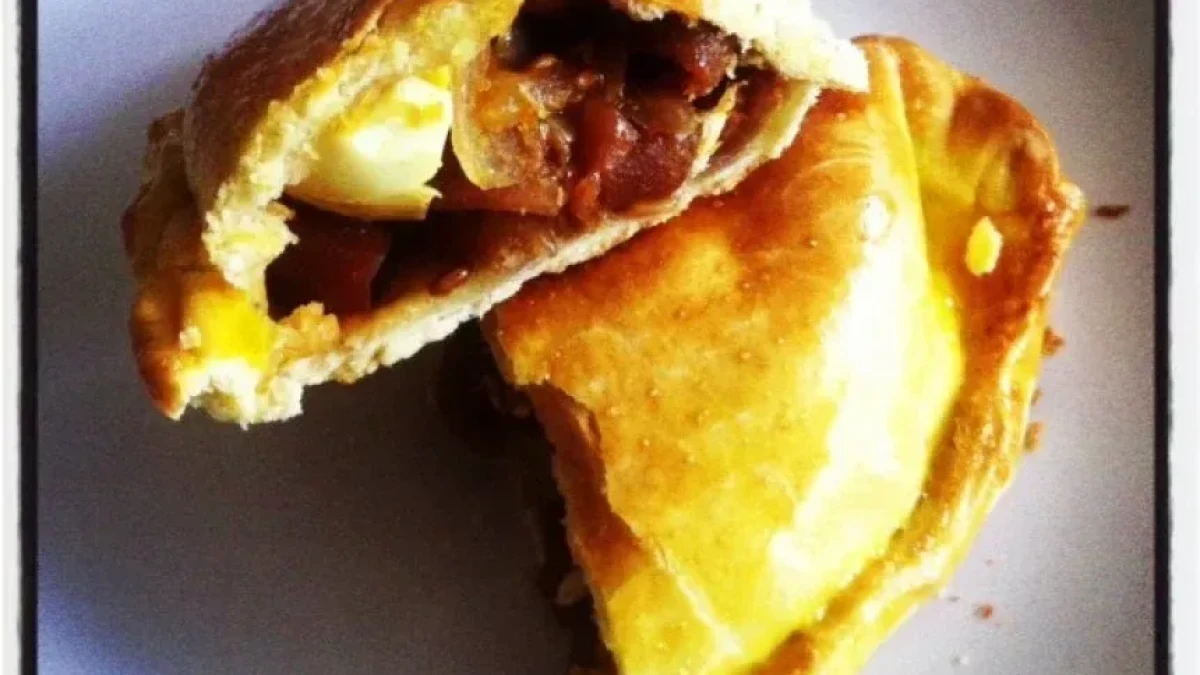
Cochayuyo is not sold ready to cook: it comes dry, hard and salty. And almost everything that goes wrong in the kitchen goes wrong at the soaking stage. Badly rehydrated, the stem stays rubbery and the dish tastes of pure sea.
What Cochayuyo Is (and Why It Is Not Just Another Vegetable)
Get the definition straight first: cochayuyo is an edible brown seaweed, Durvillaea antarctica, that grows attached to the rock right where the waves break. It is not a mushroom, not a gelatin and not a land plant. It is a seaweed, and that explains everything that happens to it in the pot.
Its "leaves", the fronds, are fleshy and have a honeycomb structure that holds water and air: that is why they float, and why they release a texture somewhere between gel and cartilage that confuses anyone tasting it for the first time. The "stem", the stipe, is round and measures about a metre up to the first frond. It ends in a very strong holdfast that anchors the plant in the middle of the surf, and the whole thing can reach 15 metres long. At sea it looks brownish green; dried, it turns reddish brown and hard as a rod.
The name is half the story. Cochayuyo comes from Quechua qucha yuyu, "sea plant", and cochaguasca from qucha waska, "sea rope", for its resemblance to a cord. From Mapudungun comes coyofe, from kollof, the leaf. The stem has its own regional name: ulte in the south, lunfo near Valdivia and lembo in Chiloe.
Where It Comes From and Who Eats It
It grows along subantarctic coasts: Chile, Argentine Patagonia, New Zealand and the South Atlantic, always in cold water and heavy swell. In Chile it is harvested from the north-central coast down to Cape Horn, and the frond is cut leaving the holdfast, which is where it regrows; regional closed seasons exist precisely to stop the plant being torn out by the root.
It fed the coastal peoples, the Lafkenche and Williche, and it also worked as currency: dried it weighs almost nothing, so it travelled inland to be traded. It was given to babies to chew while teething, the stems gave a dark brown dye for cloth and the fronds were used for the ball in linao. Today it is back on the table in salads, stews, pies and empanadas.
How to Buy It: Dried, Fresh and What to Look For
The formats come in the order you will actually find them: dried in hanks or bundles, the usual thing at markets and supermarkets; dried and chopped, more convenient and pricier per kilo; and fresh or frozen near the coast, especially in the south.
My rule for choosing: even dark brown colour, clean sea smell, and a stem that bends instead of snapping like a noodle. If there is dampness, white patches or a musty smell, skip it: wet seaweed ferments.
It yields a lot: 100 g of dried seaweed is enough for a salad platter for four.
How to Soak Cochayuyo: The Step That Decides Everything
Soaking needs numbers, because "a while" does not work here. Cold water, plenty of it, at least 2 hours, and ideally overnight, around 12 hours. Hot water does not speed it up: it cooks the surface and leaves the stem just as hard.
The trick that does work is a splash of vinegar in the soaking water. It helps soften the seaweed and tones down the sea flavour. Some people use lemon; the effect is similar and the smell is nicer.
What will happen, and is not a mistake: the water turns brown and becomes slightly gelatinous, because the seaweed releases alginic acid. Rinse it and move on. And if a recipe asks you to boil it in the soaking water, remember that water is salty.
How to Cook It: Times and How to Tell It Is Done
Times depend on thickness, not on luck. Starting from cold water, 20 to 30 minutes at a gentle boil. If the stem is thick, 40 minutes to 1 hour. In a pressure cooker, halve that and test at 10 minutes: it is easy to overshoot.
The doneness test never fails: cut a piece of stem and bite it. It should give without falling apart. If it squeaks like rubber it needs more time; if it disintegrates it went too far. The frond softens before the stem, which is why the stem goes into the pot first when you cook them separately.
About the water: boiling it in the soaking water keeps more flavour; in clean water it turns out more neutral. At the end, drain and cool it under cold water to stop the cooking, especially if it is headed for a salad.
How to Cut It: Stem and Frond Are Not the Same
Separate them before chopping. The frond is thin and gets cut into strips or pieces. The stem is thick and should be sliced into thin rounds, because it takes longest and gives the chewy texture that defines the dish.
Depending on what you are cooking: finely chopped for empanadas, stews and charquican; strips for salad and ceviche; stem rounds for stews with potato and squash, where they hold up without falling apart.
What to Cook with Cochayuyo (Beyond Salad)
The everyday salad is the entry point: cooked and chilled cochayuyo, sliced onion, lemon, coriander and oil. It works as a side for anything fried or roasted. If you want more ideas along those lines, the salads section has several.
Spoon dishes are where it really earns its place. Charquican is the classic example: the seaweed replaces or accompanies the meat and adds sea flavour and body. Stews with potato, squash and corn work too, and so do soups, such as the express soup with nori seaweed.
And the versions that surprise people: cochayuyo empanadas with a seaweed, raisin and olive filling; cochayuyo ceviche with red onion and lemon; and cochayuyo jam, which exists, is sweet and is made by coastal harvesters. For the cultural context, the Chile tag gathers what runs along those lines.
What It Actually Provides (and Where the Traps Are)
Seaweed reference sheets repeat the same table per 100 g of dried seaweed: fibre 47.5 g, protein 11.3 g, carbohydrate 8.7 g, fat 0.3 g, iodine 490 micrograms, iron 30.6 mg, calcium 1,160 mg, magnesium 1,010 mg, potassium 1,250 mg and sodium 3,460 mg. Almost half of that fibre is alginic acid, the same gelling agent the industry labels E-400. These are reference values, not a measurement of mine.
Translated to a real portion: 15 g of dried seaweed, what a salad carries, is about 7 g of fibre, about 74 micrograms of iodine - half the 150 microgram daily reference - and about 519 mg of sodium, meaning 1.3 g of salt. This is not a "free" food: it is fibre, minerals, iodine and salt.
The warnings, without alarmism and without promises: because of its iodine it should not be eaten daily in quantity, and anyone with hypothyroidism, hyperthyroidism or who is pregnant should check with their doctor. Because of its sodium it is not the best choice on a salt-restricted diet. Rinsing and changing the water lowers some of the salt, not all of it. And it is not a superfood: it is a seaweed. If seaweed and health interests you, the article on sea moss covers a different species.
Do I have to boil it or is soaking enough?
For salads and ceviche, a good 12-hour soak is usually enough if the seaweed is thin. For stews and empanadas, boil it: the stem needs heat to give way.
Can you eat it raw?
You can chew it, and people did. As a dish, no: raw it is tough, very salty and intensely flavoured.
Why does it turn out hard?
Almost always for two reasons: too little soaking, or a stem cooked for less time than the frond. Test the stem before turning off the heat.
Can you freeze it once cooked?
Yes. Drain it, portion it and freeze it; it keeps for a couple of months and thaws in the fridge.
Does it taste very strongly of the sea?
Yes, and the vinegar in the soak tones it down considerably. Changing the water halfway also helps.
Does it have too much iodine?
It is high in iodine: about 74 micrograms per 15 g portion. That is fine occasionally, but not daily in quantity, or with a thyroid condition.
Where can you buy it outside Chile?
In Latin American and seafood shops, almost always dried in hanks or chopped. Beyond those channels, it is easier to find online.