Humitas: What They Are and How They Differ From Tamales
 By
Diego Cortés
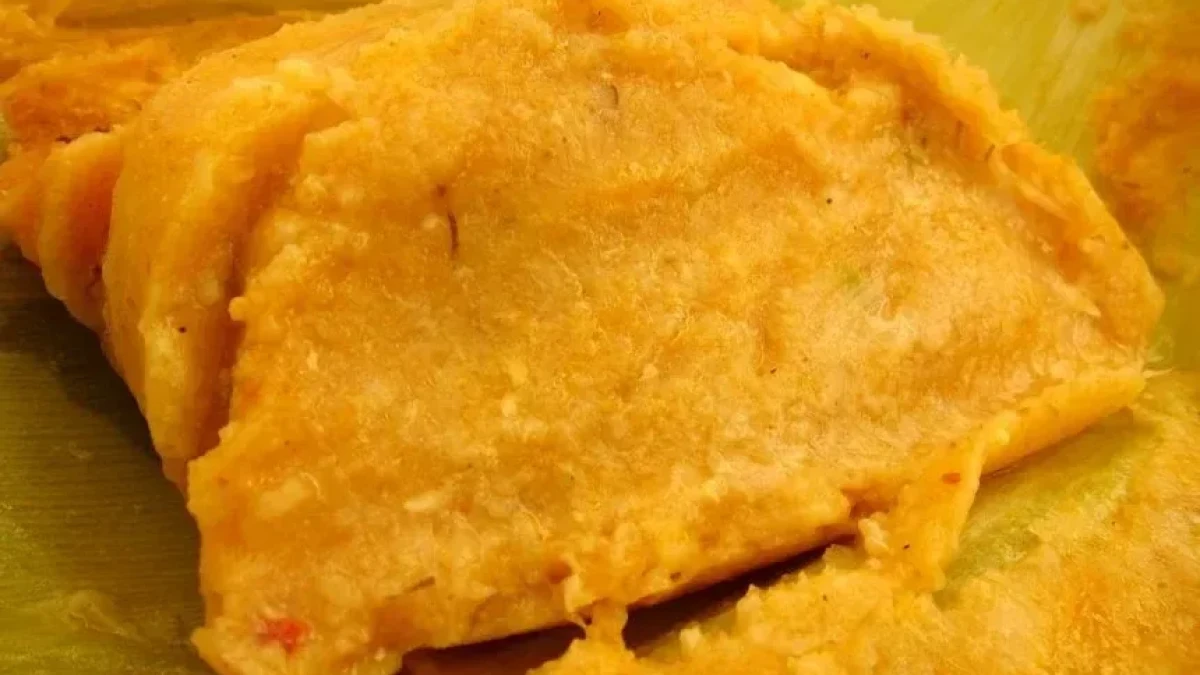
Humitas are a paste of ground fresh corn with onion, basil and fat, wrapped in the corn's own husks or cooked in a pot until thick. They are not tamales: a tamal uses dried nixtamalized corn and carries meat, while humitas use fresh corn and their whole point is the grain.
What Humitas Are (and Why They Are Not Tamales)
In their simplest form they are ground corn, sauteed onion, fresh basil and a little fat, seasoned and cooked. The confusion with tamales comes from the wrapping and from habit: both get wrapped and boiled, but the base is different. A tamal starts from dried nixtamalized corn, a firm dough filled with meat, chicken or mole; humitas start from fresh corn and, traditionally, carry no filling at all.
Humita comes from the Quechua humint'a, which translates as corn bread or fresh-corn bun. It entered Spanish as huminta and was shortened. The word is not a local quirk. Texture finishes the separation: a humita is juicy, with grains you can still feel; a tamal is dense and cuts in a block.
Where It Comes From: Fresh Corn From the Andes
Humitas are Andean and pre-Hispanic. They were being made before the Spanish arrived across what is now Chile, Peru, Bolivia, Ecuador, northwestern Argentina and southern Colombia. In each country the name, the leaf and the filling changed, but not the base: ground fresh corn cooked in water or steam.
In Chile it is made with choclo humero or choclero, the large, milky-kernel corn eaten fresh, and its season runs from December to March. Outside those months, frozen corn does the job well. The site's humitas in a pot recipe does exactly that and is the reference for quantities and timings.
Wrapped or in a Pot: Two Forms of the Same Dough
Wrapped in husks is the hand-held version. The dough is spread over two crossed husks, folded into square packets, tied and boiled in salted water for 35 to 40 minutes. It comes out firm outside, moist inside, with a basil aroma.
In a pot is the spoon version: the same mixture cooks until it thickens and is served like a stew. It needs more time and less corn per guest. The technical difference is the consistency of the dough: the wrapped one needs a thicker dough, because a runny one falls apart while boiling; the pot one needs a looser dough, so it thickens without sticking.
The Ingredients That Define a Humita (and the Ones That Do Not)
The minimum is not negotiable: fresh corn, onion, basil, fat (lard or butter), salt, pepper and, in Chile, a pinch of aji de color. Basil is not decoration: it is what separates a humita from an unsweetened corn pie.
You can add fresh cheese in the center, standard in Peru and Argentina; grated squash in northern Argentina; a little milk for a silkier dough; and sugar for the sweet version, an old custom. What ruins it: blending the corn to a paste, using pre-sweetened canned corn, and skipping the onion sweat, because raw onion ferments inside the packet.
Humita, Tamal, Hallaca and Elote: The Table That Settles It
Four corn dishes that get confused constantly and separate on three questions: which corn is used, whether there is a filling, and how it is wrapped.
| Dish | Base | Filling | Wrapper | Texture |
|---|---|---|---|---|
| Humita | Ground fresh corn | No, cheese optional | Corn husk | Juicy and grainy |
| Tamal | Dried nixtamalized corn | Yes, meat or mole | Banana or corn leaf | Firm and compact |
| Hallaca | Corn dough with stew | Yes, meat, olives, raisins | Banana leaf | Boiled pie |
| Elote | Whole cob | Not applicable | None | Whole grain, grilled |
Humitas are Andean; tamales are Mexican and Central American in origin, with living cousins in Colombia, as the Colombian tamales show, and in Mexico, as the mole tamales do. The hallaca shares the leaf and the pot, but its logic is a pie with stew inside. And elote is the whole cob, not a dough. If there is meat, it is a tamal; if there is ground fresh corn, it is a humita; if there is a whole cob, it is elote.
How They Are Served, Stored and Frozen
In Chile they arrive hot with tomato and onion salad or pebre. In Argentina, humita en chala is eaten alone or with cheese; in Peru, with salsa criolla. The pot version is served in a deep plate with a spoon. One kilo of corn kernels makes 8 to 10 wrapped humitas or 4 to 6 pot servings.
Cooked ones are cooled, wrapped one by one and keep for 2 to 3 months in the freezer; raw ones are frozen assembled and cooked straight from frozen. To reheat, boiling water for 25 to 30 minutes without thawing, or steam for 15 to 20.
How Many Calories Are in a Humita
One humita of about 150 grams lands between 200 and 230 kilocalories, which is what Chilean food tables give per unit. A generous serving of pot humita can pass 400, because it carries more dough per plate and more fat.
The math, to repeat it: a kilo of corn kernels provides about 860 kcal; 120 grams of lard, another 860; two onions, close to 120. The total sits around 1,840 kcal. Split into 8 humitas that is about 230 each; split into 4 pot servings, about 460 per plate. Humitas are not light just because they are made of vegetables: they are corn plus fat. What balances them is the portion and salad instead of bread.
Common Mistakes, Myths and Questions Answered
The three mistakes that ruin a humita: runny dough, which falls apart while boiling; husks that tear because they were not softened in hot water or stripped of the hard base; and too little basil. The fourth costs dearly: tying the packet badly and losing the dough into the pot.
The myths: that it contains meat, when that is a tamal or a corn pie; that it can only be made with fresh corn, when frozen works; and that the sweet version is modern, when it is an old custom in Chile and northern Argentina. It also gets confused with corn pie: they are relatives, but the pie carries a beef stew filling and is baked.
What is the difference between humitas and tamales
Humitas use ground fresh corn and have no filling; tamales use nixtamalized dried corn dough and do have a filling, almost always meat. Humitas are wrapped in corn husks and boiled; tamales may go in banana leaves and come out firm.
Do humitas contain meat
No. A traditional humita is corn dough with onion and basil. When meat appears, the dish changes name: tamal, corn pie or stuffed humita.
Can they be made with frozen or canned corn
Yes. Frozen kernels work well and are the solution for half the year in Chile. Canned corn works if it is unsweetened and well drained, because excess liquid changes the dough.
How long are wrapped humitas boiled
Between 35 and 40 minutes in salted boiling water, with the pot covered. If they go in frozen and raw, add 10 to 15 minutes, without thawing first.
Can humitas be frozen
Yes, assembled raw or already cooked. Cooked ones keep for 2 to 3 months when well wrapped; raw ones freeze in their packet and cook straight from frozen.
How are they thawed and reheated
Not on the counter. Cooked humitas go straight into boiling water for 25 to 30 minutes, or steam for 15 to 20. Loose dough thaws in the fridge and is warmed in a skillet.
Are humitas sweet or savory
Both exist. The savory version is the most common; the sweet one, with sugar in the dough or sprinkled at serving, is a custom in Chile and northern Argentina.
What is the chala
The leaf that wraps the corn cob. In a humita it is both mold and aroma. Use the inner leaves, cleaner and more flexible.
Can they be made without husks
Yes: that is humita en olla. The dough cooks directly in the pot until thick and is served with a spoon, with nothing to wrap.
To keep going with corn, the corn recipe category gathers every corn recipe on the site.