Crocodile Meat: What It Tastes Like, How to Cook It and Where People Eat It
 By
Diego Cortés
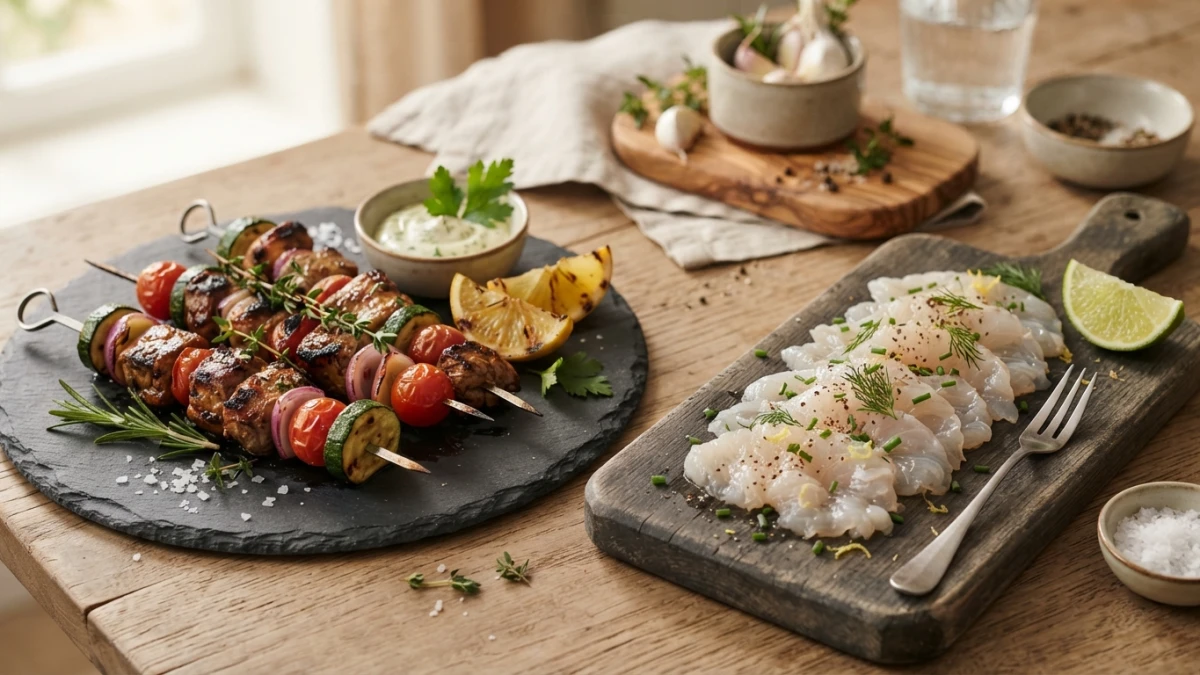
Crocodile meat is pale, very lean and mild, far closer to a firm white fish than to the strong, wild flavour people expect before they actually try it.
It comes from farmed crocodiles, animals raised mainly for their skin, with the meat as the second product. This guide covers which species it comes from, what it really tastes like, where people eat it, how to cook it without ruining it, and how many calories it has.
What crocodile meat is (and which animals it comes from)
The first confusion is zoological. In Australia and Southeast Asia the meat usually comes from saltwater crocodile (Crocodylus porosus); in Africa, from Nile crocodile (Crocodylus niloticus); in South America people eat caiman, mainly yacare and spectacled caiman; and in the United States, especially Louisiana and Florida, American alligator, a close relative cooked the same way.
The cut matters more than it seems. The most prized part is the tail: a long, firm muscle sold as the premium cut because it is the tenderest. Fillets from the body and the leg are darker and tougher, which is why they end up in stews, curries and ground meat. And the animal is almost never farmed for meat alone: the skin leads.
What crocodile meat tastes like: flavour and texture
The flavour is mild and clean. Most descriptions place it between chicken and firm white fish (monkfish, swordfish), with a faint marine note; American alligator is even compared to quail, with a slight fishy edge. This is a discreet meat, not a strong one: if you expect something intense, it will taste bland to you.
Texture is where the experience is decided. The grain is fine and firm, closer to a thick fish fillet than to a steak. The tail is the tenderest cut; the rest can be chewy, and overcooked it turns rubbery and dry. That is where many people conclude that crocodile meat is tough.
The mechanism is simple: because there is almost no fat inside the muscle, nothing moisturises it from within when it overheats. That is why it is marinated, oiled and cooked fast, just like white fish or a very lean chicken breast.
Where it comes from and where people eat it
In Australia it is part of the cooking of the north of the country and is grilled with native spices (lemon myrtle, pepper berry, bush tomato, macadamia oil). In Africa it is roasted over the South African braai and fried in battered strips with potatoes; in Thailand and Vietnam it shows up in markets and street stalls, and in the Philippines there is a version of sisig made with this meat instead of pork.
In the United States alligator is a southern classic: cajun gumbo, fried tail and grilled alligator, with Louisiana running a multi-million dollar farming industry. In South America the meat on sale is caiman and yacare, almost always farmed.
How to cook crocodile: cuts, methods and times
Preparation is three steps: thaw in the fridge, around 24 hours (never in warm water); cut into thin fillets or strips about 1 centimetre thick; and marinate for at least 30 minutes with oil, something acidic (lemon or vinegar) and garlic or herbs. Without oil or butter it sticks to the grill, because it releases no fat of its own.
Then there are two routes. Fast and hot for tail fillets: grill, griddle or wok, around 4 to 5 minutes per side over medium-high heat, with the same logic as a grilled strip roast: very hot fire and do not move the meat until it releases by itself. Wet and slow for body and leg cuts: stew, curry or cooking in coconut milk, which take long cooking with aromatics. The middle ground never works: a little too long and the meat dries out and turns rubbery.
On safety, without alarmism: handle it like raw chicken (separate board and hands, never the same plate for raw and cooked) and cook until the centre reaches around 74 °C. Pregnant women, very young children and immunocompromised people should check with a doctor first.
Recipes and ideas: from Australian skewers to sisig
Start with the best tested option on this site, the recipe for crocodile skewers with the Australian marinade and the cooking times. The marinade is not decoration: it supplies the fat and the acidity the meat lacks on its own, playing the same role as the marinade on any lean meat, coating the outside and adding flavour before the heat tightens it.
The other versions people look for: crocodile grilled or pan seared with lemon and garlic; battered strips fried with potatoes, South African style; crocodile burger made with ground meat; stew or curry with coconut milk; mixed skewers with pepper and onion; and the Filipino sisig with chopped meat and citrus. If you want another house skewer, Peruvian anticuchos follow the same logic: small cubes, marinade and short cooking.
And the practical trick: if you cannot find crocodile meat where you live, the same marinade and the same times work with chicken skewers or a firm white fish. The meat changes; the problem is the same, a lean protein that dries out the moment you overcook it.
How many calories crocodile meat has
Reference values from the Australian food composition database are around 97 kcal and about 20.6 g of protein per 100 g of raw steak, and around 106 kcal and 22.5 g of protein per 100 g for raw tail fillet. Composition guides summarise it as 22 to 24 g of protein and 1 to 2 g of fat per 100 g: high protein and minimal fat.
It is leaner than most red meats and fairly close to skinless chicken breast in protein per gram. Reference American alligator provides around 143 kcal and 29 g of protein per 100 g, with 65 mg of cholesterol. These are reference values, not a measurement of the dish on your plate.
What changes the number in practice: cooking evaporates water and raises density per gram; the marinade and the oil add up; and dishes of the style, such as skewers with macadamia oil or battered strips, carry far more calories. If your goal is a light meal, griddle or grill with little oil and vegetables on the side.
Myths, price and sustainability
Three myths. That it tastes like chicken: similar, but firmer and with a fishy edge. That it is a strong, wild meat: the opposite, it is mild and takes on the marinade. And that it is always the meat of a protected animal: trade is regulated by CITES, and much of the restaurant meat comes from farms, where the animal is produced mainly for its skin.
On price: it is an expensive meat per kilo, which is why it is nearly always served in small portions or inside a dish that stretches it (skewers, strips, stews, empanadas, burgers), not as a big steak in the centre. And the serious part: buying farmed meat from regulated distributors is not the same as eating wild or questionable origin meat, banned or restricted in several countries.
Frequently asked questions about crocodile meat
What does it taste like? Mild, between chicken and white fish. Is it tough? The tail is tender; the rest can be more fibrous and turns rubbery if overcooked. Does it taste the same as alligator? Yes, very similar, and they cook the same way.
How do you cook it and for how long? Thin fillets on the grill or griddle, around 4 to 5 minutes per side, or a long stew if the cut comes from the body. Can it be frozen? Yes, and it should be thawed in the fridge. What goes with it? The same as white fish: citrus, garlic, herbs, rice, potatoes or roasted vegetables.
Is it healthy? It is lean and high in protein, as long as it is cooked properly; if you are pregnant or immunocompromised, check with a doctor first. Where do you buy it? At specialist butchers, exotic meat shops and farm distributors, almost always frozen. And if you come from the world of surprising proteins, the guide to balut follows the same idea: understand the ingredient before you cook it.