Chin Chin: What the Nigerian Snack Is and How It Differs From Puff-Puff
 By
Diego Cortés
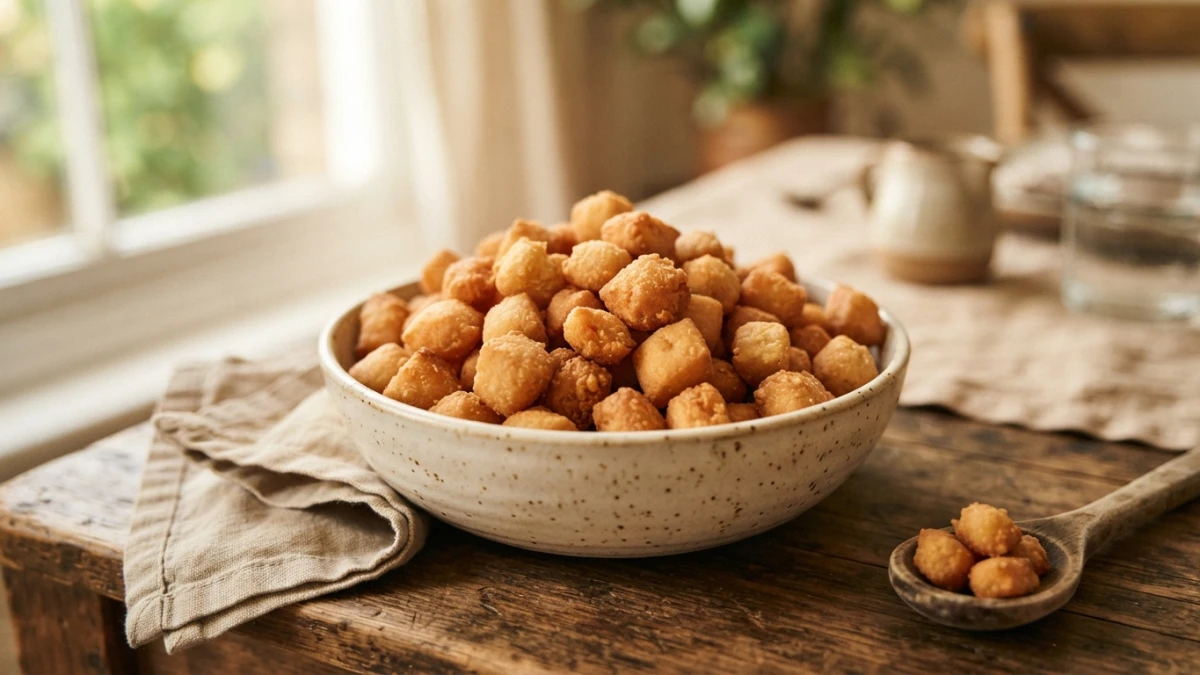
Chin chin is the Nigerian snack people eat by the handful: small cubes of fried dough, barely sweet and so crisp you can hear them from the next table. It is sold in bags, travels in a pocket, and at Christmas it is on every Nigerian table.
Most people meet it by accident: they spot a bag in an African shop or search "what is chin chin" without a clear idea of what they are looking for. Then comes the usual doubt: is it a cookie, a fritter or something else? It is neither. It is flour dough fried until almost dry, and that dryness is exactly what makes it special.
What Is Chin Chin, the Nigerian Snack (and Where the Name Comes From)
At heart it is a simple dough: wheat flour, sugar, butter or margarine, milk (often powdered), egg, baking powder and nutmeg. It is rolled thin, cut into small squares or strips, and fried. Once cool it turns hard and brittle outside, never soft like a fritter. The gap between how lightly sweet it is and how hard it is to stop eating explains most of its reputation.
The name has an uncertain etymology. The most repeated idea is that it imitates the crunching sound made while chewing, and the term appears in Nigerian English as "chin-chin (pastry)" in Nigeria's 1948 food regulations, which is a documentary record rather than proof of origin. It has nothing to do with the "chin-chin" toast that entered English through Chinese pidgin. And it is not a baked cookie: it is fried until nearly all the water is gone, which is why it keeps for days in a bag.
From Nigeria to West Africa: Achomo, Atchomon and Croquettes
Nigeria is the reference version: sweet, aromatic, heavy on nutmeg and vanilla, sometimes cinnamon or lemon zest. It is sold in bags at markets and on buses, served on platters at weddings and parties, and it is one of the classic food gifts of the Nigerian Christmas. Home production in large batches is also a small family business.
The neighbours have their own names. In Ghana it is achomo, often made with coconut or coconut milk, plus a savory version with onion, ginger and chili. In Togo and Benin it is atchomon, with ginger or pepper. In Cameroon it is called croquette or simply chin chin, in pieces about a centimetre across, sweet or savory.
The diaspora did the rest: from the 1980s the snack travelled with Nigerian migration to the UK, the United States and Canada, where it is now sold packaged and served at family gatherings as a taste of home. If that cooking interests you, fufu and its place at the African table is a good place to start.
Chin Chin vs Puff-Puff and the Rest of the Fried Snacks
The comparison people search most has a one-line answer. Puff-puff is a yeasted dough fried in balls, it rises and stays fluffy, and it is eaten hot; chin chin is an unyeasted dough (baking powder only) that is rolled, cut into small squares and fried until dry, because it is built to last.
The rest of the Nigerian snack tray is easy to order: kuli-kuli, fried peanut paste from the north; Ghanaian bofrot, a cousin of puff-puff but not the same thing; meat pie, a flaky pastry with meat; and fried plantain.
That context explains why chin chin exists. "Small chops" is the tray of bite-size snacks served as a starter at Nigerian parties, within owambe culture: since the 1950s it has mixed puff-puff, chin chin, battered fish and spicy offal, and today it adds samosas and spring rolls. Chin chin is the only one you can make days ahead. As cousins from other kitchens, shelpek from Central Asia and yuca fritters follow the same logic of fried dough made to share.
How Chin Chin Is Made: Dough, Cut and Frying
The dough holds no mystery: mix the dry ingredients (flour, sugar, baking powder, salt, nutmeg), rub in cold fat with your fingers until it looks like breadcrumbs, then bring it together with milk, egg and vanilla. Let it rest about 10 minutes, covered, because that relaxes the gluten and stops the dough from shrinking when rolled.
The cut decides the result: roll to about 5 to 10 millimetres and cut into 1 to 2 centimetre squares, strips or diamonds. Pieces that are too thick stay raw inside, and pieces that are too thin burn before they brown.
Frying is where you win or lose it. Oil at around 180 °C, small batches without crowding, 3 to 5 minutes until golden and floating. If the oil is cold the dough drinks fat; if it is too hot the outside browns while the inside stays raw. The exact amounts are in the chin chin recipe, with the quantities and timings.
Why It Stays Crunchy (and How to Keep It That Way)
The mechanism, in plain language: frying turns surface water into steam that escapes, the sugar caramelises and the crumb dries out. What crunches is that crumb with no water left. Baking powder adds bubbles, which multiply the dry surface, and the fat keeps each piece from setting like a stone.
The enemy is moisture, not time. Store it in an airtight container and let it cool completely first: if you seal it warm, the steam stays inside and softens it. That way it keeps for about two weeks at room temperature and up to three months frozen, and you thaw it uncovered so it does not sweat.
There is a rescue trick: if it went soft, 3 or 4 minutes in a low oven or an air fryer at about 150 °C brings it back. A microwave does not work, because the moisture it releases leaves the pieces chewy.
Sweet or Savory: The Variants of Chin Chin
The real argument in Nigeria is texture: some want to crack it with their teeth, others prefer it tender. You control it with fat and egg (more of both means softer), with the thickness of the cut and with frying time. The extremes have names: hard chin chin and soft chin chin.
The dough also takes shredded coconut or coconut milk, peanut, cinnamon, cardamom, lemon or orange zest, cocoa and even a touch of pepper. The savory version, more common in Ghana, swaps sugar for onion, ginger and chili. At parties it also shows up coated in chocolate.
Modern versions have a limit worth stating honestly: baked or air-fried chin chin uses far less oil, and the texture lands closer to a cookie than to the original crunch, while gluten-free flours (almond, cassava) change how the dough behaves and tend to absorb more fat. They are different options, not the same snack by another method.
How Many Calories Are in Chin Chin
Reference figures put chin chin around 450 to 520 kcal per 100 grams, with 20 to 26 grams of fat, 50 to 65 grams of carbohydrates and 6 to 10 grams of protein. Those numbers come from labels on Nigerian brands and from composition studies, not from an analysis of one home recipe.
A handful of 30 to 40 grams works out to roughly 140 to 200 kcal, close to a serving of french fries and well above a plain cracker. It is a snack to share, not something to keep open next to your keyboard.
The number moves with the method (fried dough absorbs oil, baked does not), the sugar, the size of the pieces and any chocolate coating. Like any fried flour snack, it is something to eat in moderation.
Frequently Asked Questions About Chin Chin
- What exactly is it? A sweet fried dough cut into small cubes, crisp and only lightly sweetened.
- Where is it from? Nigeria, with variations across West Africa.
- Is it the same as puff-puff? No: puff-puff is fluffy and eaten hot, while chin chin is dry and lasts for weeks.
- Is it very sweet? It is barely sweet, with a nutmeg aroma.
- Can you bake it? Yes, though it ends up closer to a cookie.
- How long does it keep? About two weeks airtight and up to three months frozen.
- Why did mine turn out greasy? Because the oil was below 180 °C.
- Does it contain allergens? Gluten and dairy, sometimes egg: the traditional version is not suitable for coeliacs.