Curanto: What It Is, Where It Comes From and How It's Made in a Pit or a Pot
 By
Diego Cortés
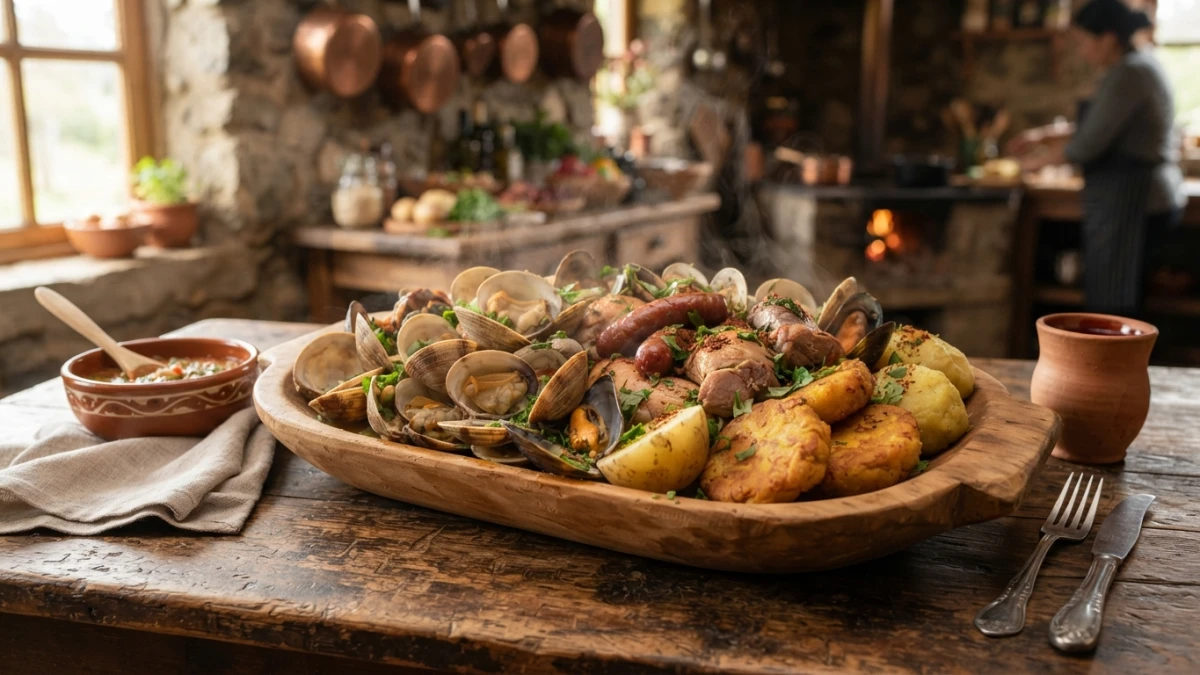
Curanto is a cooking technique rather than a dish: glowing stones, layers of seafood, meats, potatoes and doughs, leaves on top and an earth seal so everything steams. It is the oldest cooking of Chiloé.
What curanto is: cooking underground in Chiloé
The word comes from the Mapudungun kurantu, meaning stony ground: the heart of a curanto is buried hot stone. That is why the same word names three things at once, the technique, the pit and the finished dish.
It is not a stew, not a barbecue and not a casserole. There is no pot, no visible flame and nobody stirs anything. The heat comes from below and the airtight seal turns the pit into an earth oven: steam circulates, fat from meats and sausages drips onto the seafood and potatoes, and the result carries a smoky base no stew can imitate.
Where curanto comes from: Chiloé and around 6,000 years of history
Curanto is native to the Chiloé archipelago. Archaeological finds at the Puente Quilo site on the northern coast of the island place the technique at around 6,000 years old. It is best described as an archaeological estimate, not an invention date.
From Chiloé it spread south through Chile and into Argentine Patagonia. On Rapa Nui there is an earth oven of its own, the umu pae or umu, sometimes called Easter Island curanto: there the layers hold sweet potato, taro, fish and pork instead of southern seafood.
Archaeologists working in the area read today's curanto as the clearest example that pre-Hispanic Chiloé and present-day Chiloé share the same kitchen.
How curanto is made in a pit, step by step
You dig a pit on the order of one metre wide and about 20 centimetres deep, bigger if there are many people. Firewood goes in, and large stones on top of the wood. The fire burns until the stones are glowing red; only then is the ember removed, because the food cooks with the heat stored in the stone, not with flame.
Then comes the order of the layers: first the food that needs the most heat (seafood and meats), then the potatoes and the potato doughs, with leaves between layers so nothing sticks to the stone. On top everything is covered with pangue or nalca leaves and sealed with tepes, sods of earth, or with the soil from the pit.
Cooking takes on the order of an hour and a half to two hours, without opening it. The grams, exact times and quantities live in the curanto in a pot recipe, with quantities and times; the walkthrough here is descriptive.
What goes into curanto: seafood, meats and potatoes
The seafood is named in local words, which is what people search for: cholgas, clams, choritos, machas and picorocos, the shelled crustacean that grows stuck to rocks in Chiloé. When the tide allows, sea urchins or jaibas join them.
Meats and sausages complete the dish: chicken, pork ribs, beef chuck and longaniza, plus onion, leeks, peppers and a bay leaf in the pot version. The fat from the sausages is no small detail: without it the milcao comes out dry.
The Chilote potato is the real base of curanto, as much as the seafood, and there is room for vegetarians: versions without meat or seafood exist and the milcao solito is the vegan door into the dish. If this southern seafood cluster appeals to you, it pairs well with paila marina and caldillo de congrio, and for a pot dish with broth there is cazuela de vacuno.
Chapaleles and milcaos: the two doughs of curanto
These are the two names people mix up most, and the difference fits in one line: milcao is pure potato, chapalele has flour.
Milcao is grated raw potato mixed with cooked mashed potato, kneaded with pork crackling and a little lard, no flour. It cooks inside the curanto, in the oven or fried, and has a version without crackling, the milcao solito. The site covers all three: milcaos with bacon, classic milcao and milcao solito.
Chapalele is mashed potato with flour, lard and crackling, worked into a firmer dough that is flattened into discs and steamed inside the curanto or boiled. The site does not have its own chapalele recipe yet, even though the search "chapalele para curanto" ranks very high: it is logged as pending for the recipe team.
Curanto in a pit, curanto in a pot (pulmay) and the minga
Neither version is fake. The pit curanto is the original: outdoors, it needs several pairs of hands and a couple of hours of waiting. The pot curanto was born as a home and bad-weather version, covered with leaves, and it keeps the broth, served separately in a cup. The ingredients are the same; the container and the smoke change.
In central Chile the pot curanto is called pulmay, and on this site the two versions live as separate entries: pulmay or curanto in a pot.
And then there is the cultural part this dish cannot skip: the minga, collective Chilote work such as planting, harvesting or moving a house on rollers. Curanto is its meal, because it is cooked once for many people and eaten in a group. If earth ovens interest you, the Maori hangi shares the same idea with hot stones.
How many calories are in curanto
The numbers in circulation are reference values, not a measurement of the plate in front of you, because they shift with how much pork, sausage and dough the serving carries: a large serving of around 600 grams lands near 780 kcal; a standard 350 gram serving sits around 470 kcal with roughly 40 grams of protein; and every 100 grams, on the order of 165 to 170 kcal.
Those calories come from potatoes and doughs, from sausages and fatty cuts; seafood, by contrast, brings plenty of protein and little fat. To lighten it, load your serving toward seafood and potatoes, ask for less longaniza and pork, take one dough and add salad. For the full picture there is the calorie chart of 18 Chilean dishes.
Frequently asked questions about curanto
What exactly is curanto?
An underground cooking technique using hot stones, and also the dish that comes out of it: layers of seafood, meats, potatoes and doughs steamed in a sealed pit.
What does the word curanto mean?
Stony ground, from the Mapudungun kurantu, because the method rests on stones heated in a fire and then buried.
Is curanto the same as pulmay?
Not quite. Pulmay is the name for curanto made in a pot, especially in central Chile.
Can you make it without a pit, and how long does it take?
Yes, the pot version covers that. In the pit it takes on the order of an hour and a half to two hours, and in the pot between 90 minutes and two hours over low heat.
Does it always include seafood?
The southern tradition comes from the sea, but meat-only versions and vegetarian versions with potatoes, doughs and vegetables exist.