Guatemalan Tamales: What They Are, What's Inside and How They Differ from Mexican Ones
 By
Diego Cortés
By
Diego Cortés
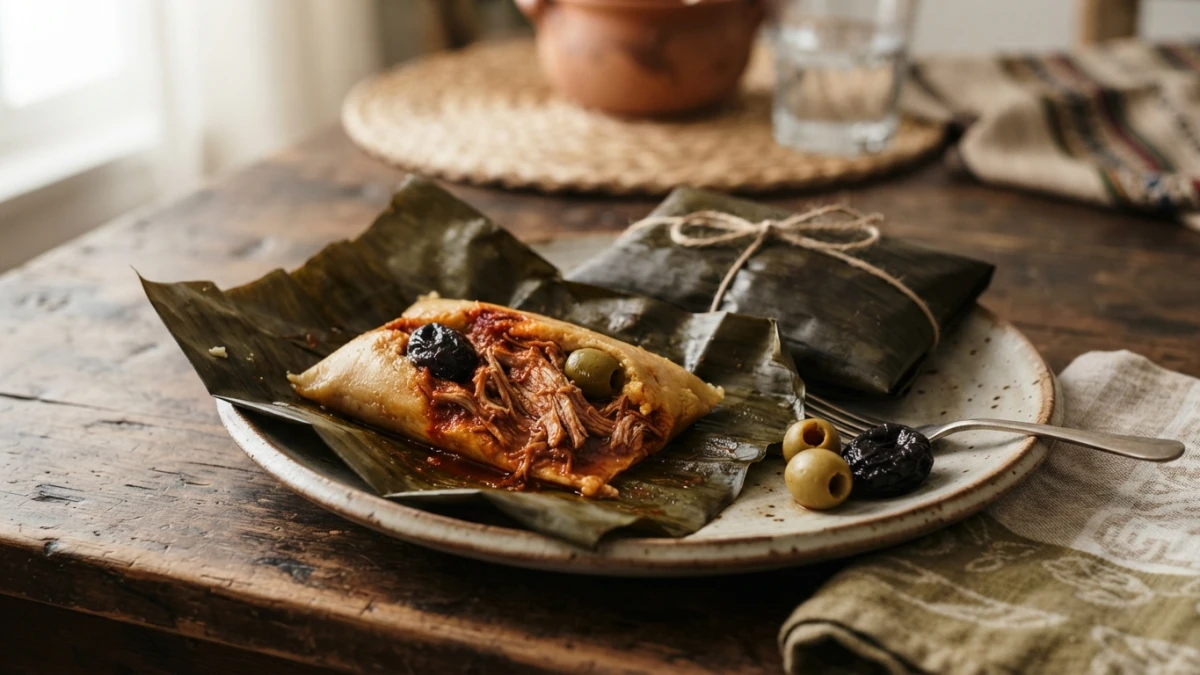
Guatemalan tamales are a full meal wrapped in a banana leaf: corn masa seasoned with recado, filled with meat and steamed until it sets. Not a starter or a side: in Guatemala they are lunch or dinner, with bread and coffee.
What Is a Guatemalan Tamal?
The first thing that stands out is the size: a large Guatemalan tamal weighs several times what a corn-husk tamal does and is usually two to three times bigger than a Mexican one. That is why you get one per person and not three: a bite elsewhere is lunch here.
The structure explains everything else. There are three layers: the leaf, which adds aroma to the steam; the corn masa, which is seasoned with recado rather than left plain; and the filling, almost always meat, sometimes with olives, raisins or prunes. That seasoned masa is what separates a Guatemalan tamal from tamales that only carry a filling inside a neutral dough.
The Recado: the Sauce That Defines the Guatemalan Flavor
The recado is the piece almost nobody outside Guatemala knows about, and it explains the flavor: a thick sauce that is ground and cooked on its own. It does two jobs at once. It is mixed into the masa and it is also spooned next to the meat, so the tamal tastes of recado from end to end and not only in the center.
The typical ingredients are roasted tomato, guaque and pasa chiles, miltomate (the green tomatillo), toasted sesame seeds and pepitoria (squash seeds), achiote for color, onion and garlic, and many kitchens thicken it with a soaked piece of French bread or a little masa. Pepitoria and sesame give it body; achiote gives it that deep red anyone who has seen a tamal colorado recognizes at once.
Two recados need to be kept apart. The red one is the classic: savory, with meat, the holiday version. The black one carries chocolate or cacao, has a sweet undertone and still carries meat, so it is sweet and savory at the same time. It is not a dessert: it is the same dish with a different soul.
The Leaves: Mashan, Banana and Corn Husk
A large tamal is wrapped in mashan or maxan leaves, wide and from the banana family, reinforced with banana or plantain leaves and tied with cibaque (the dried fiber from the stalk) or string. The leaf is not a neutral container: under steam it releases aroma, and that shows up in the masa.
Dried corn husks, called tusa, are reserved for the small sizes. Chuchitos, chipilin tamalitos and sweet corn tamalitos go in tusa because they are one or two bite pieces. The wrap also sets the portion.
Steaming is long and unhurried. The tamales stand packed upright in the pot on a bed of leaves, with water at the bottom that must not touch the bundle. They cook for around an hour and a half to two hours depending on size, and they are done when the masa pulls away clean from the leaf.
The Types of Guatemalan Tamal, One by One
The colorado is the star of the table: corn masa with lard, red recado, pork or chicken and, depending on the household, olives, raisins or prunes. It is the holiday tamal and the one most people picture when they say tamal. The step by step Guatemalan tamales recipe, with amounts and times follows that line using chicken and easy-to-find spices.
The other big ones are the black tamal, with its cacao recado; the rice tamal, made with rice instead of corn, wrapped in banana leaf and with a floral aroma; and the sweet tamal, with sweetened masa, raisins and cinnamon, eaten as dessert. Rice tamales have their own page in rice tamales, and the mole version, a close relative of the black one, in mole tamales.
The small ones, one line each. The chuchito is small, goes in tusa, carries a simple recado of tomato and achiote with a piece of meat and is eaten with red sauce, parsley and dry cheese. The pache is made from potato masa and comes from the western highlands, with the recado mixed inside. Chipilin and sweet corn tamalitos are made with the local herb and with tender corn.
When They Are Eaten and How They Are Served
In Guatemala the tamal is a family celebration dish and the peak season is December, from Christmas Eve to New Year, when batches of dozens or hundreds are made and shared with neighbors and family. To keep traditions straight: on November 1 the traditional Guatemalan dish is fiambre, not tamales.
During a normal week the tamal is also a weekend breakfast. Street vendors called tamaleras sell them before dawn and run out early, and chuchitos are the everyday version, bought on the go and eaten by hand.
The practical question is how you eat a large one: you open the leaf over the plate, the crusty bread is used to mop up the recado and black coffee or hot chocolate goes alongside. You eat it with a spoon or with bread, depending on the household.
How Many Calories Are in a Guatemalan Tamal?
As a reference value, a large colorado tamal of about 300 grams is calculated at around 600 to 760 kcal with roughly 25 to 30 grams of protein, and a generic 100 gram serving sits near 180 to 190 kcal. The range moves with the size, the cut of meat and the fat in the masa: an estimate, not an exact measurement. The calories come from the obvious places: masa cooked with lard, the meat (pork more than chicken) and the recado, with its seeds and achiote. It is calorie-dense because it is a whole meal, not a snack.
To lighten it without betraying it there are simple moves: choose chicken instead of pork, ask for less recado or less masa, split the large tamal between two people with salad on the side and leave the crusty bread for whoever is genuinely hungry.
Guatemalan Tamales vs Mexican Tamales: the Differences
The comparison lines up in five points: size (large against compact), wrap (banana and mashan leaves against corn husk), masa (seasoned and softer against neutral and airier), filling (one main meat against a wide range of fillings) and role in the meal (a main dish against a side or a snack).
One nuance matters so nobody walks away with a false rule. The banana leaf is not exclusive to Guatemala: the Oaxacan tamal and those from southern Mexico are wrapped that way too. What is genuinely Guatemalan is the recado inside the masa, the size and the way it is served. And it is not the original of anything: the tamal predates borders and comes from the same Mesoamerican corn kitchen.
Close relatives in the same cluster are Colombian tamales, also wrapped in banana leaf with corn masa, while the Guatemalan meat kitchen shows up in hilachas and its full explanation, as well as in jocon.
Frequently Asked Questions About Guatemalan Tamales
What is a Guatemalan tamal?
A corn masa seasoned with recado, filled with meat and wrapped in a banana leaf, then steamed. It is a full meal, not a starter.
Is it the same as a chuchito?
No. The chuchito is the small version, wrapped in corn husk, with a simpler recado and a piece of meat, and it is sold as a snack.
What is recado?
The sauce of tomato, chiles, toasted seeds and achiote that is ground and cooked on its own, then mixed into the masa and served with the meat. It defines the flavor of a Guatemalan tamal.
What is the masa made of?
Nixtamalized corn in most cases, although there are rice tamales and potato paches depending on the region.
How long do they take to cook?
Around an hour and a half to two hours for the large ones, and considerably less for the small ones.
Can they be frozen?
Yes. Wrapped, they keep two or three days in the fridge and several months frozen, and they reheat by steaming.
Can they be made outside Guatemala?
Yes, and the step by step on this site uses chicken and easy-to-find spices, with amounts and times. The trick from Guatemalan kitchens: the recado can be made the day before.