Hilachas: Guatemala's Shredded Beef Stew Explained
 By
Diego Cortés
By
Diego Cortés
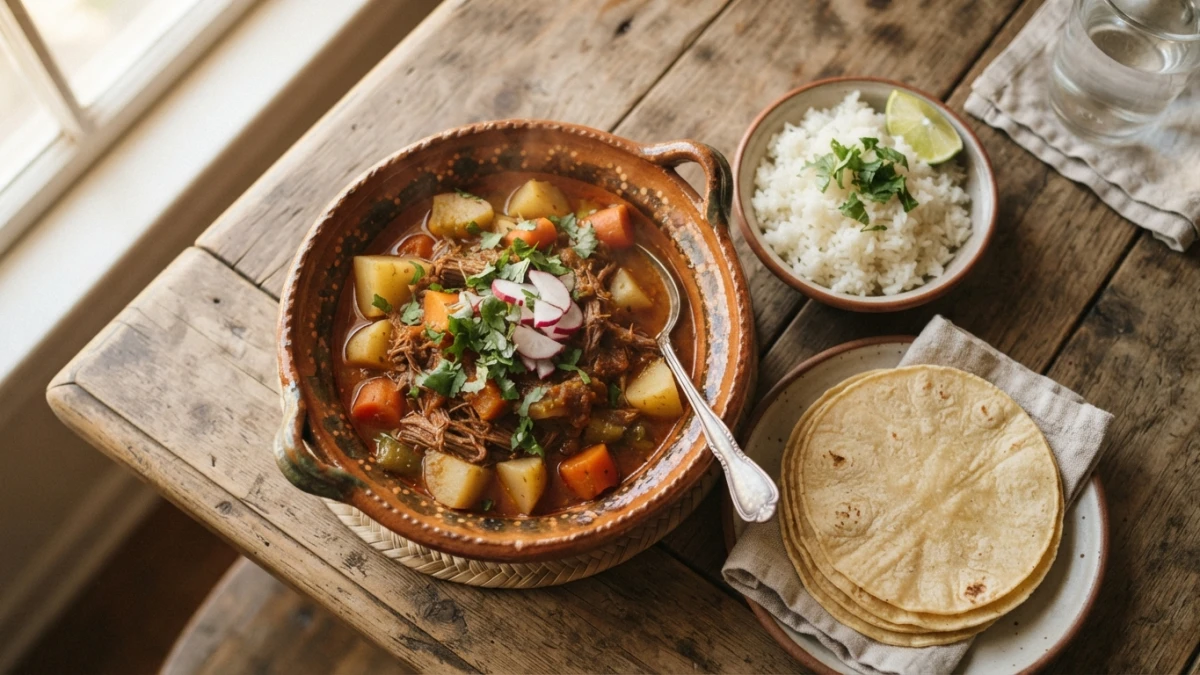
Hilachas guatemaltecas is Guatemala's shredded beef stew: beef cooked until it falls apart into threads, then finished in a recado of tomato, tomatillo and chile with potato and vegetables, and served with white rice and warm tortillas.
The name says it all: the meat is not cut into chunks, it is pulled apart. This guide covers what a recipe does not: what it is, where it comes from, what goes into it, how it is served and how many calories it has.
What hilachas guatemaltecas are and why they are called that
The short definition: shredded beef, not a stew with chunks. A fibrous cut is cooked until it gives way, left to cool slightly and pulled by hand or with two forks into fine threads, which go back into the pot to finish cooking in the recado, the thick Guatemalan sauce.
The name explains the dish: hilacha is the thread left when fabric unravels, and after a long braise the beef looks exactly like that. That is why English translates it by what it is (shredded beef) or by the full dish (Guatemalan shredded beef stew). On the plate it is instantly recognisable: long tender threads under a thick red sauce, potatoes soft enough to almost fall apart, and a deep flavour that is not spicy at all but rather sweet. The amounts and the method live in the site's step-by-step hilachas recipe; everything else is here.
Where it comes from: colonial roots, the highlands and the everyday table
Guatemala's government culture portal places the dish as originally from the country during the colonial period, when Spanish techniques and flavours arrived and were later adapted to local ingredients: a criollo dish, mixed in method and Guatemalan in ingredients. No document fixes a date or an exact town: sources spread it between the highlands and the centre of the country, with mentions of Sacatepequez and of Salama, in Baja Verapaz. What is verifiable is its logic: a big pot, cheap fibrous cuts and a long cook, which is why it belongs to Sunday lunch.
The same idea travels across Central America and the Caribbean under other names: ropa vieja in Cuba and southern Mexico, carne deshebrada in northern Mexico, similar dishes in Honduras and Costa Rica. They are sibling dishes through a shared Spanish root; what makes hilachas their own thing is the Guatemalan recado, the very low heat, the potato, the chayote and the freshly made corn tortillas.
What goes into hilachas: the beef, the recado and the vegetables
Without quantities, since those are in the recipe, the dish reads in three blocks. The beef: a fibrous cut that shreds easily, such as flank, brisket or chuck; in Guatemala you ask for "carne para hilachas" at the butcher. The recado, which defines the flavour: ripe tomato, tomatillo, onion, garlic, sweet pepper and guajillo, guaque or pasilla chile for colour and barely perceptible heat. The vegetables: potato almost always, and depending on the household, carrot, chayote or green beans.
What separates well-made hilachas from a watery stew are the thickeners and the finishing touches: the sauce is bound with corn tortilla, breadcrumbs or corn flour, a technique inherited from pre-Hispanic stews that also shows up in pepian and jocon, and fresh cilantro, cream, cheese or lime go in at the end. This is a big-pot dish that feeds a family for days and improves the next day. For the long cook, check how to cook beef in a slow cooker; with a pressure cooker, pressure cooker timings and safety decide between tender threads and dry meat, and the internal temperature chart settles doneness.
How hilachas are served at the Guatemalan table
The classic plate is a ladle of stew over white rice, warm corn tortillas and refried black beans if that is the house custom. Cream and fresh cheese go on top or on the side, cilantro goes in just before serving and lime is squeezed at the table, not into the pot. The loose white rice matters: it is what takes the sauce without turning gluey.
Heat does not come inside the stew: it is decided on each plate with chiltepe, Guatemala's small and fierce chile, or with a separate salsa. Accompaniments include avocado, radish, small white tamalitos and French bread. Hilachas keep in the fridge for three or four days and freeze well for up to two or three months in portions with sauce; to reheat, use low heat with a splash of water or stock. If they came out of the freezer, follow safe methods to thaw food safely and check whether it is safe to refreeze thawed meat.
Hilachas vs ropa vieja vs salpicon: how they differ
Names change from country to country, so the comparison is best ordered by what sets each dish apart: the cut, the sauce and the signature.
| Dish | Country and base | Sauce | Signature |
|---|---|---|---|
| Hilachas | Guatemala; shredded flank or brisket | Recado of tomato, tomatillo and guajillo, thickened with corn tortilla | Very low heat, potato and chayote, with rice and tortillas |
| Ropa vieja | Cuba and the Caribbean; also Mexico | Tomato with bell pepper, onion, cumin and sometimes wine | Olives and capers, a salty spiced profile |
| Mexican ropa vieja | Mexico | Tomato with jalapeno or another hot chile | Hotter, with herbs and oregano |
| Salpicon | Chile and Mexico | Tangy dressing, no long cooking | Shredded meat served cold or warm, as a salad |
| Carne deshebrada | Northern Mexico | Tomato and chile stew | Filling for tacos, gorditas and tortas |
The technical difference explains why two dishes that look identical taste so different: hilachas use tomatillo and guajillo with almost no heat, perfumed with cinnamon and clove in the highlands; Cuban ropa vieja leans on bell pepper and cumin, with wine, olives and capers; the Mexican one turns up the heat with jalapeno. To see it in practice, the ropa vieja empanadas and the chicken salpicon show the two extremes; mole poblano or pozole are the next step.
How many calories are in hilachas
The number depends on how much beef, potato and sauce the ladle carries, so these reference values are an estimate. One cup of hilachas (235 g) lands near 330 kcal with about 23 g of protein; a measured 165 g serving registers 107 kcal and exchanges as one starch portion plus one lean protein portion.
| Serving | Calories | Protein | Carbs | Fat |
|---|---|---|---|---|
| 1 cup of hilachas (235 g), stew only | ~330 kcal | ~23.6 g | ~23.6 g | ~14.2 g |
| Measured 165 g serving | 107 kcal | 8.4 g | 14.7 g | 1.7 g |
The gap between both figures is the ratio of beef, potato and sauce in each home serving; the full plate adds whatever is served alongside:
| Full plate | Approximate calories |
|---|---|
| 1 cup of hilachas plus 1 cup of white rice | ~535 kcal |
| The above plus 1 corn tortilla | ~600 kcal |
| The above plus cream and avocado | ~700 to 750 kcal |
To lighten it without losing the dish: lean beef, skimmed stock, more vegetables and less potato and rice, and save cream and avocado for the day you want a full plate. The cooking method does not change the calories, the proportions do. The Chilean dish calorie chart works as a formatting reference per serving.
How to tell good hilachas and what to ask for at the market
The signs are on the plate: the meat pulls into long threads rather than chunks or a compact mass, the sauce is red and glossy without running over the rice, the potatoes are tender but whole, and you can taste roasted tomato and mild chile. The three mistakes that ruin the result most often are stock that was never skimmed, a recado that was not cooked out, and vegetables cooked too long.
At the market, in Guatemala you ask for "carne para hilachas" and flank, brisket or chuck will do; guajillo, guaque or pasilla chiles and tomatillos are found in markets and Latin grocery stores, and chile powder does not replace guajillo. With no recado and no time, the dish takes a pressure cooker or a slow cooker.
To keep exploring Guatemalan cooking there are Guatemalan tamales, rice pudding atole, rellenitos de platano, chicken pupusas and grilled plantains; the whole cluster lives in the Meat category. On the table, hilachas call for warm tortillas and freshly cooked white rice.
Note: the trick that changes the result most is skimming the fat. Cook the beef the night before, chill the stock and the next day lift off the solid cap of fat before building the recado: the sauce comes out clean and thickens better.