Hangi: What the Māori Earth Oven Is and How It Works
 By
Diego Cortés
By
Diego Cortés
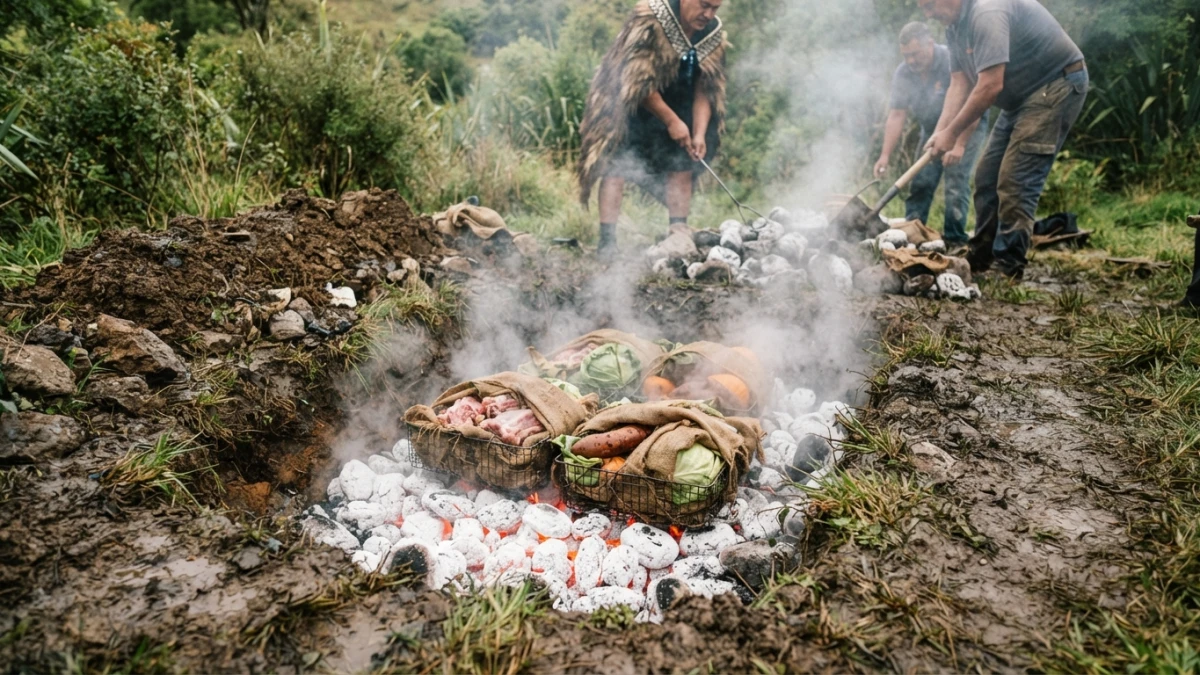
A hangi is an earth oven: you dig a pit, heat stones until they go white-hot and the steam cooks the food underground for hours. It is the traditional method of the Māori people of New Zealand.
It is also written hāngī, and its older Polynesian name is umu. If you came looking for what a hangi is, where it comes from and how it differs from a grill, this article sorts those questions out.
What a hangi is: the Māori earth oven
A hangi is a hole in the ground turned into a pot. Stones are heated white-hot, the embers are pulled out, the food is arranged in mesh baskets on top of those stones and the whole thing is sealed so neither heat nor steam escapes. With no open flame and no coal touching the meat, the cooking happens in steam rather than over direct heat.
It is worth marking what a hangi is not, because that is the most common mix-up: it is not a spit roast, not a barbecue and not a smoker. In all three there is live fire or circulating smoke, while here the air stays out. The meat does not brown: it comes out tender, juicy and with an earthy, faintly smoky flavour.
Two practical notes on the name: hāngī is written with a line over the a and pronounced roughly like "hah-nghee", with the first syllable held longer; and umu is the term used across much of Polynesia for the same kind of oven. Not a similar dish, but the same technology under another name.
Where the hangi comes from: the Polynesian umu
Māori ancestors reached Aotearoa from tropical Polynesia bringing the umu technique, an oven of heated stones, which already existed across the Pacific long before Europeans arrived. The hangi is its Māori version: inheritance, not an invention with a date.
The language leaves a trail of kinship. The Polynesian umu and the Hawaiian imu descend from the same ancient Pacific root, which is why hundreds of islands cook the same way under different names: umu in Samoa, Tonga and the Cook Islands, imu in Hawai'i, lovo in Fiji and ahima'a in Tahiti.
And it is not a museum relic: the hangi is still made every week in homes, communities and marae, the Māori community centres, along with a home-oven version.
How a hangi is made, step by step
The process has four phases that cannot be skipped. First the pit (rua) is dug and the fire is prepared. Then the stones, volcanic or river stones, are heated until they turn pale: that calls for thick wood and usually takes a couple of hours. Next the embers come out and the food goes down in baskets onto the stones. Finally everything is sealed and you wait.
The sealing decides the result. Over the baskets go sackcloth or a soaked blanket, sometimes cabbage or corn leaves, and soil on top. That closure keeps the steam in, and that is where the buttery texture and the earthy aroma come from. Without a seal, a hangi dries out instead of steaming.
On timing and craft: a hangi cooks in the region of three to four hours and cannot be rushed. The person who builds it usually has experience, the so-called hangi master, and at marae the kitchen work is done by the ringawera. The golden rules: look after the pit, do not open it early and serve quickly once uncovered.
What goes inside a hangi
The classic meats are pork (sometimes belly or ribs), lamb and chicken, almost always bone-in and with some fat, because the fat renders and perfumes everything else. The meat comes out very tender, cooked in its own steam, never browned or crisp.
Among the vegetables the queen is kūmara, the Māori sweet potato, joined by potato (rīwai), pumpkin, cabbage and carrot. A stuffing-style filling nearly always goes in, made with bread, onion, herbs and sometimes minced meat, and at big tables a leafy green or watercress salad is added. The flavours mingle inside the pit and end up sweet and smoky.
Steamed desserts are cooked in there too, such as a pudding or hangi bread, and pumpkin and kūmara come out almost like caramel. What you look for when tasting it is not heat or salt: it is earth, soft smoke and very sweet vegetables.
When a hangi happens: Matariki, tangi and hui
A hangi is crowd food and shows up at the important moments: hui (gatherings), tangi (funerals and mourning), weddings, birthdays, school fundraisers, Christmas and public holidays. It is built because it lets you cook for a lot of people with a single pit.
In midwinter, the Māori new year Matariki is celebrated with hākari, the community feast, and the hangi is its centrepiece alongside kūmara, kaimoana (seafood) and local plants such as kawakawa. It is the time of year when the hangi is talked about most in New Zealand, and dessert is often a local classic, such as the New Zealand kiwi pavlova.
The human side is what makes this cooking stick: building a hangi is team work by whānau, the extended family, and neighbours, each with a job, and the food is shared beyond the family circle. It is food that gets handed around, not a single-serving recipe.
Hangi, umu, imu, lovo and curanto: cousins of the earth oven
The whole family shares the same principle: pit, white-hot stones, covered food and steam. The leaves, the load and the timing change from island to island. Umu in Samoa, Tonga and the Cook Islands, imu in Hawai'i, lovo in Fiji and ahima'a in Tahiti answer the question of whether a hangi is the same as an umu: yes, it is the same method under a different name.
Cross the Pacific and you find American relatives of the same invention: pachamanca in the Andes and, in southern Chile, the Chilean version of curanto made in a pot, with seafood and meats cooked among stones and leaves. It is best described as a parallel method, not an import from one side to the other.
That taste for slow fire and large cuts also explains other dishes that end up similar even when the method changes: lamb al palo, explained in full in the article on Patagonian cross-roasted lamb and, on the pork side, baked Segovian suckling pig.
How to make a hangi at home (without digging a pit)
Outside New Zealand, a hangi is recreated in a home oven with the same logic: a layer of vegetables, the bone-in meat on top, the stuffing, everything packed tight and sealed with foil or a lid so the steam stays in. The touch of smoke comes from smoked wood or a charred cabbage leaf. It does not match the pit, but it gets close.
The quantities, the order of the layers and the exact times are in the hangi recipe with amounts and times. This article explains the method and its culture; the recipe card has the step-by-step.
Three tips that change the result: do not open the oven halfway through, put the largest pieces at the bottom, and seal the edges well by folding the foil. Once out, let it rest for five minutes before serving: the steam redistributes and the meat ends up juicier.
Frequently asked questions about the hangi
The most common question is how long it takes: once sealed, a hangi cooks in the region of three to four hours, plus the time to heat the stones and to build it. Does it stay raw inside? No, if it was sealed properly: the steam cooks evenly and the largest pieces sit at the bottom, where the heat is greatest.
On flavour: it tastes smoky and earthy because of the stone, the soil and the trapped steam, not because of direct smoke. Is it the same as a roast? No, that has coals and flame, which is why the meat does not brown. And what is the difference from umu, imu or curanto? It is the same principle with another name and another filling.
In short: a hangi is the Māori earth oven, a pit of hot stones that steams meat and vegetables for hours, and the home version with exact amounts is already published on the site, ready to follow step by step.