Hojarascas: What They Are and How to Make the Dough
 By
Diego Cortés
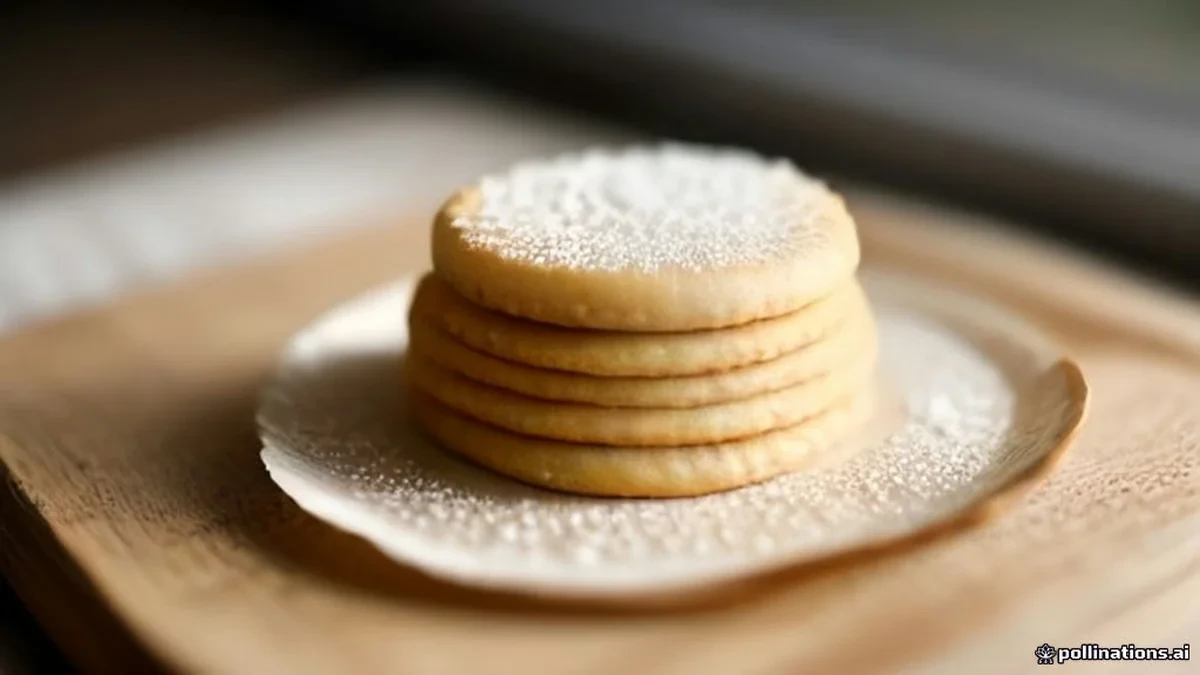
Hojarascas are the simplest dough in Chilean baking and the one that fails most often: flour, cold butter, yolks and a splash of pisco. If yours tore while rolling, shrank in the oven or baked hard, the problem is not the recipe: it is temperature.
Hojarascas: the thin disc that holds a Chilean alfajor together
A hojarasca is a disc of thin, brittle, barely sweet dough. Roll it 1 to 2 mm thick, cut it into rounds, prick it with a fork and bake it until cooked but only just golden. Two of those discs with manjar between them make an alfajor de hojarasca. The same dough, stacked in layers with manjar, cream or meringue, becomes the hojarasca cake.
It is one single base for several pastries: alfajores, chilenitos (dipped in meringue), cachitos, tacitas and the hojarasca cake, also called torta chilena. The assembly changes, not the dough.
One correction early on: hojarasca is not puff pastry. It is a shortcrust, the kind you eat dense and crunchy. Puff pastry is a laminated dough that rises on steam. The names look alike and nothing else does.
Hojarasca, puff pastry and mil hojas: three different things
The difference is how the fat is handled. In hojarasca the cold butter is rubbed into the flour until it looks like coarse sand: it is never laminated or folded. In puff pastry butter is layered between sheets and the dough is rolled and folded many times, so the oven can separate those layers with steam.
You feel it at once: hojarasca is dense, firm and crumbles; puff pastry is airy and flaky. The Chilean torta de mil hojas is built with puff pastry layers or a hybrid dough, while the hojarasca cake alternates brittle discs with filling.
This matters when searching for recipes, because both families live on this site. If you want the laminated layer, that is the thousand leaf alfajor; if you want the brittle disc, that is the Chilean alfajores or the hojarasca alfajores. They are not interchangeable.
The four ingredients that matter (and the pisco that is not decoration)
The base formula: 210 g of flour with no baking powder, 100 g of cold butter, 90 ml of milk, 2 egg yolks and 1 tablespoon of pisco. That yields around 40 alfajores of 6 cm. Some versions swap yolks for whole eggs and pisco for vinegar, and the texture is not the same.
The pisco is not there for flavour. Alcohol or acid (pisco, aguardiente, vinegar, white wine, orange juice) slows gluten development, and dough with less gluten ends up more brittle and crisp. That is the whole trick: with no pisco, a splash of vinegar does the same job.
Yolks add colour and shortness, cold butter makes the sanding possible and a pinch of salt balances the sweetness of the manjar. There is no baking powder, and that is not an oversight: it does not need to rise, it needs to stay flat.
Sanding, cold and 2 mm: how to make the dough without ruining it
Start with the flour and the butter in cubes, thoroughly cold, rubbing with your fingertips until no large pieces remain (a pastry blender works too, as long as you do not warm it). Separately mix the milk, yolks and pisco, and only then bring it together. The dough ends up damp and slightly sticky: do not knead it and do not add more flour.
Cold is not optional. Wrap it in film and refrigerate for at least 1 hour, though 8 hours or overnight is better: the fat hardens and the dough rolls without sticking or tearing.
Baking has two traps. Roll it 1 to 2 mm and cut the discs larger than you need, because the dough shrinks in the oven. Prick with a fork and bake at 180 C for 8 to 12 minutes, until cooked and only just golden. Cut them on the prepared tray: moving raw discs is the fastest way to distort them.
Why it tears, shrinks or turns hard
It tears while rolling when the dough is warm or was handled too much: the heat of your hands softens the butter and the dough breaks. Work quickly, dust lightly and put it back in the fridge as soon as it starts to stick.
It shrinks in the oven from too little chilling and from cutting the discs exactly to size. A 20 to 30 minute chill with the dough already cut, going into the oven straight from the fridge, fixes almost every case.
It turns hard or tastes of flour when extra flour goes in while rolling, when the oven is too hot or when it bakes too long. It is ready when it loses its wet sheen and starts to colour at the edges; if it browns all over, it is overbaked and turns rigid.
How many calories: the dough weighs little, the filling decides
With the reference recipe the batch adds up to about 1,646 kcal. Across 40 alfajores that is roughly 41 kcal of dough per alfajor and about 21 kcal per disc. These are calculations from the ingredients, not a laboratory analysis.
What moves the needle is the filling: with 10 g of manjar an alfajor lands near 73 kcal, and with 15 g it reaches about 89 kcal. Published figures range from 95 kcal for a small alfajor to 230 kcal for a large serving, and the difference is size and filling, not the dough. On this site, the chilenitos list 140 kcal each including meringue and the hojarasca cake lists 213 kcal per serving. For the full picture there is the calorie chart of 18 classic Chilean dishes.
How to store, fill and freeze them
What you want to keep are the bare discs: in an airtight tin for up to a week and frozen for up to two months. A filled alfajor is eaten the same day: the manjar softens the top disc and after two days it is past its best.
To assemble, use thick repostero manjar or dulce de leche, one spoonful in the centre and gentle pressure. Too much filling and the top disc cracks. Roll the edges in grated coconut and dust with icing sugar.
Frequently asked questions
What exactly is hojarasca
A very thin shortcrust with flour, butter, yolks and milk, baked in discs and used as the top and bottom of alfajores, chilenitos and cakes. It eats crunchy and compact, not airy.
Is it the same as puff pastry
No. Hojarasca is a sanded dough that is never laminated; puff pastry is rolled and folded into layers so it puffs with steam. Both the technique and the texture differ.
Does it have to include pisco
No, it is optional. Its job is to slow the gluten so the dough stays crisper, and it can be replaced with vinegar, white wine or orange juice.
Why does my dough tear when I roll it
Because it is warm or was worked too much. The butter softens and the dough cracks. Chill it for 20 minutes and keep your movements quick.
Why does it shrink in the oven
Not enough chilling before baking, and discs cut exactly to size. Cut them larger, leave the cut dough in the fridge for 20 to 30 minutes and bake straight from there.
How many calories are in an alfajor de hojarasca
About 73 kcal with 10 g of manjar and about 89 kcal with 15 g, counting only dough and filling. The higher figures belong to bigger alfajores or heavier fillings.
Can the discs be frozen
Yes, for up to two months if well sealed. Freeze them unfilled and fill them the same day you plan to eat them.
How does it differ from a chilenito and from a mil hojas alfajor
A chilenito is a hojarasca alfajor dipped in meringue. The mil hojas version uses laminated puff-style dough. The base is not the same.
Are Mexican hojarascas the same thing
No. In Mexico they are cinnamon cookies dusted with sugar, and Bolivia has its own hojarascas from Tarija. The word is shared, the sweet is not: this article covers the Chilean disc.
Proportions and timings were checked against the Academia de Reposteria at Gourmet, the Come Bonito recipe collection, Irene Mercadal and Pilar Hernandez's Cocina Chilena. All data is reworded in our own words.