Mote: What It Is, How to Cook It and How to Store It (Chilean Wheat Mote)
 By
Diego Cortés
By
Diego Cortés
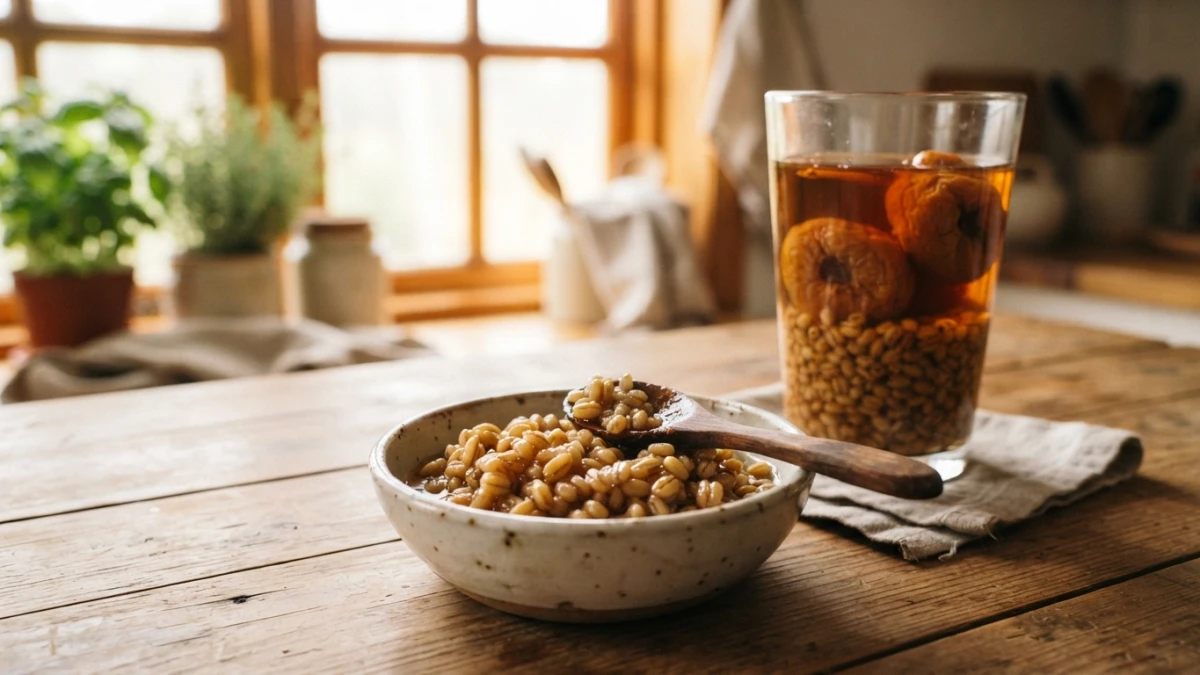
Chilean mote is peeled, pre-cooked candeal wheat: the whole grain behind mote con huesillos and a common savory side for stews and soups. It cooks in 30 to 40 minutes, triples in volume and keeps frozen for up to 3 months.
What Chilean mote is: definition and where it comes from
The word comes from the Quechua mut'i and originally named any grain or legume cooked in water with ash or lime: it belongs to the same family of techniques as the nixtamalization of corn in Mexico. It has been eaten across much of the Americas since long before the arrival of the Spanish.
In Chile, when someone says mote on its own, they mean wheat mote: a candeal wheat grain, a hard wheat, boiled and peeled until the hull or bran is gone. It is a whole, pre-cooked grain with a neutral flavor, leaning sweet and distinctly of cooked wheat.
That grain is the backbone of mote con huesillos, the sweet drink made with a caramelized juice of dried peaches. It is also eaten savory, as a side for stews and soups, and it is an ingredient of Mapuche cooking: the dough of catuto or mültrün and the low-alcohol drink called muday. The step by step of the dessert is in the mote con huesillos recipe.
Wheat mote, motemei and other grains that share the name
Wheat mote (Chile): the peeled, pre-cooked candeal wheat grain. It is sold fresh or pre-cooked in water at street markets, and also dry in supermarkets and seed shops. This is the one used in mote con huesillos.
Motemei or corn mote (Chile): the same idea applied to peeled corn, used in desserts and in savory dishes. In Chile it is not what people mean when the word mote stands alone.
In the rest of the continent the default mote is peeled corn boiled with ash or lime: that is how it is in Peru, Bolivia and Ecuador, where it comes with dishes such as chicharron with mote. In Colombia and Venezuela it is called mute, and there is also mote from broad beans, peas and beans, especially in Chiloe.
How mote is made: from wheat to a hull-free grain
The starting point is candeal wheat, a hard grain: it withstands cooking best and comes out firm and loose instead of falling apart. Turning that wheat into mote is a matter of peeling: the grains are boiled with ash from native trees or with lye, which releases the hull. Once peeled, the grain can stay pre-cooked and moist, which is the fresh market mote kept in water with a very short shelf life, or be dried and sold dehydrated, a format that lasts months and makes portioning easy. Good mote has whole, even grains, no hull remains, no sour smell and clean soaking water in the moist version; mushy grains or cloudy, sticky water mean it is better discarded.
How to cook dry mote, step by step
- Previous soaking, recommended but not required: two to four hours in cold water. If you forget, the mote still cooks, though it takes longer and comes out less even.
- For every cup of dry mote use three to four cups of cold water in a deep pot. No sugar or sweetener at this stage: the grain has to cook in plain water.
- Bring to a boil over high heat, lower to medium-low, cover partially and cook for 30 to 40 minutes, until the grain looks swollen but still offers mild resistance at the center, that is, al dente.
- In a pressure cooker the time drops to 20 to 25 minutes once it reaches pressure.
- As soon as it is ready, drain it immediately and rinse it under cold running water until the water runs clear.
That rinse does two things: it stops the cooking instantly and it washes off the surface starch, which is what makes mote gluey and clouds the syrup of the dessert. One cup of dry mote yields about two and a half cups of cooked mote. If you use a pressure cooker, review the timings and safety notes in this guide on how to use a pressure cooker, and compare soaking times with other grains in vegetable cooking and soaking time.
Fresh or pre-cooked mote: how to handle it
Fresh or moist market mote is already pre-cooked, so you only need to bring it to the right point: about 10 to 15 minutes of gentle simmering in water, tasting from the fifth minute on, because overcooking makes it gluey. If it comes stored in water, drain and rinse it before use; in dishes where it will not be cooked any further, such as salads, start from rinsed, well drained mote so it does not release starch into the mix.
Fresh mote lasts only a few days and depends on the cold chain of the stall: if it will not be eaten soon, it is better to cook it, cool it and freeze it than to leave it until it spoils.
How to store mote: fridge, freezer and pantry
| Where | How long | Key point |
|---|---|---|
| Fridge (2 to 5 degrees) | 3 to 4 days | Airtight container, never left soaking in the juice |
| Freezer | Up to 3 months | Air-free portions, cooled quickly before storing |
| Pantry (dry mote) | Several months | Airtight container, cool, dry and dark place |
The golden rule of the street carts: never store mote soaking in the juice or the syrup, because the grain keeps absorbing liquid nonstop and ends up gluey, and the juice thickens. Grain on one side, syrup on the other. To freeze a big pot, cool the grain quickly, portion it into bags or airtight containers sized for one use, pressing out the air, and keep it for up to three months. Thaw it overnight in the fridge or straight in the pot if the dish is hot; before reheating it is worth reviewing how to thaw food safely.
Dry mote lasts months in an airtight container kept in a cool, dry and dark place. And if cooked mote smells sour, feels gluey, the liquid looks cloudy with foam or mold appears, throw it out: reheating does not rescue it. It follows the same logic of zone, container and temperature as this guide on how to store food in the pantry and this one on how to organize your fridge.
Uses of mote in Chilean and Latin American cooking
Sweet: it is the base of mote con huesillos, a long-standing fixture of stalls and carts in central Chile, very much a summer and Fiestas Patrias drink, and it is also eaten with dulce de leche or with milk and sugar. The grain goes separate from the syrup, cold and loose. Savory: mote stew, beans with mote, potatoes with mote, casseroles and soups, where the grain takes long cooking without falling apart; in Peru and Ecuador it plays the same role as a side.
In Mapuche and country cooking, wheat mote appears in the dough of catuto or mültrün, in muday and in one-pot stews. It is a cheap pantry ingredient that yields a lot and stretches any meat or legume stew. If the goal is to add fiber and plant protein to the week, this guide on the benefits of legumes explains why whole grains are a good base for a meal.
Calories and nutrients in wheat mote
| Nutrient | Approximate amount per 100 g cooked |
|---|---|
| Calories | 110 to 130 kcal |
| Protein | 3 to 3.5 g |
| Carbohydrates | 25 to 30 g |
| Fat | Less than 0.6 g |
These are approximate figures. They vary with hydration and the variety of the grain, and with whether the portion was measured drained or with the soaking water. They are not nutritional advice. It is a whole grain, so its starch digests slowly and it contributes fiber: it is neither a light food nor a forbidden one, it is a carbohydrate base that satisfies. In mote con huesillos the extra calories come from the sugar and the chancaca in the syrup, not from the grain.
Because it is cheap, yields more when cooked and freezes well, it is a handy staple for keeping ready portions; to keep portions in check, measure the drained grain, half a cup to one cup per person, and keep the syrup separate.
Can you freeze cooked mote?
Yes. Well drained and rinsed, in airtight portions, it keeps up to three months in the freezer; thaw it in the fridge or straight in the pot.
Is it the same as Peruvian mote?
No. In Chile the default mote is peeled, pre-cooked candeal wheat, while in Peru, Bolivia and Ecuador it is peeled corn boiled with ash or lime. In Chile corn is called motemei.
Is mote con huesillos made with wheat mote or corn mote?
With wheat mote, always, because that is the traditional version of the Chilean drink. The step by step is in the mote con huesillos recipe.