Pollo Mariscal: What It Is and How It Differs from Mariscal
 By
Diego Cortés
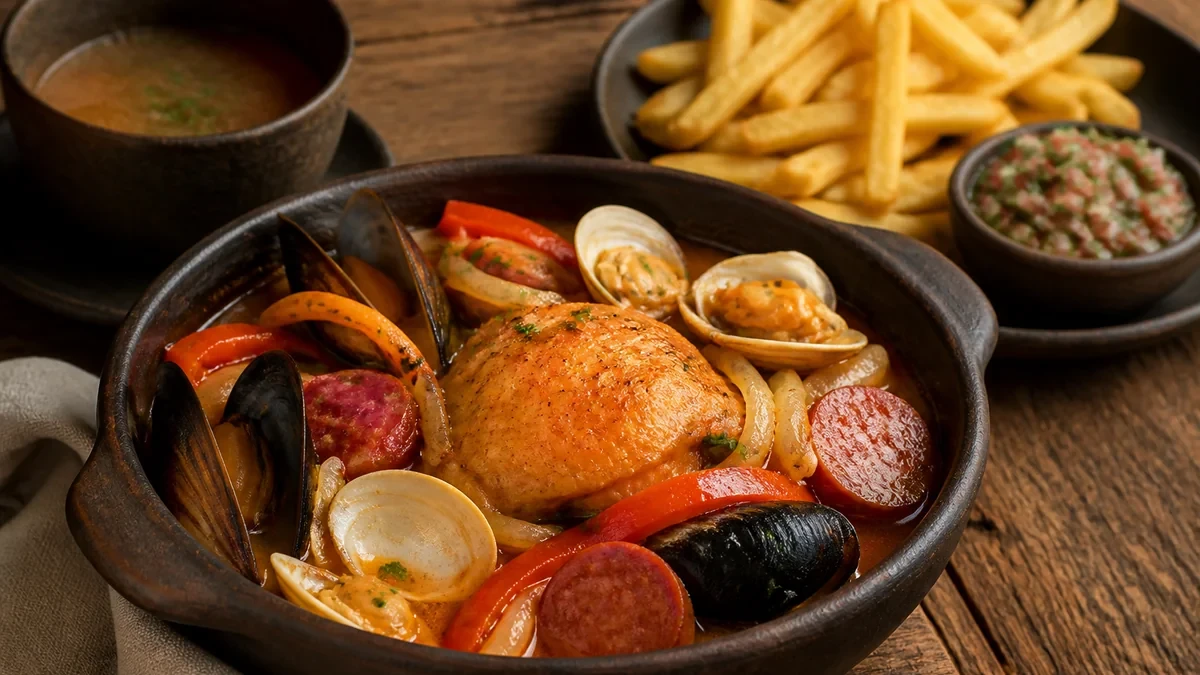
Pollo mariscal is not chicken with seafood thrown in as a garnish: it is a one-pot stew where the shellfish and the longaniza do the work the chicken cannot do alone. It comes from the Maule Region, it is tied to Talca, and it reaches the table in the same pot, broth served separately in cups.
What pollo mariscal is: the Talca dish that puts chicken and shellfish in one pot
Pollo mariscal is a Chilean stew from the Maule Region, associated above all with Talca, that cooks bone-in chicken with shellfish (mussels and clams), cured sausage (longaniza or chorizo) and vegetables in a broth built on white wine. It arrives in the cooking pot or in a clay cazuela, with the broth on the side.
What separates it from any other chicken stew is that the shellfish does not decorate, it structures: it brings the salty, iodine-rich base that makes the dish taste of the coast, while the longaniza adds cured fat and smoke that chicken never has. On the name, better to be precise: mariscal is built on marisco (shellfish) and mar (Latin mare), not on the military rank. The overlap with an army marshal is the joke at the table, not the origin.
Where it comes from: Talca, the fishing coves and a pot built on making things stretch
The seafood version was born in the coves of northern and central Chile, where fishermen offered whoever showed up whatever was left from the day, with lemon and a green sauce. Pollo mariscal is the inland reading of the same logic: stretching shellfish with chicken and sausage when shellfish was expensive or scarce.
The exact origin is not documented and I am not going to invent a date. What can be stated is the pattern: a single-pot dish, from roadside kitchens and home tables, like other Chilean one-pot dishes such as charquican.
What goes into pollo mariscal: the job of each ingredient
The chicken goes in cut up and on the bone, thigh rather than breast: bone and collagen give the broth body. It is browned first and set aside rather than boiled raw, because the flavour of the pot is built in that step. The shellfish are mussels and clams in the shell, fresh and well rinsed, added at the end once the chicken is cooked so they do not turn rubbery; variations allow razor clams, shrimp, piure or cuttlefish, as in the site's machas a la parmesana.
The sausage is longaniza or chorizo sliced into rounds, and it is the signature of the Talca version. The vegetables are onion, bell pepper and carrot sweated down, plus garlic; the seasonings are oregano, ají de color or merkén and black pepper. White wine deglazes the pot and brings acidity, beer is the usual substitute, and cilantro or parsley with lemon go in off the heat.
How it is served: the pot in the middle, broth in cups, fries on the side
It is served in the pot or in a clay cazuela, in the middle of the table, and everyone helps themselves. The broth goes into cups on the side: that is the identity marker of the dish, because it lets you eat the stew without soaking everything and drink the broth hot while you talk.
The house side is French fries and chancho en piedra, that crushed tomato with onion, chilli and garlic served as an accompaniment rather than a sauce. Bread is mandatory, and to drink, ice-cold white wine or a light lager: a heavy red buries a salty, iodine-rich dish.
Cold mariscal, hot mariscal and pollo mariscal: the table that tells them apart
The three come from the same root, which is why they get confused on a menu:
| Type | Base | Shellfish and seasonings | Service | When |
|---|---|---|---|---|
| Cold mariscal | Ceviche style | Raw or barely cooked shellfish, lemon, onion, cilantro, chilli | Clay platter | Summer starter |
| Hot mariscal | Shellfish soup | Shellfish, white wine, garlic, merkén, parsley | Clay bowl | Winter broth |
| Pollo mariscal | One-pot stew | Chicken, sausage, shellfish, vegetables | Cazuela in the middle | Autumn and winter main |
The rule that keeps you right: if it has chicken, it is pollo mariscal and comes with fries; if it is shellfish and broth only, it is hot mariscal and comes with bread; if it arrives cold with lemon, it is cold mariscal and you order it as a starter.
Mariscal, paila marina and caldillo de congrio are not the same dish
Paila marina has shellfish plus fish, congrio or salmon, and a fish broth, in a clay paila. Hot mariscal has no fish at all: shellfish with white wine. That is the practical difference, and you taste it before you count it.
Caldillo de congrio is a single fish with potatoes, onion, wine and milk or cream depending on the kitchen. Nothing to do with mariscal, even though all three arrive in clay. Chupe, by contrast, adds potatoes and cream: thicker and heavier.
How many calories pollo mariscal has (with the maths shown)
With reference values per 100 grams or millilitres, a batch serving four works out like this:
| Ingredient | Amount | Calories |
|---|---|---|
| Chicken (skinless thigh) | 560 g | 1,008 kcal |
| Longaniza | 200 g | 600 kcal |
| Mussel and clam meat | 160 g | 128 kcal |
| Vegetables | 400 g | 173 kcal |
| Oil | 45 ml | 398 kcal |
| White wine | 200 ml | 160 kcal |
| Total | 2,466 kcal |
That is roughly 615 calories per portion of stew and, with the house's 150 grams of fries, close to 1,065 on the plate. For comparison: a hot mariscal is listed at around 450 per serving and a cold one sits near 200 to 210; the frame for the rest is in the chart of 18 classic Chilean dishes.
The sausage and the oil account for more than a third of the total, while shellfish adds almost nothing. The dish lightens without losing its identity: half the sausage, skinless chicken, oven potatoes and double the vegetables.
How to spot a good pollo mariscal and what to order in Talca
A dish done right has shellfish in the shell and open, clean rather than greasy broth, longaniza in rounds, and chicken that comes off the bone with a fork. A weak one has shellfish out of the shell and tough from overcooking, cloudy broth with oil floating on top, no sausage at all and rice instead of potatoes. It also gives itself away when it arrives already plated: in Talca it comes to the table in the pot.
In Talca it is a neighbourhood restaurant dish and a home dish, and there are traditional places where it is the house speciality, such as Las Viejas Cochinas or Los Pollos Dorados, examples of local tradition rather than a ranking. In Santiago, what people order at the Mercado Central is seafood mariscal. The site's own cards for cooking it at home are the marshal chicken recipe and its second card.
Frequently asked questions about pollo mariscal
What is pollo mariscal
A one-pot stew from Talca and the Maule, with bone-in chicken, mussels, clams, longaniza and vegetables in white wine broth.
What goes into pollo mariscal
Bone-in chicken, mussels and clams, longaniza, onion, bell pepper, carrot, garlic, oregano, merkén, white wine and cilantro.
Can it be made with chicken breast
It can, hence the pechuga mariscal searches, but without bone the broth comes out thinner.
What is the difference between mariscal and pollo mariscal
Mariscal is shellfish only, served as a starter or a broth; pollo mariscal adds chicken and sausage and is a main.
How is mariscal different from paila marina
Paila marina has fish and fish broth; hot mariscal is shellfish with white wine and no fish.
Does cold mariscal have lemon
Yes, lemon is its base, with rinsed onion, cilantro and chilli. It is a summer preparation.
Why is it called mariscal
From marisco and mar, Latin mare. It does not come from the military rank: the overlap is the joke.
Is it from Talca or from the coast
Pollo mariscal is from Talca and the Maule; the seafood mariscal was born in the coves of northern and central Chile.
How many calories does it have
About 615 per portion of stew and close to 1,065 with fries, following the arithmetic in this article.
Can it be frozen
It freezes well for up to two months, without the fries. Shellfish in the shell lose texture when reheated.
What is served with pollo mariscal
French fries, chancho en piedra and bread. To drink, ice-cold white wine or a light lager.
Does it have longaniza or chorizo
It has longaniza, or chorizo in rounds. Without sausage the stew is correct but thin.