Terremoto Drink: What's in It and Why It's Called Earthquake
 By
Diego Cortés
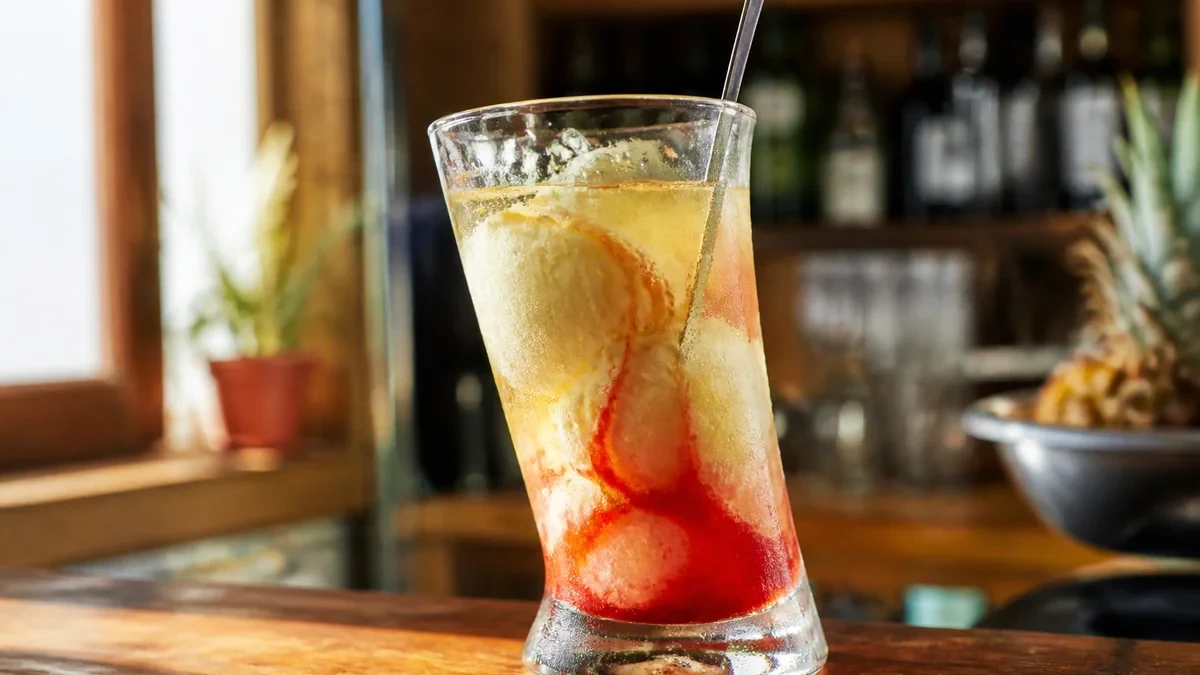
The terremoto is not shaken and it is not a glass of wine with ice cream floating on top: it is a Chilean cocktail built in layers, with white pipeño wine, pineapple ice cream and grenadine, eaten with a spoon before the ice cream melts.
What the terremoto is: the Chilean drink you finish before it melts
The terremoto is a Chilean cocktail from the late twentieth century, a descendant of ponche a la romana, built in a tall glass of about 400 millilitres with white pipeño wine, pineapple ice cream and a dash of grenadine. It is never shaken and never served over ice, which would water it down. Some bars swap the grenadine for fernet, and that is where the neighbourhood argument starts.
Its moment is September, in fondas and ramadas, although it is drunk all year round. The recipe with exact quantities is in the terremoto, a typical Chilean drink card.
What the terremoto is made of: the job of each ingredient
Pipeño fills about three quarters of the glass. It is a young wine stored in raulí wood barrels, made with País grapes for the red and criolla varieties such as Muscat or Torontel for the white. It comes from vineyards between Aconcagua and the Biobío river, with the Itata valley as its heart and at least 11.5 degrees of alcohol, and it arrives with gas and residual sugar: the drink needs no added sugar.
Pineapple ice cream is the other half: about four or five tablespoons per glass, close to 100 grams. It has to be pineapple, not vanilla, because it brings the acidity that cuts the sweetness of the wine. The water-based one leaves a lighter drink.
The third ingredient is a dash of about 15 millilitres that defines the house: grenadine in the sweet red version, or fernet and bitter liqueur in the dry one. The mental proportion, without turning this into a recipe: three parts pipeño, one part ice cream and a dash of grenadine. More ice cream makes it a dessert; less makes it wine with a memory of pineapple.
Why it is called terremoto: 1985, El Hoyo and the reporters
The name was coined after the earthquake of 3 March 1985. The most repeated version: foreign correspondents covering the quake ended the day drinking at El Hoyo, near Estación Central, and one stood up dizzy, thought another tremor had started and let out something close to "this one really is an earthquake". It is legend, not record.
The detail almost nobody mentions is that the drink existed before the name. The owner of El Hoyo, Guillermo Valenzuela, used to say that by 1978 he was already mixing pipeño from Coelemu with grenadine and pineapple ice cream, and that customers asked for it as "Submarino". La Piojera, on Aillavilú street, claims it was serving it before 1985 and with fernet. The origin is unconfirmed.
What is documented is the habit: Chile comes from colonial sweetened wines, such as the sun-dried wines of Cauquenes, and from the punch with fruit and pineapple ice cream that became popular in downtown Santiago in the sixties. The direct relative of the terremoto is ponche a la romana.
Cataclismo, réplica, temblor and africano: the vocabulary of the glass
In Chile the size is ordered with the name of a seismic event. A temblor is the small glass, the one you have when it is the only one. A terremoto is the tall glass of 400 millilitres. A réplica is the repeat in a small glass, and a cataclismo is the large pitcher to share, which some bars call "loro".
The variations change by liquor and by colour: the africano is made with red wine and the tsunami carries a dash of mint liqueur that tints it green. The glassware has a name too: the angled glass is the "potrillo", the same one used for mote con huesillos.
The kids version and the alcohol-free terremoto: what changes and what does not
Only the alcoholic base changes: instead of pipeño you use a clear sparkling soft drink, Sprite style, or pineapple juice. The pineapple ice cream and the grenadine stay. The full recipe is in the earthquake for children card.
What does not change is the sugar, the calories or the texture. Anyone ordering the alcohol-free version assuming it is light is in for a surprise: the sugar comes from the ice cream and the grenadine, not from the wine.
For children, use a glass of 200 to 250 millilitres, less grenadine and a spoon instead of a straw.
How many calories are in a terremoto (with the math shown)
The count uses reference values. Pipeño provides about 90 kilocalories per 100 millilitres, because alcohol delivers 7 per gram. Pineapple ice cream sits around 190 per 100 grams, grenadine about 260 per 100 millilitres and fernet about 230.
- Temblor of 200 millilitres: close to 275 kilocalories.
- Glass of 300 millilitres: about 370.
- Fonda glass of 400 millilitres: roughly 490.
- Cataclismo of 1.5 litres: about 1,810 in total, or 360 to 450 per person if four or five share it.
- Kids version of 300 millilitres: close to 260.
The ice cream and the grenadine supply a little more than half, and the alcohol in the pipeño the rest. The most common mistake is assuming the drink is light because the wine is white and the ice cream is fruit based. To compare with other dishes there is the chart of 18 classics, which estimates 450 kilocalories for a fonda glass.
How to order a terremoto at a fonda and where to drink it in Santiago
You order by size, not by brand. "Un terremoto" is the 400 millilitre glass; if you go again, "una réplica"; if there are several of you, "un cataclismo". If it arrives with ice, it is badly made.
The four bars of the Santiago tradition each have their secret: El Hoyo, at San Vicente 375, uses grenadine and claims authorship; La Piojera, on Aillavilú, leans on fernet; Las Puntas goes with cognac and Las Tejas with rum.
During the national holidays it is ordered next to mote con huesillos, choripán and empanada de pino. It is the classic fonda combination, and it adds up: a terremoto and a mote together are already a meal for many people.
Terremoto, jote and ponche a la romana: the table that separates them
The terremoto takes white pipeño, pineapple ice cream and grenadine or fernet, in a 400 millilitre glass and with a spoon. The jote is red wine with cola, no ice cream, drunk as a long refresher. The perla negra combines coffee liqueur, dark rum and ice in a short glass. Ponche a la romana is wine with fruit and ice cream, the direct ancestor.
All of them share the logic of young, sweet wine sweetened with something cold; what sets the terremoto apart is the sheer amount of ice cream.
Which to order: terremoto if you want dessert and drink in the same glass; jote if you want something long and bubbly; perla negra to close the night. The article on the jote follows the same formula.
Frequently asked questions about the terremoto
What is in a terremoto?
White pipeño wine, pineapple ice cream and a dash of grenadine or fernet. No ice, no added sugar and no shaking.
What can replace pipeño?
A young white wine, preferably sweet and slightly sparkling. A dry white changes the result a lot.
What is in a terremoto for children?
A clear sparkling soft drink or pineapple juice instead of wine, plus pineapple ice cream and grenadine. The rest is identical.
Which soft drink is used for the kids version?
Sprite or a similar clear soda, or pineapple juice. Many households mix both to bring back the acidity.
Why is it called terremoto?
Because of the earthquake of 3 March 1985 and the legend of the reporters who, dizzy at El Hoyo, mistook the effect of the drink for an aftershock.
What is a réplica and what is a cataclismo?
The réplica is the repeat in a small glass. The cataclismo is the large pitcher to share, which some bars call loro.
How many calories are in a kids terremoto?
Around 260 kilocalories in a 300 millilitre glass. The alcohol-free version is not the light one: the sugar comes from the ice cream and the grenadine.
How many calories are in a terremoto?
Between 450 and 500 kilocalories in a 400 millilitre fonda glass. A 200 millilitre temblor drops to about 275.
Is the terremoto africano the same thing?
It is the variation with red wine instead of white. The colour changes and so does the flavour a little, but the build is the same.
Does it have ice, and can it be made in advance?
No ice: the cold comes from the ice cream and a pre-chilled glass. Nor should it be made ahead, because the ice cream melts in minutes.