 Meat
Intermediate
Meat
Intermediate
Peking Duck
180 min
Vida Recetas Editorial
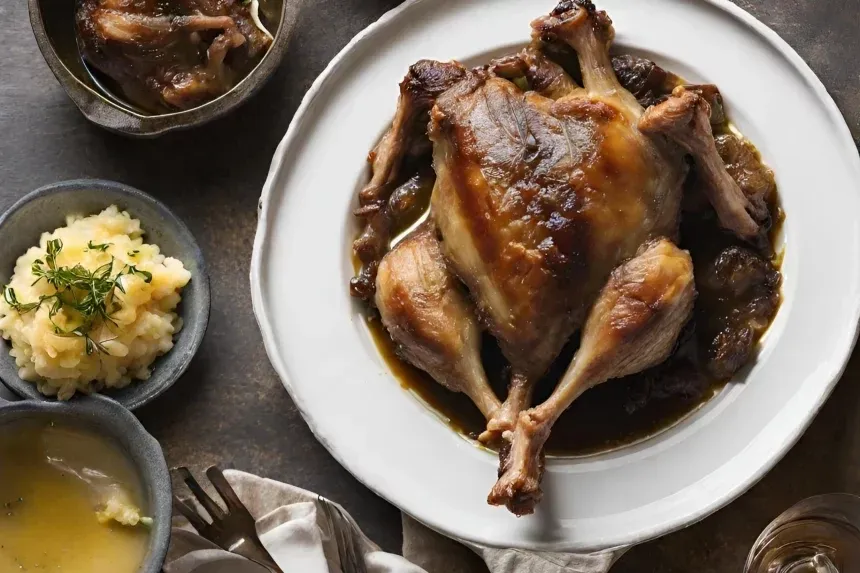
Duck confit is one of the jewels of French gastronomy, a dish that transforms simple duck legs into a sublime culinary experience. Originating in the Gascony region, this slow-cooking method in fat was devised as a preservation technique, but today it is prized for its unmatched texture and flavor.
The key lies in confiting: cooking the legs at a low temperature (120°C) submerged in duck fat for hours. This breaks down connective tissues, resulting in meat so tender it falls apart, while the skin, when browned at the end, becomes crispy and golden. The result is a perfect contrast between juiciness and texture.
Although it requires time and patience, duck confit is perfect for a festive meal or an elegant dinner. It can be prepared in advance and stored in its fat, making it very practical. It is a dish that impresses diners and undoubtedly elevates any menu.
Traditionally it is served with roasted potatoes (confited in the same fat) and seasonal vegetables. You can also find versions with orange sauce, cherries, or even in salads. The versatility of duck confit makes it adaptable to multiple presentations.
Prep
180 min
Servings
4
Sprinkle the duck thighs with coarse salt and black pepper. Add garlic, bay leaves, and thyme. Cover and refrigerate for 24 hours.
Preheat your oven to 120°C (250°F).
Remove excess salt and spices from the duck thighs. Place them in an ovenproof dish and cover them with duck fat.
Roast in the oven for about 2.5 hours or until the meat is tender, and the skin is crispy.
Remove the duck thighs from the oven, drain them, and sear in a hot pan for a few minutes.
Serve the duck confit thighs with roasted potatoes and seasonal vegetables for a delightful French meal.
This recipe has a medium difficulty level, which means it's accessible for cooks of all levels.
The preparation time is 180 minutes and the cooking time is minutes.
This recipe is designed for 4 servings.
Yes, many ingredients can be substituted with similar alternatives. We recommend checking the recipe variations.
Store the preparation in the refrigerator for up to 3 days in an airtight container. Some preparations can be frozen for up to 3 months.