Mochaccino: What It Is, How It Differs from a Cappuccino and How to Make One
 By
Diego Cortés
By
Diego Cortés
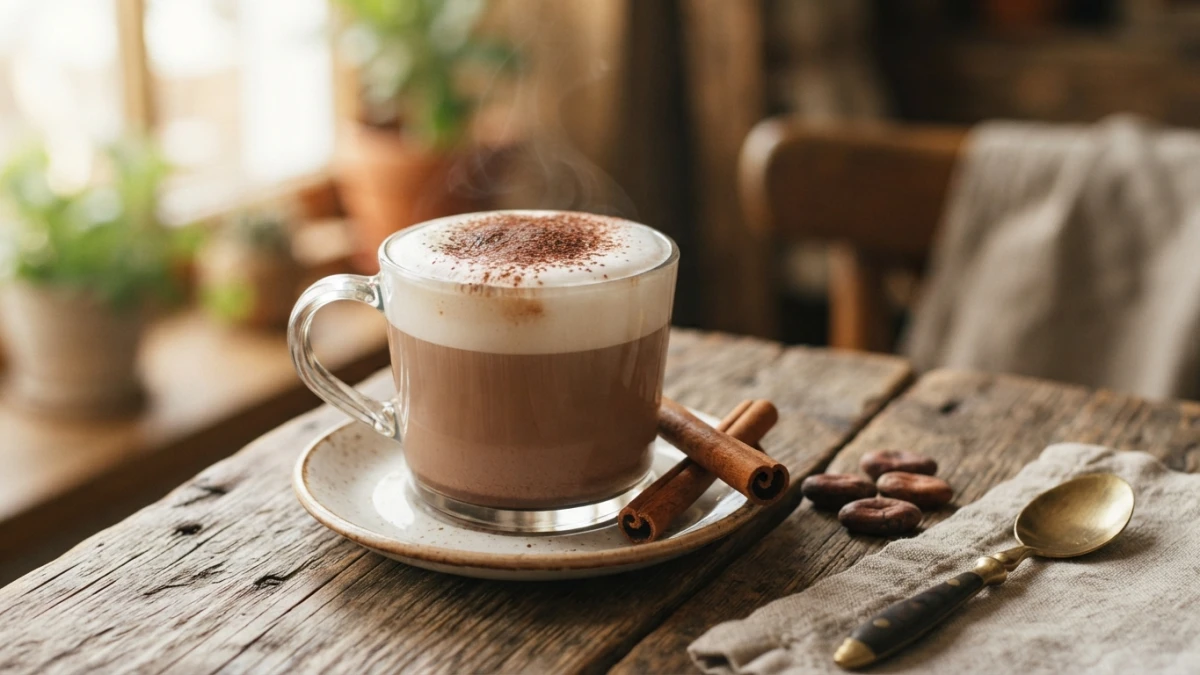
A mochaccino is a cappuccino with chocolate: espresso, milk and cocoa in one cup, as sweet as a dessert and as strong as coffee. It also goes by mocaccino, mocha or caffe mocha, and those are not different drinks: it is the same idea spelled several ways.
If a straight espresso is too much for you, this is your drink; if you already take it strong and want something sweeter, it works too. Here is what goes into it, how it differs from a cappuccino and how to make one at home with no espresso machine.
What a mochaccino is: espresso, milk and chocolate in one cup
A mochaccino is built from three things: strong black coffee (an espresso or the closest thing you can make at home), hot milk and chocolate, whether that is cocoa powder, syrup or melted chocolate. It is served foamy, with cocoa or cinnamon dusted on top.
The proportions matter, and so does who leads the cup: coffee leads and chocolate follows. It is not a dessert in a glass, and it is not hot chocolate with a splash of coffee. If the sweetness buries the coffee, it stopped being a mochaccino. That is why it belongs in a 200 to 250 millilitre cup rather than a giant mug. It is also worth sorting out the names early: mocha, caffe mocha, mocca, mocaccino, mochaccino and mocachino all name the same drink, with mocha or mochaccino in English, mocaccino in Italian and mocachino as the everyday word in Chile and Peru.
Where the name comes from: the port of Mokha and coffee that tasted of chocolate
Mocha comes from Mokha, the name once used for Al-Mukha, the Red Sea port in Yemen that was one of the great centres of the coffee trade between the fifteenth and eighteenth centuries. Beans shipped from there were famous for a cup with naturally chocolatey notes, and that association gave us the name we now use for any coffee with chocolate.
The drink as we order it in a cafe came much later: it took shape during the twentieth century. In Europe and the Middle East it was understood as coffee with milk and cocoa or chocolate, while in the United States it was defined as a cappuccino made with chocolate. Both readings survive in reference works, so there is no single date. And no espresso machine is needed at home: a moka pot, a French press or well-brewed instant coffee will do.
Mochaccino, cappuccino, latte and caffe mocha: what sets them apart
All four come from the same base, espresso and milk, and they differ in how much milk goes in and whether chocolate is added. A cappuccino is espresso with an equal amount of milk and a thick layer of foam, and no chocolate at all, which is why it tastes stronger. A latte is espresso with considerably more milk and only a thin film of foam, softer and creamier, and at home the portions can get more generous, as in a cafe latte a lo pobre. A caffe mocha or mocaccino is a latte with chocolate added, topped with whipped cream in its cafe version.
The proportions help you recognise them in the cup: in a cappuccino the coffee weighs more because there is less milk, in a latte milk takes up most of the glass, and in a mochaccino chocolate joins in, sweetening and thickening the drink. The simple rule: if it tastes of coffee and milk and nothing else, it is a cappuccino or a latte; if it also tastes of chocolate, it is a mochaccino. Two close cousins with names of their own are the hazelnut cappuccino and the vanilla coffee.
Watch out for the lookalikes. Hot chocolate has no coffee, and a marocchino or espressino is coffee with milk foam and cocoa in a small glass, unlike the blended iced mochaccino. In the chocolate-with-coffee family there is also the Mexican hot chocolate mocha.
How to make a mochaccino at home, with no espresso machine
The method is simpler than it looks. Brew a strong coffee in a moka pot, a French press or a filter brewer using more coffee than usual. Separately, dissolve the chocolate in hot milk, never boiling milk, then foam that milk with a whisk or a lidded jar shaken hard for a few seconds. Then build the cup: coffee at the bottom, chocolate milk over it and the foam on top.
Three details change the result. Chocolate blends far better if you first make a thick paste with hot milk. Milk foams best at around 60 to 65 degrees Celsius, hot to the touch but not steaming or boiling. And if you need to sweeten, do it with chocolate rather than extra sugar, because sugar masks the coffee.
Exact amounts and times are in the mochaccino recipe with quantities and times, and to improve the base, the complete guide to brewing perfect coffee at home covers grind and temperature.
The variations people ask for most: white, cinnamon, caramel and iced
A white mochaccino swaps dark chocolate for white chocolate: sweeter and creamier, without the bitterness of cocoa. The easiest variation of all is cinnamon, dusted on top or stirred into the milk, which brings a warm aroma without much added sugar; caramel or vanilla add sweetness without pouring in more chocolate.
Cafes bring out seasonal versions: chilli or pepper in the chocolate for a sweet and spicy contrast, hazelnut or orange for aroma, and the iced version in a tall glass over ice, where chilling the coffee first keeps the ice from watering the drink down. Serve it in 200 to 250 millilitres, and it pairs well with dry things such as churros, biscuits or toast, and poorly with another sweet dessert.
How many calories are in a mochaccino (and how to lighten it)
The coffee itself adds under 5 calories a cup; everything else is what counts. A cup of whole milk, about 240 millilitres, is around 150 calories and semi-skimmed drops to roughly 120; unsweetened cocoa powder adds 25 to 50 per tablespoon, chocolate syrup between 50 and 90 and whipped cream another 50 to 80. A homemade mochaccino with whole milk usually lands between 200 and 350 calories, and a large cafe version goes well above that.
It is a sweet drink, not an everyday coffee if you are watching your weight: instant mochaccino mixes declare figures around 350 calories per 100 grams of powder. To lighten it, use skimmed milk or unsweetened plant milk, unsweetened cocoa with cinnamon instead of syrup, skip the whipped cream, serve it in a smaller glass and leave the sugar out. The Chilean food calorie chart has more reference points.
The mistakes that ruin a mochaccino (and how to avoid them)
The first is the milk: boiling it or reheating it twice gives it a cooked taste and kills the foam, so it should be hot, not steaming, and foamed right before serving. The second is the chocolate: adding powder straight into the milk forms lumps and leaves the drink gritty, so make a paste with a little hot milk first.
The third is proportion: weak coffee leaves you with chocolate milk, and too much sugar leaves you with syrup and milk. The fourth is serving: foaming the milk, letting it sit and pouring into a cold cup. Build the drink and drink it right away.
Common questions about the mochaccino
Is it the same as a caffe mocha or a mocha? Yes, it is the same drink spelled differently. Is it the same as a cappuccino? No, because a cappuccino has no chocolate. And the same as hot chocolate? No either, since hot chocolate has no coffee.
Can you make it without an espresso machine? Yes, with a moka pot, a French press or strong instant coffee; if yours turns out too intense, the guide to perfect foam for your cappuccino works for this cup as well. Can you use decaf? Yes, it changes the effect but not the method. Does it work without whipped cream? Absolutely: the cream is a cafe addition, not part of the drink.
To sum it up: a mochaccino is a cappuccino with chocolate, made of espresso, milk and foam, and its recipe with quantities and times lives on the site recipe card.