Malt with Egg: What It Is, Where It Comes From and Why It Is Made with Raw Egg
 By
Diego Cortés
By
Diego Cortés
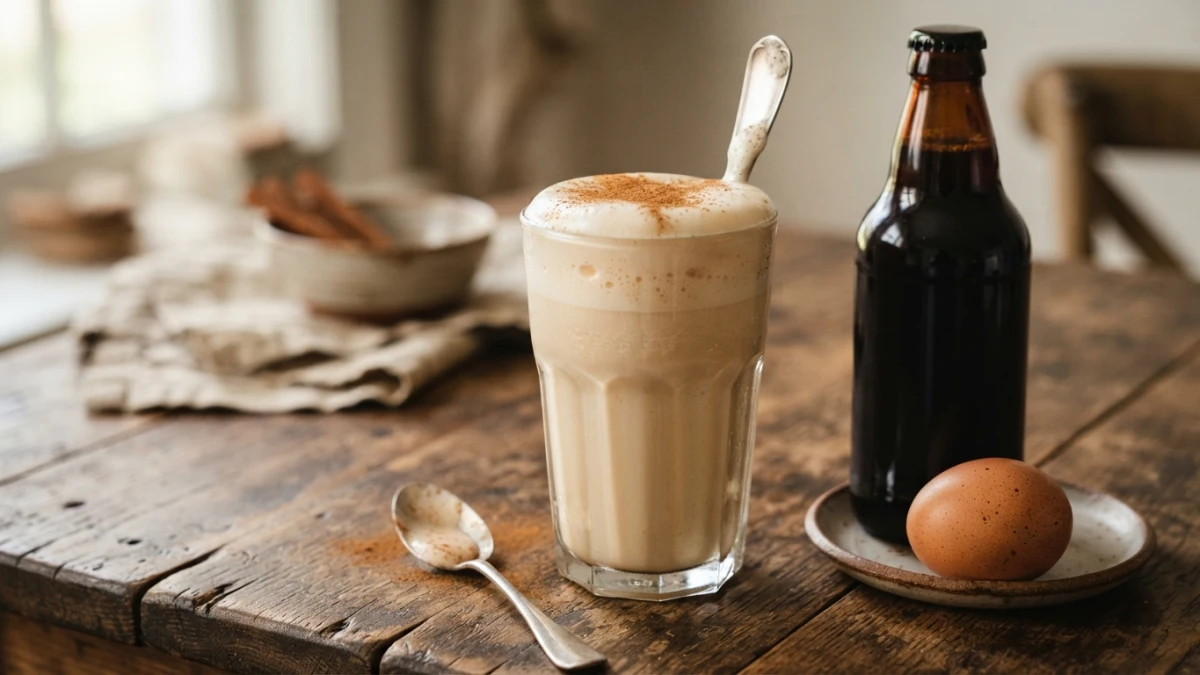
Malt with egg is the old Chilean pick-me-up shake: dark malt, a raw egg and sugar, blended until frothy. Three ingredients, one minute and a reputation that crosses generations.
It helps to say what it is not: it is not a cocktail and it contains no alcohol, it is not a fruit smoothie and it is not a pharmacy remedy. It is a homemade drink from Chilean home cooking, the kind put together with whatever the pantry had and drunk on the spot.
What malt with egg is (and why it is called levantamuertos)
The base is always the same: a malt drink, a raw egg and something sweet, beaten until the mixture lightens and foams up. The result is a thick drink, light caramel, toasted and sweet like cereal, with a creamy texture.
In Chilean home cooking it was called "levantamuertos", literally "raise the dead", pure folklore: it was credited with lifting the tired and getting back on their feet those who came home worn out from work. It is not a medical promise, but how people spoke about a very calorie-dense drink when cheap energy was found in the kitchen.
Where it comes from: from the Chilean countryside to European egg punches
Malt arrived in Chile as a bottled product sold as nutritious: dark, sweet, alcohol-free and made from malted barley. The egg was the cheapest and most available protein in any household. The sum of the two needed no recipe: someone beat what they had and it stuck.
Its use is remembered without dates or authors: it was the drink of skinny children, people recovering from illness and tired adults, and in the countryside it served as a cheap energy breakfast or a recovery drink after heavy physical effort. It is always told in the past tense and with attribution: it was used, it was credited with.
The family it belongs to is that of egg punches. The ponche a la romana is its closest relative in this recipe book, and it shares the table with the chupilca and with alcohol-free drinks such as the mint tonic, in the Drinks category. In the Caribbean, the same pairing of malt and egg, or of malt and condensed milk, is a childhood classic in Cuba and the Dominican Republic.
What it is made of: the malt, the egg and the sweetness
Malt is not beer, even if the colour is misleading. It is a malted barley drink, usually carbonated and sweet, alcohol-free, and it supplies the sugars of quick energy and the toasted flavour that defines the shake. When the label says dark or brown malt it means the same with more intensity: the darker, the more pronounced the toasted cereal taste.
The egg goes in whole: the yolk brings creaminess, colour and fat, and the white brings protein. Beaten first with the sugar is what lifts the foam. It is never cooked, it is served raw. The sweetness comes from sugar or condensed milk, the most requested version because it adds body and sweetness at once; vanilla rounds off the flavour and cinnamon on top is the classic finish. For the nutritional detail, the article on why eggs are a healthy superfood covers that ground.
Why the raw egg goes in: the logic of the pick-me-up
The explanation comes from the pantry, not the lab. Malt carbohydrates deliver quick energy and the egg protein adds structure: together they make a drink that is very dense in calories and protein, cheap, ready in a minute and with nothing to cook. At a time without protein supplements, that combination was the pick-me-up the house had on hand.
Still, what the myth inflates is worth measuring. As a drink it is indeed energetic and works as a boost after intense physical effort or in a diet designed to gain weight. What does not survive scrutiny is that a raw egg nourishes more than a cooked one: the proteins are used just the same, and crediting the mixture with medicinal powers is grandmother's folklore, not nutrition. Today it is drunk for pleasure and nostalgia, and as a quick homemade energy shake.
Is it safe to drink malt with egg? Raw egg, salmonella and who should avoid it
The risk is real, without drama: raw egg can carry Salmonella, and eggs and egg products are among the groups that concentrate outbreaks and hospitalisations from that bacteria. With a fresh egg and an unbroken cold chain the risk is low, but it is not zero, and the responsibility lies in how it is handled.
The levers to reduce it are simple: use very fresh eggs kept under refrigeration, discard any that are cracked or dirty, break the egg into a separate glass before adding it to the blender, mix and drink immediately, without leaving it waiting. The safest route, especially if you are serving someone at risk, is pasteurised egg, which is sold as a liquid precisely for raw preparations.
This drink does not suit, as it is, pregnant women, very young children, older adults and immunocompromised people: they should avoid it or make it with pasteurised egg. If you are unsure about the freshness of what is in the fridge, the article on how to tell if eggs are fresh settles that point before you reach for the blender.
How to make it at home (and the variations worth adding)
The method holds no mystery, but it does have an order that changes everything. First, chill the malt well: very cold, the drink tastes better and the foam lasts longer. Then beat the egg with the sugar alone until the mixture lightens and foams, without rushing. Only then fold in the cold malt a little at a time, stirring gently so the foam does not collapse, and serve at once. That order is the difference between a light shake and a paste; the classic mistake is pouring the malt in all at once.
The variations build on that base: with cold milk it turns softer; with condensed milk, sweeter and creamier, and that is the version most people look for; with honey the flavour shifts; with cinnamon on top it gains aroma; and for adults a splash of pisco can go in. The oldest versions include a few drops of cocoa liqueur. The article on cocktail basics at home applies here too, even though this drink has no alcohol.
With exact amounts the matter is settled in the house recipe: that is where you find the malt with egg recipe, with its ingredients and its steps, to follow to the letter the first time.
How many calories it has and when to drink it
The breakdown is more useful than a single number, because a lone figure misleads. Half a litre of bottled malt runs about 250 to 320 calories depending on the brand and the added sugar; an egg adds some 70; and two tablespoons of sugar contribute around 100, rising to about 130 with condensed milk. That puts a large glass between 420 and 490 calories, averaging near 440. It is an estimate based on reference values, not a label reading.
The profile allows no miracles either: plenty of carbohydrates and sugar, some protein and fat from the egg and practically no fibre, so it does not satisfy like a meal. As a recovery shake or a winter breakfast it does the job; as an everyday drink it adds calories fast and quietly. It is not a light drink.
The sensible moment is after intense physical effort, at breakfast on a cold day or within a plan for gaining weight. To compare it with the rest of the Chilean table, the table of calories in Chilean dishes provides the missing context.
Common mistakes and frequent questions about malt with egg
The same confusions come up and each has a short answer. No, it contains no alcohol: malt is an alcohol-free drink and should not be confused with beer, except in the pisco version made on purpose. No, it is not the same as the Caribbean malt with condensed milk: that is the variation without egg, or with it, depending on the household. And no, it cannot be made with a cooked egg: if the egg is cooked it is no longer this drink, and the safe route when in doubt is pasteurised egg.
The foam collapses when the malt is poured in all at once or when the mixture is over-beaten; that is why it goes in cold and gradually. The drink cannot be made ahead: it is for immediate consumption, both for hygiene and because the texture is lost within minutes. And the egg is beaten with the sugar first because the foam is not decoration: it separates a shake from a stirred mixture.
In short: malt with egg is a homemade shake of malt, raw egg and sugar, traditional in Chile and drunk on the spot. The exact amounts are in this site's malt with egg recipe.