Yuxiang Rousi: Why Fish-Fragrant Pork Has No Fish
 By
Diego Cortés
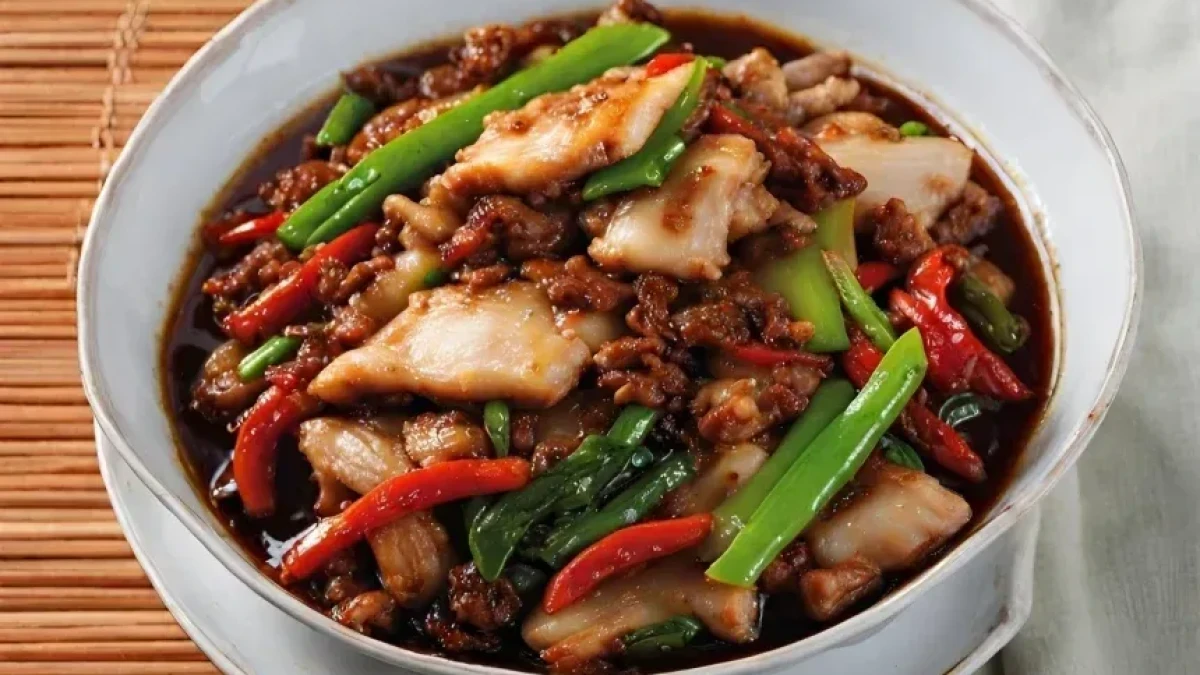
Yuxiang rousi contains no fish and does not taste of fish, yet its Chinese name means "shredded pork with fish fragrance". It is named after the seasoning Sichuan cooks use for fish, not after an ingredient.
What yuxiang rousi is (and what it is not)
It is a stir-fry of thin pork strips from Sichuan cuisine, coated in a glossy red sauce of pickled chilies, garlic, ginger, vinegar and sugar. In Chinese it is 鱼香肉丝 (yúxiāng ròusī): rousi means strips, about the thickness of a matchstick, not slices. That matters, because a thin strip cooks in seconds and drinks up the sauce.
First, what needs clearing up: there is no fish, no fish sauce and no fish smell. Nor is it the "pork in garlic sauce" printed on many American menus: garlic is there, but it shares command with vinegar, sugar and fermented chili.
Why it is called "fish-fragrant" without any fish
The mechanism fits in one sentence: Sichuan households cooked fish with garlic, ginger, scallion, pickled chili, vinegar, soy and sugar to strip the river smell and lift the aroma. The seasoning worked so well that it was tried on other ingredients, and it stopped being a fish recipe to become a flavour category: yúxiāng wèi (鱼香味).
The legend everyone tells: a cook who had just prepared fish poured the leftover seasoning into a pot of pork, and her hungry husband tasted it and asked how she had done it. Sources repeat it as folk storytelling, with no date, city or name. Another version mentions wartime scarcity, also without a firm source.
Where it comes from: Sichuan and a twentieth-century dish
It is Sichuanese, cousin to mapo tofu and kung pao, and today it is eaten all over China with a different home version in every kitchen. It does not stop at heat either: the region also has gentle, sour and sweet profiles. On the same table sit dishes built on a different logic, such as Szechuan beef or shi zi tou meatballs.
The date that orders the story: a compilation of Sichuan dishes published in Chengdu in 1909, with more than thirteen hundred recipes, does not include yuxiang rousi. That places it as modern, twentieth century, not an imperial heirloom.
Its charm is being home cooking that became a classic: lean meat, a couple of vegetables and a jar of pickled chili, with the skill spent on balancing the sauce rather than on an expensive ingredient.
The yuxiang profile: sweet, sour, hot and aromatic at once
Yuxiang is one of the catalogued flavour profiles of Sichuan cooking; sources count 23 or 24, depending on how they divide them. It is not a bottled sauce but a ratio that repeats across ingredients, which is where yuxiang eggplant and yuxiang tofu come from.
The balance, without jargon: vinegar gives the sour edge, sugar rounds it off, fermented chili brings heat and colour, and garlic, ginger and scallion bring the aroma. If vinegar wins, the dish turns sour; if sugar wins, it becomes a flat sweet and sour.
What separates yuxiang from any sweet and sour sauce is fermentation: pickled chili and fermented broad bean paste add a salty, deep base that sugar and vinegar alone cannot reach. That is why the dish tastes bigger than its ingredient list.
What it actually contains: five pillars
- The meat: lean pork loin in strips, marinated with soy, salt, white pepper, cornstarch and a little oil: that is what keeps it tender in the wok.
- The chili: the traditional version uses pao jiao, red pickled Sichuan chilies of the erjingtiao type. The easier find is Pixian doubanjiang, fermented broad bean paste with chili, which produces the red oil. Many kitchens use both.
- The sauce: mixed separately and added at the end, with black vinegar (Chinkiang or Baoning), sugar, soy, Shaoxing wine and stock, thickened with starch. Without vinegar there is no yuxiang.
- The vegetables: wood ear and bamboo shoots in strips, or celery, celtuce, carrot and bell pepper. They add texture, not bulk.
- The aromatics: garlic, ginger and scallion in generous amounts: half of the fragrance the dish is named after.
Allergens: soy sauce and doubanjiang usually contain wheat, so read the labels. Pickled chili normally does not.
How it is made, in order (no numbered steps)
Everything gets prepped before the burner goes on: the stir-fry takes under ten minutes. Marinated strips, soaked wood ear, vegetables cut to the same size, chopped aromatics and the sauce in a bowl.
Very hot wok, plenty of oil, the pork first for one or two minutes, then out onto a plate. Then garlic, ginger and the white part of the scallion, followed by the pickled chili or the bean paste for thirty to sixty seconds, until the oil turns red. That step builds the flavour and it is the one most often skipped at home.
The finish: the pork returns, wood ear and vegetables go in, the bowl of sauce is poured over and the dish is thickened with dissolved starch, stirring, until it shines and coats a spoon. Serve immediately. Exact amounts, grams and timings live in the step by step yuxiang rousi recipe; this article stays with the what and the why.
How it differs from sweet and sour pork, kung pao and mapo tofu
Against sweet and sour pork, which aims for sweet plus sour with tomato sauce and a batter, yuxiang aims for salty, sour, sweet and hot with fermentation, no tomato and no batter. Pantry cousins, not siblings: bittersweet fried chicken shows the gap.
Against kung pao chicken, both are hot, but kung pao carries peanuts and dried chilies and its core is crunch. Yuxiang has no nuts at all: its core is the sauce.
Against mapo tofu, they share the bean paste, but mapo is tofu with minced meat and Sichuan pepper, no vinegar and no sugar. Quick rule: tofu plus tingle is mapo; pork strips plus sour-sweet shine is yuxiang. All of them sit in the meat category.
How it is served, variations, storage, calories and FAQ
It goes with steamed white rice, and the rice gets mixed with the red sauce. It also works over egg fried rice, and in a Chinese spread it is paired with a stir-fried vegetable and a clear soup rather than a second heavy meat dish. As a starter, homemade Chinese dumplings fit better than bread.
Variations: chicken or beef with the same marinade, firm tofu and oyster mushrooms for the vegetarian one. No black vinegar, use rice vinegar; no pao jiao, doubanjiang; no wood ear, portobello. It keeps two to three days in the fridge and reheats in a pan, not a microwave, so the sauce does not split.
Calories, with the maths in plain sight: 450 g pork loin (644 kcal), 40 ml oil (354), 18 g doubanjiang (30), 25 g sugar (97), 45 ml vinegar (20), soy and Shaoxing (28), 8 g cornstarch (30), wood ear (15), bamboo shoots (27), celery (16) and aromatics (25) add up to about 1,285 kcal for 4 servings, roughly 321 kcal per plate without rice. It is an estimate that depends on the oil left in the wok. The bigger load comes from the rice.
Does it contain fish?
No. No fish, no fish sauce, no anchovy: the name describes the seasoning.
What does it taste like, then?
Salty, sour, sweet and hot at once, with a fermented base and the aroma of garlic, ginger and scallion.
Is it very spicy?
It has heat, but the rounded heat of fermented chili, not the dry punch of fresh chile.
What is pao jiao and what replaces it?
Red chili pickled in brine, typical of Sichuan. The most accessible substitute is Pixian doubanjiang.
Can it be made without pork?
Yes: chicken or beef strips with the same marinade, or firm tofu with oyster mushrooms.
How many calories does it have?
About 321 kcal per serving without rice, in a four-serving batch.