Börek: What It Is, Its Types and How It Differs from Burek
 By
Diego Cortés
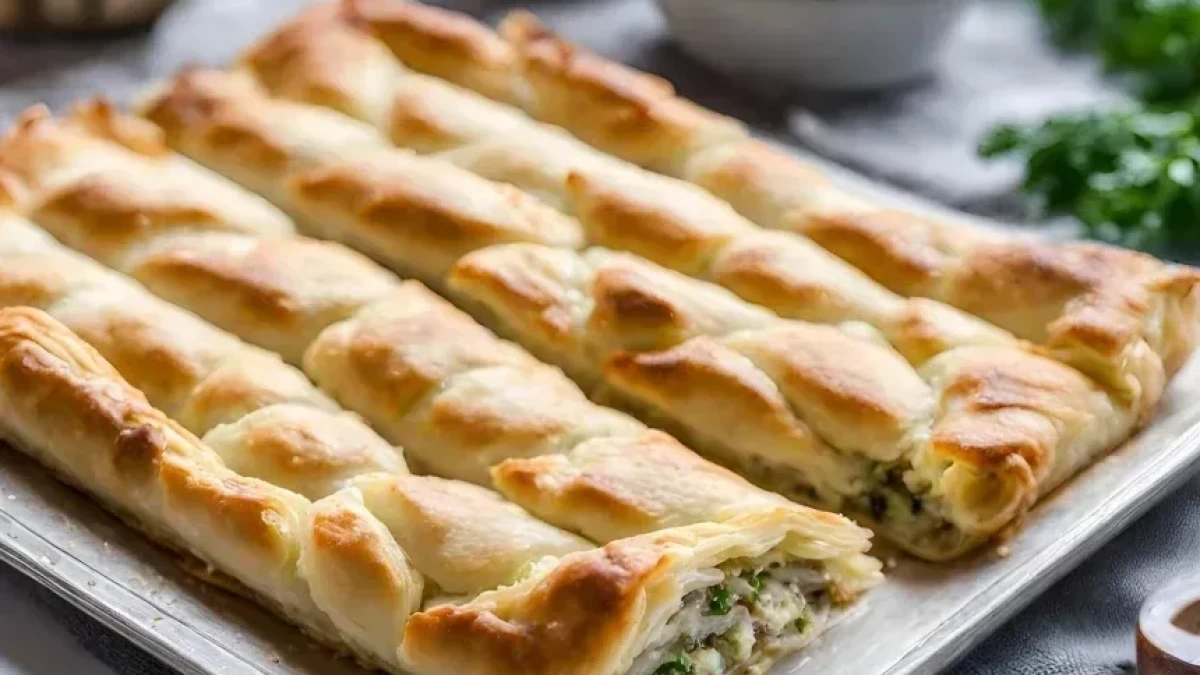
Börek is not puff pastry, even if it looks like it: it is a family of savoury pies made with very thin stretched dough, filled with cheese, spinach, potato or meat, eaten for breakfast in Turkey.
What börek is (and why it is not puff pastry)
The most common mistake is calling it puff pastry. Puff pastry is laminated by folding butter inside the dough; börek follows a different technique: sheets stretched until almost transparent, stacked and brushed one by one with oil or melted butter. That is where its texture comes from, crisp and layered without being puff pastry. It is baked in a large tray and then cut into portions, or shaped into individual pieces and fried.
On the table it is recognised by the sesame seeds or nigella sprinkled on top, and because it is eaten hot or cold with ayran or yoghurt on the side. It is breakfast, tea-time snack and street food at once. One idea is worth fixing: börek is a family, not a single dish, and the filling, the thickness of the sheet and the shape all change without leaving the same tradition.
Where the name comes from (and where the dish comes from)
The word comes from the Turkish bürmek, "to roll" or "to wind", and goes back to an old Turkic root meaning "to cover" or "to wrap". The first documented mention is from the 13th century, in the work of Mevlana, and a Turkic-Arabic dictionary from the early 14th century already defines it as "pieces of dough filled with meat", with a version threaded on a skewer.
The origin of the dish is not settled. Some trace it to a Byzantine layered pie with cheese, itself an heir of the Greek and Roman placenta, and others explain it through the Turkic habit of stacking thin yufka breads with butter or filling between the layers. The sources leave it as a hypothesis.
What can be stated is that the technique travelled with the Turkic peoples and with the Ottoman Empire, which is why the same pastry shows up as byrek in Albania, boureki in Greece, byorek in Armenia, bourek in Algeria, brik in Tunisia and bourekas among the Sephardic Jews. The same kitchen holds dishes that already have their own explanation, such as the iskender kebab and how it differs from döner.
Yufka, filo and shop-bought dough: the dough is everything
The real difference is thickness. Turkish yufka is thicker and made differently; filo is thinner and more fragile. At home almost everyone uses shop-bought filo or fresh yufka from the bakery, and that changes the timing and the number of layers. In the past börek was cooked on the saj, the same iron griddle used for bread.
The practical rule: the thinner the sheet, the more layers and the more fat between them; the thicker the sheet, the fewer layers and the more filling. A tray of cheese börek takes between 6 and 12 sheets, and each one is brushed with olive oil, butter or a mix. The same dough solves sweet baklava and meat lahmacun.
Two things cannot be skipped: the filling must be cold or lukewarm when assembling, because if it is hot it cooks the dough from the inside and leaves it gummy, and the sheets must be covered with a cloth, because they dry out in minutes and crack. To start with quantities, the tray-baked cheese börek recipe works as a base.
The types of börek worth knowing
Su böreği briefly scalds the sheets in hot water before assembling and then bakes them: the result is softer and juicier. Sigara böreği, or cigar börek, are thin fried rolls with cheese or potato. Kol böreği are long baked rolls, with a smaller, greasier version associated with the Sarıyer district of Istanbul.
Then come the tray bakes: tepsi böreği is the classic one cut into diamonds before baking, talaş böreği or Nemse are small squares of starchier dough filled with lamb and peas, and paçanga böreği holds pastirma, cheese, tomato and parsley, and is fried.
The family does not stop at Turkey. Greek spanakopita, Bulgarian banitsa, Albanian byrek and Sephardic bourekas are direct cousins, and they share their logic with dürüm kebab and with spinach pide.
Turkish börek and Balkan burek: not the same thing
In Turkey börek is a family with dozens of shapes and names depending on the filling; in the Balkans burek tends to be one large pie, round or rolled into a spiral, cut into portions. In Bosnia it is called pita. The names by filling are the key to avoiding a "cheese burek": the meat one is burek, the cottage-cheese one sirnica, the spinach one zeljanica and the potato one krompiruša. In Serbia the round burek developed in Niš, where a festival dedicated to the pastry is held every year, and its meat version has its own page here: Balkan meat burek.
What they share: stretched dough, yoghurt on the side and the role of everyday food, especially at night. And one serving rule works for both: tea if the filling is cheese, spinach or leek, and ayran if it is meat. The same pairing goes with iskender kebab and with homemade döner.
How börek is made, in order
Assembly sets the rules: brush the tray, lay a sheet, brush it, repeat until halfway, spread the filling, cover with the remaining brushed sheets, fold the edges inwards and cut into portions before baking.
The cheese filling, as a reference: crumbled salty cheese such as feta or beyaz peynir mixed with a mild fresh cheese so it does not dry out, egg to bind, parsley and pepper. The meat filling calls for softened onion and meat that is cold at assembly. Baking goes hot first so the sheets turn crisp and then gentler so the filling sets, about 30 to 45 minutes; it rests a few minutes before cutting, because cut while hot it falls apart. In the fried versions the oil must be hot but not smoking.
How many calories it has
The calculation, in plain sight, for a tray cheese börek serving 8: about 10 sheets of filo (250 g, 748 kcal), 300 g of feta (792), 250 g of ricotta (435), 3 eggs (215), 55 g of olive oil (486) and 57 g of butter (409), plus parsley and sesame (about 62). That is nearly 3,150 kcal for 1.1 kg, or about 289 kcal per 100 g.
A 150 g portion is about 430 kcal and an eighth of the tray about 390, while meat burek sits at around 243 kcal per 100 g. Fried versions climb: Turkish sources estimate about 420 kcal per portion of sigara böreği. It is a dish of dough and fat, to be eaten in small portions with yoghurt or salad on the side, not as a daily main course. It contains gluten and dairy, and egg in most versions.
Common mistakes and short answers
The four mistakes that ruin a börek are hot filling at assembly, uncovered sheets that dry out, too little fat between layers (you get hard bread) and cutting it straight out of the oven. It holds 2 or 3 days in the fridge and recovers better in the oven or an air fryer than in a microwave; frozen raw it works well, frozen after baking it loses its crunch.
Is börek the same as burek?
They are the same family in different formats: one is a set of pastries with many names, the other is usually one large pie cut into portions.
Does it contain puff pastry?
No. It uses stretched dough such as yufka or filo, stacked and brushed with fat.
Can it be made with shop-bought filo?
Yes, that is the usual way. You only need to adjust the number of layers and keep the sheets covered.
What is it served with?
Tea if it is cheese, spinach or leek, and ayran or yoghurt if it is meat.
Is it eaten cold?
Yes, and it firms up. It reheats better in the oven or an air fryer.
How many calories does it have?
About 289 kcal per 100 g in the cheese version and about 243 in the meat one, as an estimate.
How is it different from spanakopita and banitsa?
They are cousins: spanakopita is Greek and pairs spinach with feta; Bulgarian banitsa is made with rolled sheets and often with egg.
Is it suitable for vegetarians?
The cheese, spinach, potato and aubergine versions are; the meat and pastirma ones are not.