What You Can Freeze Once Cooked: Dishes, Times and Tips
 By
Diego Cortés
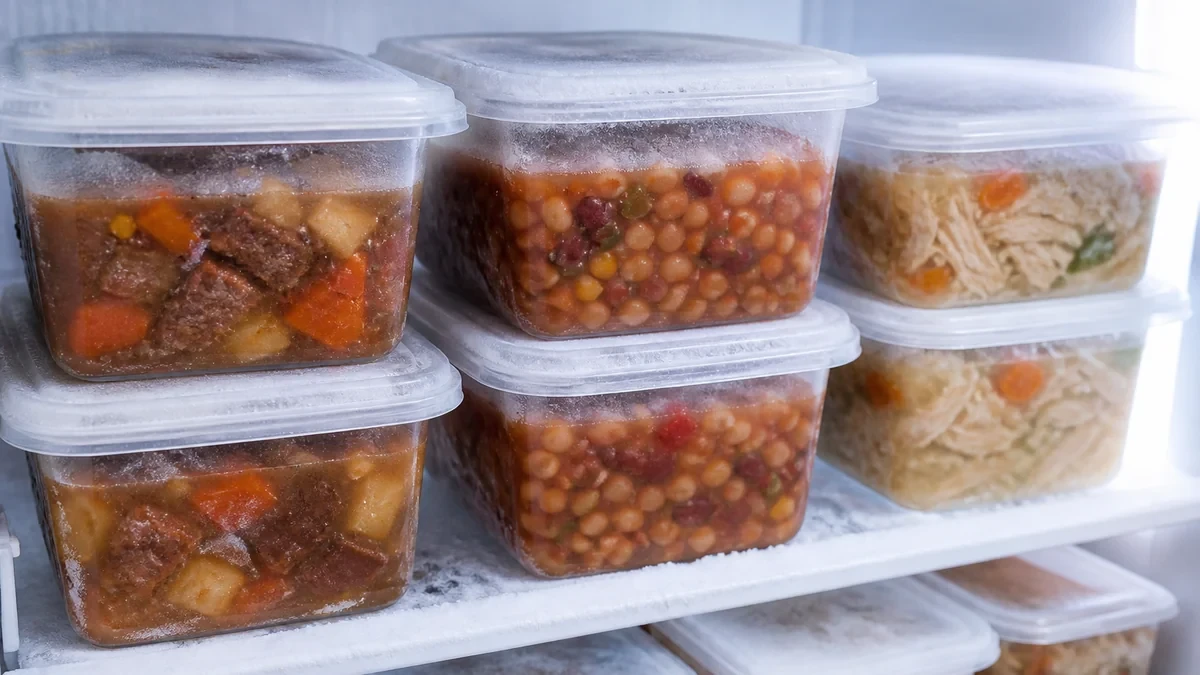
Knowing what you can freeze once a dish is cooked settles an expensive question at home: keep it or toss it. Almost everything survives the freezer, but not everything comes back the same.
Freezing preserves, it does not improve: the rule behind everything else
At 0 °F (-18 °C) bacteria stop multiplying. That is all the freezer does: it stops them, it does not kill them. Once the dish thaws, the survivors go back to work if they find time and warmth, so whatever goes in has to be clean and properly cooked in the first place.
The second idea worth separating is safety from quality. The FDA is explicit: at 0 °F food stays safe indefinitely, and its time charts are about quality, not danger. Going six months past a stew's window does not poison it, it just makes it taste like cardboard. Mixing those two things up is what sends perfectly good food to the bin.
The third is texture. Water inside the tissue expands as it freezes and breaks cell walls, so a freezer never fixes poor ingredients or an oversalted stew.
What you can freeze well and what gets ruined, by groups
These come out the same or almost: stews and soups with broth, cooked legumes, cooked meat and poultry with their juices, raw doughs, fruit in syrup, bread and stocks. The test is simple: if the dish is already moist and soft, ice will not hurt it.
These get ruined, with the reason next to each: cooked potatoes turn grainy, watery and dark, and mature potatoes behave worse than new ones; cooked pasta loses its bite; fried food arrives soggy and tasting old; sauces made with cream, mayonnaise or thickened with flour or egg split; cooked egg white turns rubbery; gelatin weeps and meringue shrinks and hardens.
There is a quiet group almost nobody writes down: lettuce, celery, cucumber, tomato and salad greens go limp and watery. Salt loses strength and speeds up rancidity in fats, while pepper, clove, garlic and oregano turn sharper or bitter in the cold.
Dish by dish: what happens to Chilean food in the freezer
The home classics are in no official chart, so treat these as quality recommendations: 2 to 3 months suits most of them, as long as they were cooled fast and packed without air.
| Dish | Verdict | How to freeze it |
|---|---|---|
| Pebre | Not for serving raw: the tomato releases water and the cilantro darkens | Only the dressing base, or saved for stews |
| Cooked mote | Yes, up to 3 months | Drained, in portions with a little liquid |
| Mote con huesillo | Yes, with one condition | Grain and juice separately: together the grain absorbs it |
| Humitas | Yes, better raw | In their husk, cooked straight from frozen |
| Empanadas de pino | The raw assembled ones; fried ones lose their crunch | Into the oven straight from frozen |
| Sopaipillas | The raw discs, yes | Separated with film so they do not stick |
| Calzones rotos | The dough holds; the fried one does not | Dough in a flat disc; the fried one gets eaten that day |
| Carbonada, cazuela and charquican | Yes, 2 to 3 months, with potatoes as the weak spot | Without potatoes: add fresh ones when reheating |
| Beans, chickpeas and lentils, cooked | Yes, 2 to 3 months | Drained or in their broth, in single-meal portions |
Cooling and packing: the four steps that decide the result
Cool fast before freezing is the step everyone skips. Liquids go into an ice bath; solids get spread on a tray or left uncovered in the fridge. Never put a hot pot in the freezer: it raises the temperature of everything around it.
Portion by use, one meal per bag, in flat bags or wide-mouth containers. Leave a couple of centimeters free because the contents expand, and squeeze the air out, since that is exactly what causes freezer burn.
Label with name and date and note the use-by date: an unlabeled container is a lost container. And do not load the freezer all at once, because everything then takes longer to drop in temperature.
Thawing and reheating without ruining what froze well
The safe hierarchy is well known: overnight in the fridge, best for stews and legumes; microwave on defrost and cook immediately; or straight into the pot when the dish is going to boil anyway. What you never do is thaw on the counter, right in the warm zone. The methods are covered in the guide to how to thaw food safely.
Fried food and doughs are never thawed: oven or air fryer straight from frozen. That is the only way a sopaipilla or an empanada arrives crisp instead of gummy.
Two rules close the subject: never refreeze what has already thawed, because a second ice cycle destroys the texture, and reheat only the portion you are about to eat.
The mistakes that keep repeating at home
Process mistakes: freezing hot food, filling the container to the brim, leaving air in the bag, skipping labels and letting mystery bags pile up at the back. And the summer classic: freezing salad or pebre hoping to serve them fresh the next day.
Expectation and seasoning mistakes: believing frozen means forever, when freezer burn and that freezer smell already warn that quality is gone; and seasoning fully before freezing, when the right move is to go halfway and finish on reheating.
How long each thing keeps: the time chart
These figures come from the FDA and USDA charts, the ones people quote when they ask how long a frozen stew keeps:
| Preparation | Freezer |
|---|---|
| Soups and stews | 2 to 3 months |
| Cooked meat and meat dishes | 2 to 3 months |
| Stock and meat juices | 2 to 3 months |
| Cooked chicken or turkey | 4 to 6 months |
| Cooked fish | 4 to 6 months |
| Fried chicken | 4 months |
| Raw whites and yolks | 1 year |
| Hard-boiled eggs | Do not freeze |
| Prepared egg, tuna, chicken or pasta salads | Do not freeze |
Everything else in the freezer has other windows and other guides: blanched vegetables keep 8 to 12 months, as the vegetable freezing guide explains, and bread sits around 3 months, covered in how to keep bread fresh longer. If a dish contains cooked potato, mayonnaise or cream, the number that matters is not the freezer one but the fridge one, 3 to 4 days.
Frequently asked questions
Can you freeze pebre?
Not if you plan to serve it raw: the tomato releases water and the cilantro darkens. Freeze only the dressing base, or save it for a stew.
Can you freeze cooked mote?
Yes, up to 3 months. Drained, portioned with a little liquid and thawed in the fridge it stays firm. The details are in the full mote guide.
Can you freeze cooked huesillos?
Yes, and the juice too. What does not work is freezing them together with the mote: the grain soaks up the liquid and turns pasty.
Should humitas be frozen raw or cooked?
Raw and in their husk is better, cooked straight from frozen without thawing: they stay juicier than the ones frozen already cooked.
Can you freeze a stew with potatoes?
You can, but the potato turns grainy and watery. Better to freeze it without potatoes and add fresh ones when reheating.
How long does carbonada keep in the freezer?
2 to 3 months is a fair quality reference, in line with the FDA window for soups and stews. Beyond that it is not harmful, but the flavor fades.
Can you refreeze food that has already thawed?
Not advisable: a second ice cycle leaves the dish dry or gummy. The topic is covered in is it safe to refreeze thawed meat.
Can you freeze hard-boiled eggs?
No. The white turns rubbery and the yolk crumbles. Keep them in the fridge, still in the shell, for up to a week.
That answers what you can freeze after cooking: almost everything, as long as it is cooled fast, packed without air and labeled with a date.